
A subscript in chemistry is a small number that shows how many atoms of an element are in a molecule.
I’ve taught and used chemical formulas for years, so I know how a tiny number changes everything. This article explains what a subscript in chemistry means, why it matters, how to read and use subscripts in formulas, common mistakes, and practical tips from my experience. Read on to gain a clear, usable understanding of subscripts and how they shape chemical meaning.

Source: youtube.com
What is a subscript in chemistry — clear definition and purpose
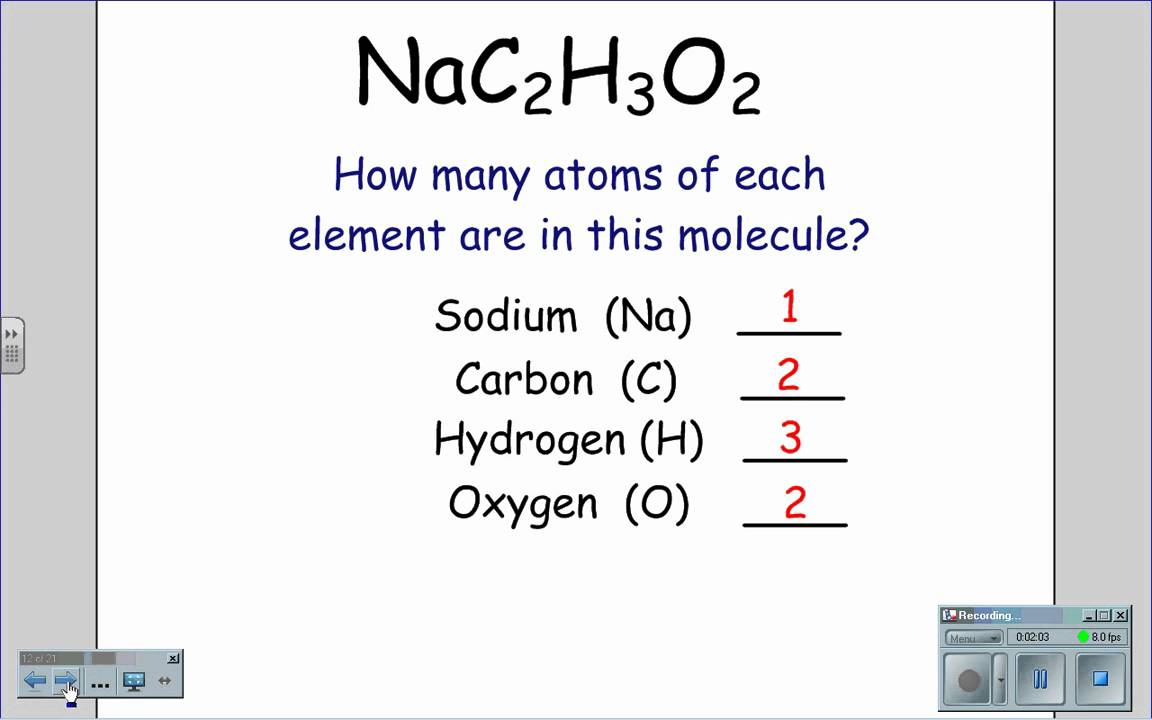
A subscript in chemistry is a small numeral written to the lower right of an element symbol in a chemical formula. It indicates the number of atoms of that element present in a single molecule or formula unit. For example, in H2O the subscript 2 tells you there are two hydrogen atoms and one oxygen atom per water molecule.
Subscripts do not change the identity of the element. They only tell you amounts. A missing subscript implies a value of one. Subscripts are used in molecular formulas, ionic formulas, and empirical formulas to convey composition precisely. What is a Subscript in Chemistry appears in most basic chemistry lessons because it is essential to reading and writing formulas.

Source: xaktly.com
Why subscripts matter in chemistry
Subscripts affect composition, mass, and chemical behavior. The number of atoms affects molecular weight, reaction stoichiometry, and physical properties like polarity and boiling point. Misreading a subscript leads to wrong calculations and bad conclusions.
Chemists use subscripts to:
- Identify molecule composition clearly.
- Calculate molar mass for lab work.
- Balance chemical equations correctly.
- Predict proportions in reactions and compounds.
My lab work once showed how a single wrong subscript led to a 50% error in reagent amounts. Small numbers are not small in impact.

Source: heroictechwriting.com
How to read and interpret subscripts in formulas
Reading subscripts is simple if you follow a few steps:
- Locate the element symbol.
- Read the subscript to its lower right.
- If there is no subscript, assume one.
- Apply parentheses and multiplication when groups have subscripts.
Examples:
- CO2 means one carbon and two oxygens.
- Ca(OH)2 means one calcium, two oxygens, and two hydrogens because the 2 multiplies the OH group.
- Fe2(SO4)3 means two iron atoms and three sulfate groups.
When you count atoms across a formula, always expand parentheses first. This keeps counts accurate for mass and mole calculations.
Source: google.com
Rules and conventions for writing subscripts
Chemists follow a few common rules for subscripts:
- Use Arabic numerals for subscripts (1 is omitted).
- Place the number lower-right of the element symbol.
- Use parentheses for polyatomic groups followed by a subscript to show multiples.
- Subscripts cannot be fractions in molecular formulas; use empirical formulas instead if needed.
- In ionic compounds, subscripts reflect the simplest whole-number ratio.
These rules keep formulas standardized and readable. In professional writing, correct subscript placement prevents misinterpretation.

Source: helpteaching.com
Subscripts in stoichiometry and calculations
Subscripts provide the atom counts needed for stoichiometry. To find molar mass, multiply each element’s atomic mass by its subscript, then sum the values. For reaction stoichiometry, subscripts give reactant and product composition, which connects to coefficients balancing mass.
Steps to use subscripts in stoichiometry:
- Determine atom counts from subscripts.
- Convert atom counts to moles using molar masses.
- Use mole ratios to link reactants and products.
A simple example: For H2 + Cl2 → 2HCl, the subscripts in H2 and Cl2 show two atoms per molecule. This informs how many molecules or moles react and form product.

Source: study.com
Common mistakes and how to avoid them
New learners often make these errors:
- Ignoring parentheses and miscounting atoms.
- Treating subscripts as coefficients (they are not the same).
- Forgetting that subscripts change molecular mass.
- Using fractional subscripts incorrectly in molecular formulas.
Tips to avoid mistakes:
- Rewrite complex formulas by expanding parentheses.
- Always check whether a number is a subscript or a coefficient.
- Recalculate molar mass after any formula change.
- Practice with common formulas until recognition is automatic.
From my tutoring experience, rewriting formulas line-by-line reduces error quickly.

Source: coscinecreative.com
Related concepts you should know
Understanding subscripts works best with related terms:
- Coefficient: number in front of molecules in equations that scales whole molecules.
- Empirical formula: simplest whole-number ratio of atoms (may differ from molecular formula).
- Molecular formula: exact number of each atom in a molecule.
- Polyatomic ion: a charged group of bonded atoms often shown with parentheses and subscripts.
These concepts often appear together when learning what is a subscript in chemistry, so mastering them helps comprehension.

Source: youtube.com
Practical examples and practice problems
Practice helps cement the idea of a subscript in chemistry. Try these quick checks:
- Count atoms in C6H12O6: 6 carbons, 12 hydrogens, 6 oxygens.
- Expand Al2(SO4)3: 2 aluminum, 3 sulfurs × 1 each → 6 sulfurs, and 3×4 oxygens → 12 oxygens.
- Convert empirical CH2 to a molecular formula with molar mass 84 g/mol: empirical mass = 14, so molecular formula is C3H6.
Solving these shows how subscripts affect counts and mass. In my classes, students gain confidence by doing short timed drills.
Practical tips from experience
- Always write out atom counts when starting a calculation.
- Use a clear, consistent format for parentheses and subscripts.
- Double-check formulas against known compounds when unsure.
- Teach others: explaining subscripts aloud helps lock in the concept.
Small habits prevent big mistakes. I once reduced lab errors by making a short checklist that included “verify subscripts” before weighing reagents.
Frequently Asked Questions of What is a Subscript in Chemistry
What is the difference between a subscript and a coefficient?
A subscript shows how many atoms of an element are in one molecule. A coefficient multiplies whole molecules in a balanced chemical equation.
Can subscripts be zero or negative?
No. Subscripts represent counts of atoms and must be positive whole numbers. Zero or negative subscripts are not meaningful in formulas.
How do subscripts affect molar mass?
Subscripts multiply an element’s atomic mass when calculating molar mass. Add each element’s mass contribution to get the total molar mass.
What happens when you change a subscript in a formula?
Changing a subscript alters the compound’s identity and properties. For example, CO and CO2 are different substances with different behavior.
Are subscripts used for ionic compounds?
Yes. Subscripts show the ratio of ions in the formula unit, often found by balancing charges to reach a neutral compound.
Conclusion
Subscripts are small numbers with big meaning in chemistry. They tell you how many atoms make up a molecule, guide calculations, and shape chemical identity. Mastering what is a subscript in chemistry makes reading formulas, calculating mass, and balancing reactions clear and reliable.
Takeaway: practice reading and expanding formulas, and make checking subscripts a habit. If you found this useful, try a few example problems, subscribe for more guides, or leave a question below — I’ll help you work through it.