Have you ever looked at a chemical formula like H₂O or CO₂ and wondered what those tiny numbers mean? Those small digits, called subscripts, are more than just details—they hold the key to understanding exactly how atoms come together to form different substances.
Knowing the purpose of subscripts can change the way you see chemistry, making it easier to grasp why compounds behave the way they do. You’ll discover why subscripts matter, how they reveal the true makeup of compounds, and how they help you make sense of chemical reactions.
Keep reading, and you’ll unlock the secret language of chemical formulas!
Role Of Subscripts In Formulas
Subscripts play a vital role in chemical formulas. They show the number of atoms of each element in a compound. Without subscripts, formulas would not convey clear information about a substance’s makeup.
Each subscript is written as a small number just after the symbol of an element. It tells how many atoms of that element are present in one molecule or unit of the compound. This helps scientists and students understand the exact composition.
Indicating The Number Of Atoms
Subscripts specify how many atoms of an element exist in a molecule. For example, in H2O, the subscript “2” shows two hydrogen atoms. Oxygen has no subscript here, which means there is only one oxygen atom.
This simple detail changes the meaning of a formula and the properties of the compound.
Showing Element Ratios
Subscripts reveal the ratio of elements in a compound. In carbon dioxide, CO2, the subscript “2” tells us there are twice as many oxygen atoms as carbon atoms. This ratio is important for understanding chemical reactions and formulas.
Distinguishing Different Compounds
Changing subscripts changes the compound entirely. For example, H2O is water, but H2O2 is hydrogen peroxide. The extra oxygen atom makes it a different chemical with different properties.
Subscripts help avoid confusion by clearly showing the makeup of each compound.
Indicating Atom Quantity
Subscripts in chemical formulas show the number of atoms for each element. They tell how many atoms of an element are in one molecule or formula unit. This helps to understand the exact makeup of a compound.
Without subscripts, it would be hard to know the proportion of atoms in a substance. For example, H2O means two hydrogen atoms and one oxygen atom in water. The subscript “2” is crucial to explain the correct formula.
Specifies Atomic Ratios
Subscripts define the ratio between atoms in a compound. They show how atoms combine in fixed proportions. For example, CO2 means one carbon atom and two oxygen atoms. This ratio affects the compound’s properties.
Distinguishes Different Compounds
Subscripts help tell compounds apart by their atom counts. For example, CO and CO2 are different compounds. The first has one oxygen atom; the second has two. This small change alters the chemical behavior.
Supports Chemical Reactions
Subscripts help balance chemical equations by showing atom numbers. They ensure atoms are conserved on both sides of the reaction. This is vital for understanding how substances transform during reactions.
Atomic Ratios In Compounds
Subscripts in chemical formulas show how many atoms of each element are in a compound. They help explain the exact atomic ratio. This information is key to understanding the compound’s structure and properties.
Subscripts in chemical formulas show the number of atoms of each element. They reveal the exact atomic ratio in a compound. Understanding these ratios helps us know the compound’s true composition.
For example, in water (H2O), the subscript 2 tells us there are two hydrogen atoms for every oxygen atom. This ratio defines the properties and behavior of water.
Atomic ratios are crucial in chemistry. They help scientists predict how compounds react and combine. Without subscripts, formulas would lose their meaning and clarity.
How Subscripts Define Atomic Ratios
Subscripts directly indicate how many atoms of each element exist in one molecule. They give a clear count and order of atoms. This count forms the basis for atomic ratios in a compound.
These ratios remain constant for pure substances. For instance, carbon dioxide always has one carbon atom and two oxygen atoms. The subscripts 1 and 2 keep this ratio clear.
Importance Of Atomic Ratios In Chemistry
Atomic ratios determine a compound’s chemical and physical properties. They affect the way substances mix and react. Knowing these ratios helps chemists create new materials and medicines.
Ratios also help in calculating molecular weight and concentration. Accurate subscripts ensure precise measurements and predictions in experiments.
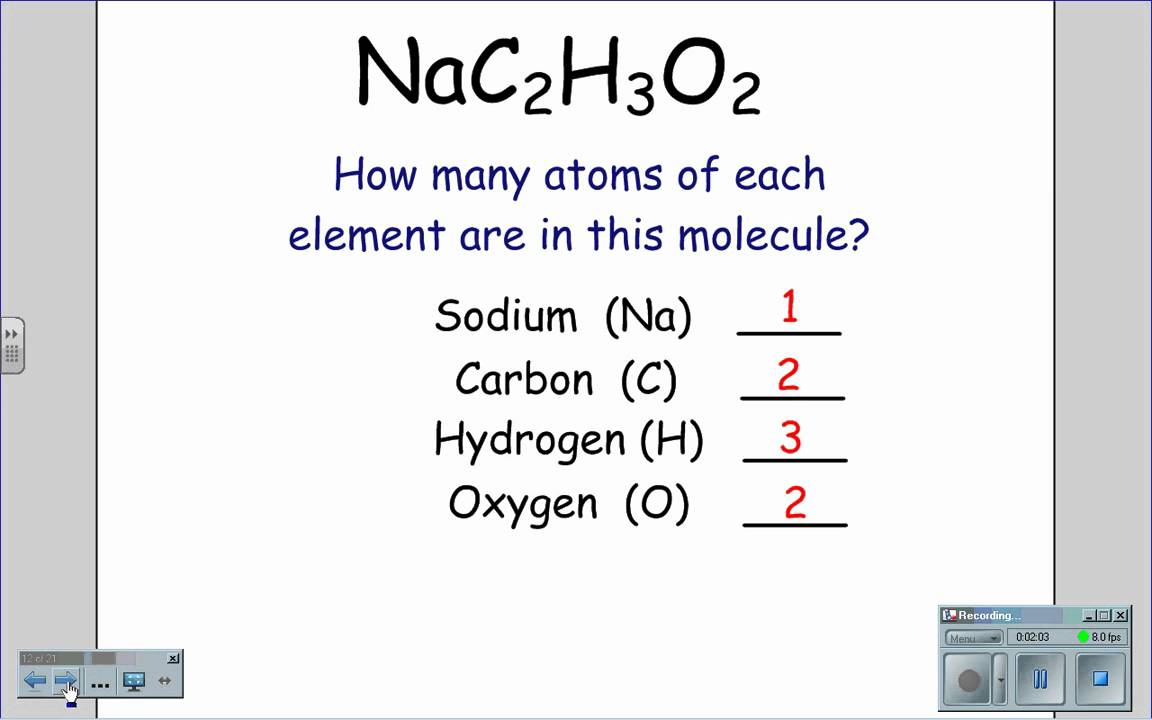
Credit: www.youtube.com
Difference Between Subscripts And Coefficients
The difference between subscripts and coefficients in chemical formulas is important. Both numbers give information about molecules. Yet, they tell us different things.
Subscripts show the number of atoms of an element in one molecule. Coefficients show how many molecules there are in a chemical equation. Understanding this helps to read and write chemical formulas correctly.
What Are Subscripts In Chemical Formulas?
Subscripts are small numbers written below and to the right of an element symbol. They tell how many atoms of that element are in one molecule. For example, in H2O, the subscript 2 means there are two hydrogen atoms. Oxygen has no subscript, so it has one atom.
What Are Coefficients In Chemical Equations?
Coefficients are whole numbers placed before a chemical formula. They tell how many molecules or units of that compound are involved. For example, 3H2O means three water molecules. The coefficient multiplies the whole formula, including subscripts.
How Subscripts And Coefficients Work Together
Subscripts count atoms inside one molecule. Coefficients count molecules in a reaction. For instance, in 2H2O, the coefficient 2 means two water molecules. Each molecule has 2 hydrogen atoms and 1 oxygen atom. So total atoms are 4 hydrogen and 2 oxygen atoms.
Impact On Chemical Properties
Subscripts in chemical formulas show the number of atoms in a molecule. This number affects the chemical properties of the substance. Different amounts of atoms change how a compound behaves and reacts with others.
Small changes in subscripts can create new compounds with new properties. For example, water (H2O) has different properties than hydrogen peroxide (H2O2), even though they contain the same elements.
Determining Molecular Structure
Subscripts reveal how atoms connect in a molecule. The arrangement impacts the shape and size of the molecule. This shape affects how the molecule interacts with other chemicals.
Influence On Reactivity
The number of atoms determines how a compound reacts. More or fewer atoms can make a substance more or less reactive. This impacts chemical reactions and energy changes.
Effect On Physical Properties
Subscripts influence melting point, boiling point, and density. Variations in atom counts cause changes in these physical traits. This helps identify and classify substances.
Subscripts In Molecular Vs Ionic Compounds
Subscripts in chemical formulas show how many atoms of each element are in a compound. Their role varies between molecular and ionic compounds. Understanding this difference helps to read and write chemical formulas correctly.
Subscripts In Molecular Compounds
Molecular compounds form when atoms share electrons. Subscripts tell the exact number of atoms in one molecule. For example, H2O means two hydrogen atoms and one oxygen atom. These numbers are fixed for each molecule. They describe the real structure of the compound.
Subscripts In Ionic Compounds
Ionic compounds form from charged ions. Subscripts show the ratio of ions needed to balance charges. For example, NaCl means one sodium ion and one chloride ion. The formula unit reflects the simplest ratio, not exact atoms. Subscripts ensure the compound is electrically neutral.
Role In Balancing Chemical Equations
Subscripts show the number of atoms for each element in a chemical formula. They help balance equations by keeping atom counts accurate. Without subscripts, the true composition of compounds would be unclear.
Subscripts play a key role in balancing chemical equations. They show the exact number of atoms of each element in a molecule. This information helps ensure the equation follows the law of conservation of mass.
Balancing means having the same number of atoms of each element on both sides of the equation. Subscripts tell us how many atoms belong to each element in a compound. Without them, it would be impossible to know the correct proportions.
Subscripts Define Atom Counts
Subscripts appear as small numbers next to element symbols. For example, in H2O, the subscript 2 tells us there are two hydrogen atoms. The oxygen atom has no subscript, so it is just one atom. This count is essential for balancing.
Subscripts show atoms inside a molecule. Coefficients multiply whole molecules. For example, 2H2O means two water molecules. Each molecule still has two hydrogens and one oxygen. Coefficients help balance equations without changing the molecule’s formula.
Maintaining Chemical Identity
Changing subscripts changes the compound itself. This would create a different chemical. Balancing must keep subscripts fixed and adjust only coefficients. This keeps each substance’s identity while ensuring atom counts balance.
Effect On Stoichiometric Calculations
Subscripts in chemical formulas play a crucial role in stoichiometric calculations. They show the exact number of atoms of each element in a compound. This information helps chemists calculate the amounts of substances involved in reactions accurately.
Ignoring subscripts can lead to wrong results in chemical calculations. The subscript tells how many atoms are present per molecule or formula unit. This count is essential for determining molar masses and mole ratios in reactions.
Determining Mole Ratios
Subscripts define the ratio of atoms in a compound. For example, in H2O, the subscript 2 means two hydrogen atoms. This ratio helps find the proportion of reactants and products in chemical equations.
Calculating Molar Mass
The molar mass depends on the number of atoms shown by subscripts. Each subscript multiplies the atomic mass of that element. Adding these values gives the total molar mass of the compound.
Balancing Chemical Equations
Subscripts indicate how many atoms of each element are in a molecule. This helps balance equations by ensuring the same number of atoms on both sides. Proper balancing is vital for correct stoichiometric calculations.
Common Misconceptions About Subscripts
Subscripts in chemical formulas often confuse many learners. Some think they mean different things than they actually do. Clearing these common misconceptions helps understand chemical formulas better. This section highlights the most frequent misunderstandings about subscripts.
Subscripts Indicate Total Number Of Molecules
Many believe subscripts show the total molecules in a compound. They do not. Subscripts only tell how many atoms of each element are in one molecule. For example, in H2O, the subscript 2 shows two hydrogen atoms in one water molecule.
Subscripts Can Be Changed To Balance Equations
Some think changing subscripts balances chemical equations. This is incorrect. Balancing uses coefficients, not subscripts. Changing subscripts alters the compound itself. Coefficients adjust the number of molecules instead.
Subscripts Show Element Importance
It is wrong to assume subscripts indicate the importance of elements. Subscripts only count atoms, not their role or significance. Every atom in a formula contributes to the compound’s properties equally, regardless of the subscript number.
Subscripts And Coefficients Mean The Same
Subscripts and coefficients often get mixed up. They have different functions. Subscripts show atoms per molecule. Coefficients show how many molecules are involved. For example, in 3H2O, 3 is the coefficient, and 2 is the subscript.

Credit: www.coscinecreative.com
Visual Representation In Chemical Notation
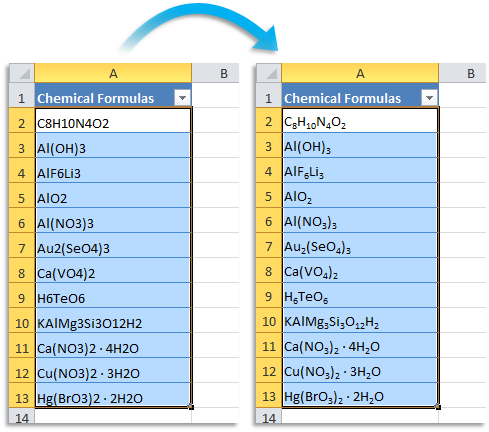
Chemical formulas use a special way to show the numbers of atoms in a molecule. This method helps scientists and students quickly understand the makeup of a compound. Subscripts are small numbers written just below and to the right of element symbols. They tell exactly how many atoms of each element are present.
This clear visual style makes reading and writing chemical formulas easier. Without subscripts, formulas would be confusing and hard to interpret. The position and size of subscripts provide important information at a glance. This helps avoid mistakes in chemistry calculations and experiments.
What Subscripts Indicate In Formulas
Subscripts show the exact count of atoms for each element in a compound. For example, in H2O, the subscript 2 means there are two hydrogen atoms. The oxygen atom has no subscript, so there is just one oxygen atom. This simple notation is a universal language in chemistry.
Subscripts differ from coefficients, which are larger numbers placed before the formula. Coefficients show how many molecules or units there are. Subscripts tell how many atoms are inside one molecule. For example, in 3H2O, the coefficient 3 means three water molecules. The subscript 2 means each molecule has two hydrogen atoms.
Why Subscripts Are Small And Lowered
Subscripts are written smaller and below the line to separate them from element symbols. This visual style avoids confusion with other numbers or letters. It clearly shows they belong to the atom count, not the element name. This helps maintain clarity in complex formulas with many elements.
Credit: www.asap-utilities.com
Frequently Asked Questions
What Is The Purpose Of A Subscript In A Chemical Formula?
A subscript in a chemical formula shows the number of atoms of each element in a compound. It defines the element’s ratio and composition. Subscripts help balance equations and calculate molecular properties accurately.
Why Are Subscripts Used In Formulas?
Subscripts in formulas show the number of atoms of each element in a compound. They clarify atomic ratios and composition.
Why Are Subscripts Important?
Subscripts show the number of atoms of each element in a compound. They clarify chemical composition and aid equation balancing.
What Is The Role Of Subscript?
Subscripts in chemical formulas show the number of atoms of each element in a compound. They clarify atomic ratios and aid calculations.
What Do Subscripts In Chemical Formulas Represent?
Subscripts show the number of atoms of each element in a chemical compound.
Why Are Subscripts Important In Chemical Formulas?
They tell the exact ratio of atoms, helping to identify the compound’s composition.
How Do Subscripts Differ From Coefficients In Formulas?
Subscripts count atoms within a molecule; coefficients show how many molecules are present.
Can Subscripts Change The Properties Of A Compound?
Yes, changing subscripts alters the atom ratio, which can create a different substance.
Do Subscripts Apply To All Elements In A Formula?
Only elements with more than one atom in the compound have subscripts.
What Does A Subscript Of “1” Mean In Formulas?
A subscript of 1 is usually not written but means one atom of that element.
Conclusion
Subscripts tell how many atoms of each element exist in a molecule. They show the exact atomic ratio needed for the compound. This helps chemists understand the formula and its structure. Subscripts are key to balancing chemical equations correctly. They also guide calculations in chemistry problems.
Knowing subscripts makes it easier to learn about chemical properties. Without subscripts, formulas would lack clear meaning and precision. They bring order and clarity to chemical language.