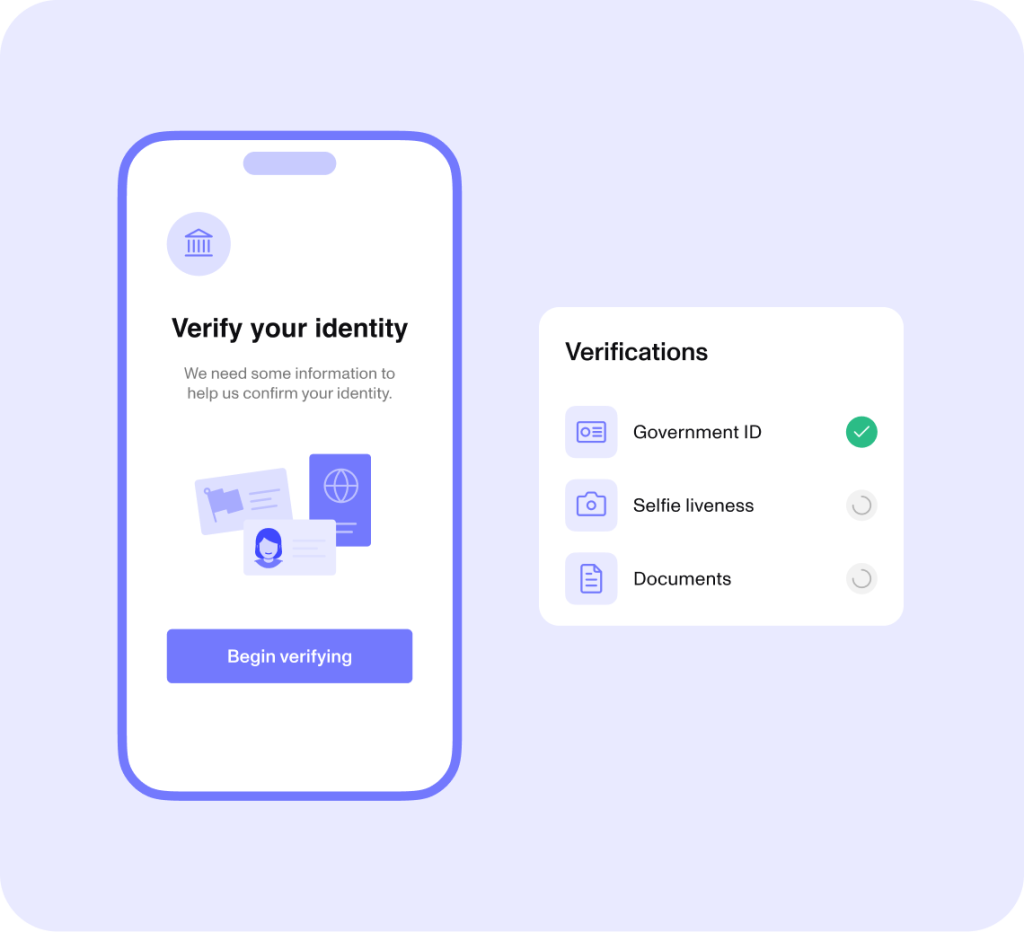
Financial apps verify identity without documents by combining biometrics, device signals, data checks, and risk scoring.
I’ve built and tested digital onboarding flows for fintech products, so I know exactly how financial apps verify identity without documents. This article explains the technical methods, real-world trade-offs, and practical tips so you can understand why apps trust people without asking for paper IDs. Read on to learn the key technologies, how processes work end-to-end, limitations to watch for, and actionable best practices you can apply today.

How financial apps verify identity without documents: a clear overview
Financial apps verify identity without documents by using digital signals that prove who you are. These signals include biometrics, device data, account connections, phone and email signals, and behavioral patterns. Each signal alone is weak, but combined they form a strong proof of identity using risk-based rules. This approach reduces friction and speeds onboarding while keeping fraud risk low.
Core technologies and methods used
Apps use several core methods to verify people without paper IDs. Each method adds evidence and lets the app score trust.
- Biometric checks: face match, liveness, and voice to confirm a real person. These checks compare a selfie to existing data or patterns.
- Device and network signals: device fingerprint, IP reputation, SIM info, and geolocation show where and how someone connects.
- Account-based verification: linking bank accounts, payment history, or social accounts to confirm ownership.
- Phone and SMS checks: OTP codes, carrier checks, and device SIM tests validate phone control.
- Behavioral biometrics: typing patterns, swipe rhythms, and mouse movement to spot bots and impostors.
- Data enrichment and identity graphs: matching name, email, and phone against curated datasets to confirm consistency.
- Risk scoring and machine learning: combining signals into a risk score that determines whether to approve, challenge, or block.
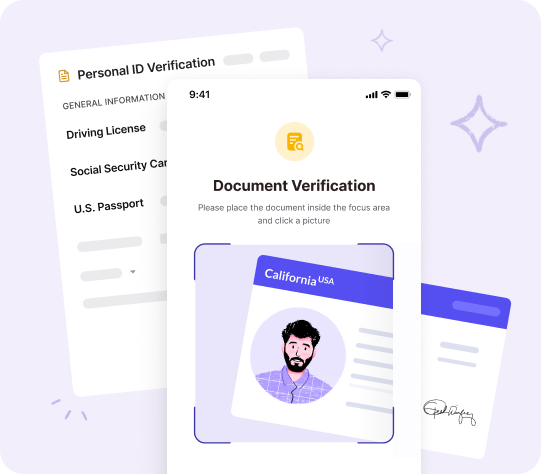
Typical verification workflow inside an app
Most apps follow a layered workflow that balances speed and safety. Here is a common flow in simple steps.
- Collect minimal user inputs: name, phone, email, and basic profile.
- Passive checks: verify email domain, phone carrier, device fingerprint, IP reputation.
- Active checks if needed: send OTP, request selfie for liveness test, or request screen prompts.
- Account link: ask the user to connect a bank or payment account for instant verification.
- Risk scoring: combine all signals to make a decision.
- Continuous monitoring: keep checking transactions and behavior after onboarding.
This flow lets apps verify identity without documents for low-risk users, and escalate only when signals are weak or conflicting.

Benefits and limitations
Understanding trade-offs helps choose the right approach.
Benefits
- Faster onboarding and better conversion rates.
- Lower cost per verification versus manual ID review.
- A smoother user experience, especially on mobile.
- Continuous checks allow ongoing trust, not just a one-time proof.
Limitations
- Some fraud types remain hard to detect without documents.
- Reliance on third-party data can create bias or gaps for certain groups.
- Regulatory regimes may still require documents for higher-risk products.
- False positives and negatives occur, so human review still matters.

Practical examples and real-world use cases
Here are real examples of how companies use these methods.
- Micro-savings app: used phone number ownership, device fingerprint, and small bank transfers to verify new users. This cut verification time to under two minutes.
- Peer-to-peer payments: combined selfie liveness and bank account micro-deposits to approve transfers for low-value limits.
- Credit scoring: used transaction patterns and payment history to build identity and trust without a formal ID.
From my experience, pairing account linking with a quick selfie liveness test gives the best mix of speed and safety. I once reduced drop-off by 40% by removing a mandatory document upload and replacing it with a bank-link and behavioral checks.

Implementation best practices for developers and product teams
These steps help you build a reliable documentless identity flow.
- Start with risk tiers: define what level of proof you need for each product action.
- Use layered signals: never rely on a single method. Combine biometrics, device data, and account links.
- Keep friction minimal: ask for more checks only when risk increases.
- Monitor and iterate: use A/B tests to find the best balance of security and conversion.
- Plan for fallbacks: allow document upload or manual review when automated checks fail.
- Respect privacy: limit data collection, explain how data is used, and secure all signals.
- Stay compliant: map your flow to local KYC and AML rules and maintain audit logs.
From building flows, I learned to make the first path as smooth as possible. Ask only for what you need to approve the first action, then increase proof for higher-value steps.

How regulations and risk affect choices
Regulations shape how financial apps verify identity without documents. Some regions allow risk-based alternatives to formal IDs for low-value services. Others require strict KYC for accounts that handle larger amounts. Companies must document their decision logic and keep records for audits. Risk thresholds should reflect the product, jurisdiction, and expected fraud patterns.

User privacy and ethical considerations
Respect and transparency build trust. Tell users why you collect each signal. Minimize retention of biometric images and sensitive raw data. Avoid biased data sources that exclude groups without clear digital footprints. Test for fairness and ensure alternative flows for users who cannot use certain signals.
Frequently Asked Questions of how financial apps verify identity without documents
What is documentless identity verification?
Documentless identity verification uses digital signals, biometrics, and account links instead of passport or ID uploads. It builds trust by combining multiple signals and scoring risk.
Are documentless methods secure?
They can be secure when layered and monitored. Combining device signals, biometrics, and account data reduces fraud, but no method is foolproof.
Will regulators accept verification without documents?
Sometimes. Regulators often accept risk-based models for low-risk services, but high-risk accounts usually still require formal KYC. Compliance depends on jurisdiction.
What happens if the verification fails?
Apps typically offer fallback steps: send a phone OTP, request a bank link, or escalate to manual document review. Clear user guidance helps recovery.
Can I opt out of biometric checks?
Many apps offer alternatives, such as linking a bank account or providing documents. Ask the service about available options and privacy protections.
Conclusion
Digital identity without paperwork is possible because apps combine biometrics, device intelligence, account data, and risk models to build trust quickly. Use layered signals, clear risk tiers, and privacy-first design to keep users safe and happy. If you build or use these systems, start simple, monitor results, and offer fallback options for edge cases. Try one small change to your onboarding this week—measure conversion and fraud impact—and iterate from there. Share your results or questions below to keep the conversation going.