Introduction
I can’t check live news from here, so I can’t tell you which specific celebrity died today. Instead, this section gives immediate, practical steps to find and verify any report you encounter and explains when you should treat a report as unconfirmed.
Who this guidance is for
- Curious readers who saw a social post claiming a celebrity death and want to verify it.
- Journalists, bloggers, or social media users who need quick verification before sharing.
- Family, friends, or fans looking for reliable confirmation and reputable reporting practices.
What you will be able to do after reading
- Use a short checklist to confirm whether a death report is credible before sharing it.
- Identify reliable signals (official statements, reputable outlets, consistent timestamps) versus red flags (single anonymous posts, memorial pages with no source).
- Decide when to wait for confirmation and when a report is already reliably confirmed.
Quick, usable checklist (keep this handy): look for an announcement from the celebrity’s verified account or agent, corroboration from at least two reputable news organizations, and consistent timing/details across sources. Treat a single social-media post, especially from an unverified account or a meme page, as unconfirmed until multiple trusted sources report it.
Limitations and when this advice may not apply: breaking news can change rapidly and local outlets sometimes report before national outlets; paywalls or language barriers may slow verification; private-family requests for privacy can limit public information. Always allow for a short verification delay and avoid amplifying unconfirmed claims.
Essential Background
What counts as a “celebrity”?
“Celebrity” is a broad, informal label for people who are publicly known beyond their private circles. That can include actors, musicians, athletes, elected officials, prominent journalists, social media creators, and other public figures. Familiarity varies by community and platform: someone may be a major celebrity in one country or niche but unknown elsewhere. Recognizing this helps set expectations about the reach and speed of reporting.
How news about a death typically emerges
Reports can appear in several ways: an official statement from a family member or representative, a public agency release (police, coroner/medical examiner), posts on an official social account, or a news outlet story. Early mentions often come from social media or eyewitnesses; these can be accurate but are also prone to error. Over time, confirmed reports usually consolidate through multiple reputable outlets and official notices.
Distinguishing confirmation from rumor
- Confirmed: multiple independent, reputable sources report the death and cite an official statement (family, publicist, coroner, agency) or primary documentation such as an obituary.
- Unconfirmed: single social-media posts, anonymous tips, or posts without attribution. Treat these as provisional until verified.
- Corrections happen: outlets can retract or update early reports. That’s a normal part of reporting fast-moving news.
Important context to keep in mind
“Today” can be ambiguous because of time zones and publication times. A death reported late in one region may be dated differently elsewhere. Cause-of-death information is often withheld or provisional until an investigation or autopsy is complete. Respect for privacy and grieving families is important: avoid spreading unverified details or speculation about causes.
When this guidance may not apply
Procedures and terminology vary internationally—coroner vs. medical examiner systems, legal processes, and cultural practices. Local news practices and social-media norms also differ, so apply these principles with awareness of regional differences.
Key Concepts
What “died today” actually means
“Died today” can mean different things depending on the source. It might mean the death occurred in your local calendar day, the moment a death was publicly announced, or the timestamp on a news story. Time zones and late announcements can make “today” ambiguous. Treat initial timing claims as provisional until multiple trusted sources align.
Types of reports and how to weigh them
- Official statements: Announcements from family, representatives, hospitals, or government/medical officials are the strongest evidence.
- Mainstream news reports: Stories from established news organizations that cite primary sources are generally reliable, especially when corroborated.
- Social media posts: Quick but error-prone. Verified accounts add credibility but can still be wrong if hacked or based on rumor.
- Obituaries vs. tributes: An obituary is a formal notice about a person’s death; tributes or “RIP” posts are reactions and not confirmations.
Common sources of error
Confusion often comes from name collisions (different people with the same name), hoaxes, premature announcements, and misinformation spread by rapid sharing. Photos or ages attached to a report can help confirm identity but can also be misattributed.
Practical verification steps
- Look for multiple independent confirmations citing primary sources.
- Check for statements from official accounts or representatives.
- Confirm identifying details (age, role, recent projects) to avoid mistaking someone else for the celebrity.
- Wait for follow-ups if only social posts or unverified outlets report the news.
Limitations and ethical considerations
Not all deaths will be publicly confirmed quickly, especially for private individuals or when families request privacy. Avoid sharing unverified claims that can harm people’s reputations or cause distress. When in doubt, prioritize caution over speed.
Step-by-Step Explanation

Step-by-step verification and response
Purpose: determine whether a report that a celebrity “died today” is accurate, and decide how to responsibly act on that information.
Prerequisites
- Internet access and a device to view multiple sources.
- Basic source-evaluation skills: look for direct statements, attribution, and timestamps.
- Patience—early reports can be wrong; time often clarifies the picture.
Steps
- Look for an official confirmation. Check statements from the celebrity’s verified social accounts, family, publicist, agent, or law enforcement where relevant. An explicit, named source is more reliable than undated posts or anonymous tips.
- Check reputable news organizations. Major national or local outlets with editorial processes often confirm before publishing. Find the earliest article and note its sourcing and timestamp.
- Search for primary documents. Obituaries, statements from hospitals (when appropriate), or coroner notices can serve as primary confirmation. These are not always immediately available.
- Cross-check timestamps and attributions. Ensure later pieces update earlier reports. If articles repeat the same uncertain source, treat the news as unconfirmed.
- Avoid amplifying unverified posts. Don’t share or repost unless you can point to an official confirmation. If discussing, use qualifiers like “reports say” or “unconfirmed reports.”
Expected outcomes
- Confirmed: multiple independent, primary sources or an official statement agree.
- Unconfirmed: only social posts or unnamed tips exist—wait for verification.
- Refuted: reliable sources deny the report or correct earlier errors.
Troubleshooting
- If sources conflict, prioritize official, directly attributed statements and wait for follow-ups.
- If you can’t find authoritative information, refrain from sharing; set a time to recheck (e.g., 1–3 hours).
- Be aware of deliberate hoaxes and deepfakes; unusual details or sensational language often indicate false reports.
Limitations: Some deaths are confirmed privately or after a delay; this guidance helps reduce misinformation but cannot force a quick official statement.
Practical Examples
Below are realistic, concrete scenarios showing how to apply verification steps and how to react. Each scenario is clearly labeled; none are presented as verified events.
Hypothetical Example — Viral social post
A widely shared social post claims a famous actor “died today.” What to do:
- Check the account that posted it. Is it the celebrity’s verified account or a known news outlet? If it’s an unverified personal account, treat it with skepticism.
- Look for confirmation from multiple reputable sources (major national news organizations, well-known entertainment desks). If only the post exists, wait for corroboration.
- Don’t reshare. If you want to comment, note it’s unconfirmed.
Hypothetical Example — Same-name confusion
A headline says “John Smith, actor, dies,” but the celebrity you follow has the same name. What to do:
- Open the article and read beyond the headline for identifiers (age, roles, location). If details don’t match the person you know, it may be a different individual.
- Search for the celebrity’s official channels or agency statement to confirm which “John Smith” is referenced.
Hypothetical Example — Old obituary resurfacing
An old obituary circulates again after its anniversary, leading people to think the death is new. What to do:
- Check the article’s publication or update timestamp. If it’s several years old, that explains the confusion.
- If in doubt, check recent articles from current-day archives.
Limitations and when this guidance may not apply
In fast-breaking situations, initial reports can be inaccurate. Official confirmation can take hours. Also, private families may delay statements, so absence of comment is not proof either way. When emotions run high, pause before sharing; accurate verification often matters more than being first.
Common Mistakes
Common mistakes and how to avoid them
When you want to know “what celebrity died today,” common errors can lead to spreading false information or misunderstanding the situation. Below are frequent pitfalls and clear steps to avoid them.
Relying on unverified social posts
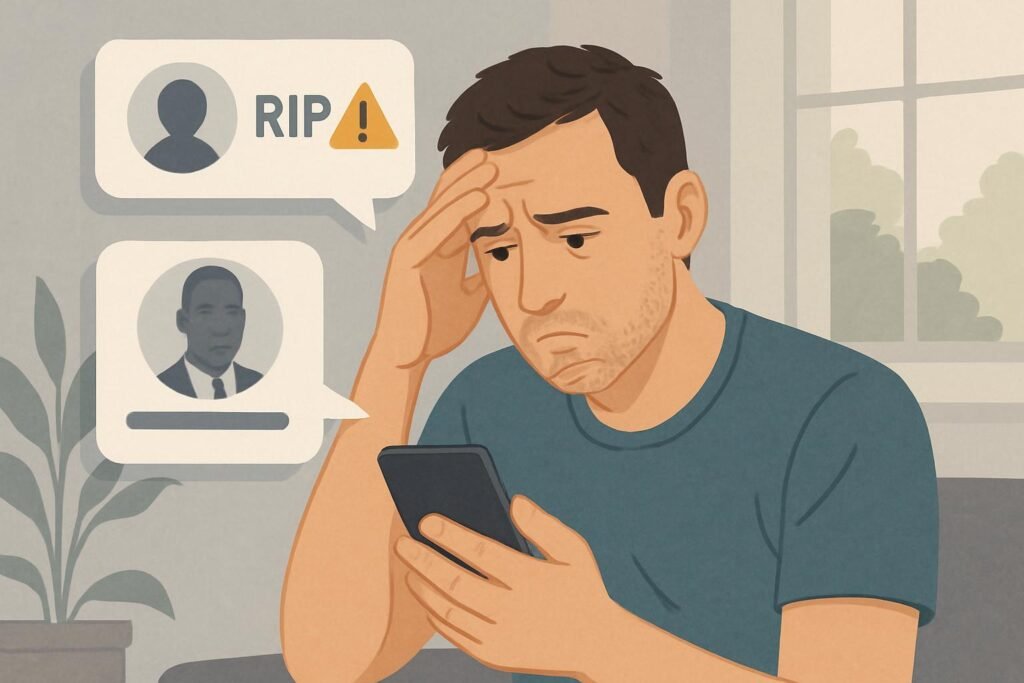
Seeing “RIP” or obituary-style posts on social platforms is tempting to accept as true. Social media is often the first place rumors spread. Before trusting a post, look for confirmation from credible news organizations or an official account for the celebrity, their family, or their representative.
Confusing people with similar names
Many celebrities share surnames or stage names with others. Verify the context—occupation, age, photo, or location—so you aren’t mixing two different people. If a headline lacks identifying details, seek a more complete report.
Mistaking satire or hoaxes for facts
Satirical sites and parody accounts sometimes publish fake death announcements. Check the publication’s reputation and examine the URL carefully. If the story is sensational but only appears on one odd-looking site, treat it with skepticism.
Using outdated or recycled content
Old obituaries and archival clips can resurface and be misinterpreted as new. Check the article’s date and the timestamp on social posts so you don’t mistake past coverage for current news.
Sharing before confirmation
Posting or reposting before there’s corroboration contributes to misinformation. Pause, verify with reputable sources, and include qualifiers (e.g., “unconfirmed reports”) if you must share early.
Verification tips
- Look for statements from official accounts, family, or an agency.
- Confirm across multiple reputable outlets, not just one source.
- Use reverse image search to check whether a photo is recent or misattributed.
- Check timestamps and time zones to clarify “today.”
Keep in mind: in fast-moving situations, even reliable outlets may update details. Treat initial reports as provisional until clear, corroborated confirmation appears.
Helpful Tips
Helpful tips for verifying and responding
When you see a claim that a celebrity died today, pause before sharing. Quick confirmation steps and simple decision rules help separate accurate reports from hoaxes and recycled stories.
- Do basic cross-checks first: look for the same report on two or more independent, reputable news outlets or an official representative (family, publicist, or the celebrity’s verified account). If multiple, independent sources report the same facts, confidence rises.
- Evaluate the original source: social posts, tabloids, and anonymous tweets are common starting points for false claims. An official statement from the celebrity’s organization or a major news desk is stronger evidence.
- Watch for recycled or misdated content: old obituaries and archival photos are often recirculated after unrelated events. Check timestamps and whether images are labeled with earlier dates.
- Be cautious with single-source reports: if only one outlet or a single social post is reporting the death, wait for corroboration. Quick updates may later be corrected.
- Respect privacy and avoid cause speculation: unless family or officials announce a cause, don’t assume or share unverified medical details.
Decision tradeoffs and limitations
Speed vs. accuracy: breaking news can be tempting to share, but rushing increases the risk of spreading false reports. If you need to act quickly (for work or publication), clearly label information as unconfirmed and update it as more reliable sources appear.
Verification tools have limits: reverse image search can reveal reused photos but won’t prove current context. Official records (like death certificates) may not be immediately accessible; public confirmation often comes from representatives instead.
If you’re emotionally impacted, verify before posting tributes publicly. For journalists or social accounts, set alerts for updates and correct errors transparently if new facts emerge.
Conclusion

Conclusion — practical summary and next steps
If you searched “what celebrity died today,” start from caution: social posts and early reports can be incorrect. This section wraps up how to treat such news, what you can do immediately, and how to follow up responsibly.
Key takeaways
- Give breaking claims a moment: wait for confirmation from reliable sources before accepting or sharing them as fact.
- Look for primary confirmation—official family statements, the celebrity’s verified social accounts, or established news organizations—rather than relying on a single social post.
- Be mindful of the emotional effect of death news. Protect vulnerable people by avoiding sensational sharing and including trigger warnings if you must share.
Practical next steps
- If you saw the claim on social media: pause before sharing, check two or more reputable outlets, and look for an official statement.
- If you’re a content creator or journalist: timestamp updates, link to primary sources, correct errors transparently, and avoid speculation about causes until authorities or family confirm.
- If you feel upset: reach out to friends, a trusted professional, or local mental health services. In the U.S., you can contact community crisis resources for immediate help.
- If you want ongoing alerts: set news alerts from established outlets or follow verified accounts for official updates rather than relying on rumor-driven feeds.
Limitations and when this advice may not apply
This guidance is general: I cannot verify real-time events or confirm reports for you. News develops quickly and verification standards vary by outlet. Use multiple, independent confirmations before treating a report as fact, and adapt the steps above to your role (reader, family member, journalist).
Taking these measured steps helps you stay informed, reduces the spread of misinformation, and respects the people affected by the news.
Frequently Asked Questions
How can I quickly verify that a celebrity actually died today?
Look for an official statement from the celebrity’s family, their verified social accounts, a representative (agent/manager), or a statement from the hospital or police if applicable. Also check multiple major news organizations or wire services; independent corroboration from several reputable outlets reduces the chance of error.
Why do false reports or “celebrity death hoaxes” appear so often?
Social media amplifies unverified posts, old articles or images get recycled, and mistaken identity or prank accounts can spread misinformation rapidly. Sensational headlines and rapid sharing make retractions slower and less visible than the original claim.
Which sources are safest to trust for confirmation?
Prioritize official family statements, verified accounts, well-established news organizations, and wire services. Local newspapers or the celebrity’s employer (studio, sports team, record label) can also confirm details. Avoid relying on a single post from an anonymous account.
What should I do if I see conflicting reports?
Wait for additional verification. Check timestamps and whether later reporting cites primary sources. Treat early, uncorroborated reports as provisional and avoid posting them as fact until confirmed.
Is it okay to share unconfirmed news or tributes immediately?
No — sharing unverified information can spread harm. If you must comment, label it clearly as unconfirmed and link to the primary source. For tributes, wait until confirmation to avoid distressing friends or family with misinformation.
Where can I find obituary, funeral, or donation information?
Official family statements, the celebrity’s official website or verified social pages, and announcements from funeral homes will have logistics. Reputable news outlets typically summarize these details once verified. If you plan to donate, confirm the charity’s legitimacy before contributing.
 Who Is The Most Influential Celebrity
 Who Is The Most Famous Celebrity Couple?
 Is Entertainment Earth Legit? Evidence and Order Checks






1 thought on “What Celebrity Died Today?”