Introduction
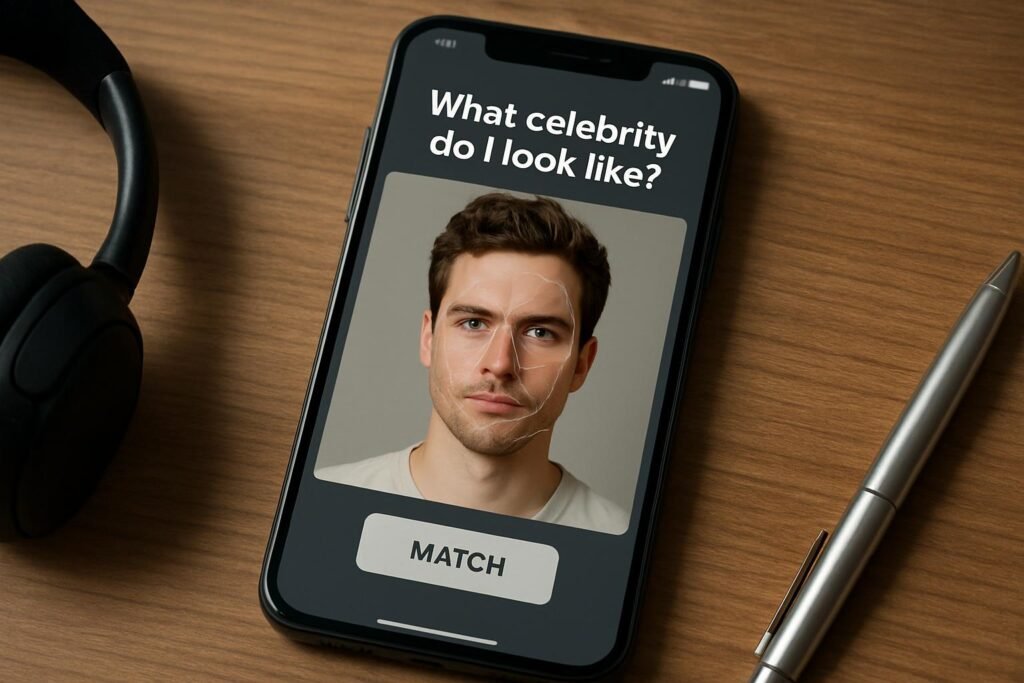
Short answer: you can get a reasonable idea of which celebrity you resemble by comparing core facial traits (face shape, feature placement, and proportions), checking neutral photos, and seeking multiple opinions — but any match is partly subjective and can change with hair, makeup, expression, or age.
This guidance is for anyone curious about celebrity look‑alikes: people taking casual quizzes, preparing a themed event, creating a social media post, or exploring how styling influences perceived likeness. By following this section you’ll learn practical ways to judge resemblance, examples of the features that matter, and clear limits of those judgments.
How to approach it
- Start with a clean, neutral photo (natural light, no heavy makeup or extreme angles) so features are visible without distortion.
- Compare basic structural traits: face shape (round, oval, square), forehead and hairline, eyebrow shape, eye spacing, nose length/width, cheekbone prominence, and jawline.
- Look for distinctive small details that drive recognition: a wide-set smile, prominent dimples, an upturned nose, or a strong brow ridge.
Example: two people with similar jawlines can still appear different if one has a very broad nose or a unique eyebrow arch. That’s why you should weigh both overall proportions and standout features.
Limitations and when this won’t apply
- Resemblance is subjective: different observers and cultures prioritize different cues.
- Styling and temporary changes (haircut, color, facial hair, makeup, weight) can create or erase likenesses.
- Automated tools may be biased or reflect limited image databases; treat their output as a starting point, not a definitive answer.
- Be cautious about uploading photos to unknown services for privacy reasons.
Use this section as a practical checklist to form a sensible, cautious opinion about celebrity look‑alikes before moving to more specific comparisons or tools.
Essential Background
What “look like” actually means
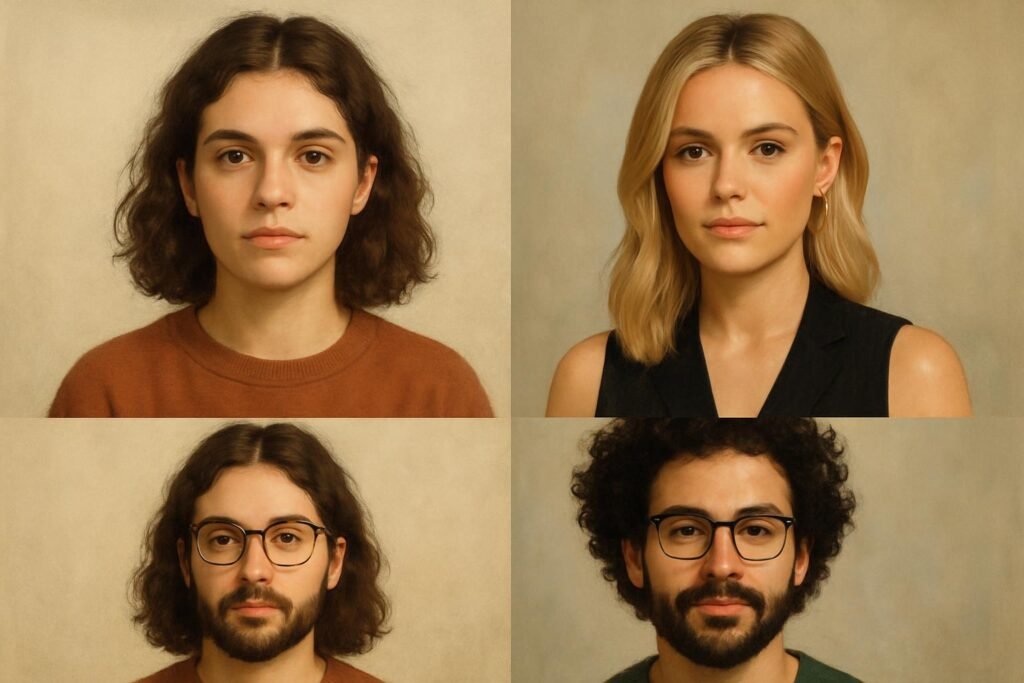
When people ask “what celebrity do I look like,” they’re asking about perceived visual resemblance. That can mean several different things: matching facial proportions, sharing one or two distinctive features, copying a hairstyle or makeup, or giving the same overall “vibe.” These are related but not identical concepts.
Types of resemblance
- Feature-based: Similar nose, eyes, jawline, or other individual features.
- Proportional or structural: Comparable face shape and relative spacing of features (what people sometimes call “face shape”).
- Stylistic: Same haircut, beard, glasses, or makeup that creates a likeness.
- Expressive or likeness of character: Similar facial expressions, posture, or the way someone carries themselves.
Context that changes perception
Resemblance depends heavily on controllable factors: hairstyle, grooming, makeup, lighting, camera angle, and expression. Two photos of the same person can suggest different celebrity look-alikes depending on those variables. Age, weight changes, and cosmetic procedures also change perceived similarity.
Limitations and biases
Human perception is subjective and prone to bias. People often notice one striking feature and generalize from it (confirmation bias). Automated matching tools use facial landmarks or pattern recognition but inherit training-data biases: they can perform unevenly across races, ages, and genders. Results from apps are suggestive, not definitive.
Ethics and privacy
Using someone else’s image to find a look-alike raises consent and privacy questions. Avoid uploading photos of minors or other people without permission. Also be mindful that focusing on resemblance can unintentionally stereotype or reduce identity to appearance.
Keep these definitions and limits in mind: resemblance is a mix of measurable features and subjective impression, and any “match” should be taken as a fun approximation rather than a factual identity statement.
Key Concepts
What “looking like” someone actually means
Resemblance is not a single thing. It can mean facial structure, specific features, overall impression, or even style and grooming. Distinguish these when you ask “what celebrity do I look like?”:
- Structural likeness — bone structure, forehead, cheekbones, jawline.
- Feature-level likeness — shape and placement of eyes, nose, mouth, eyebrows.
- Expressive likeness — typical facial expressions or smiles that create a similar vibe.
- Stylistic likeness — hair, makeup, clothing, or haircut that makes two people look more similar.
How photos and context change perception
Lighting, camera angle, expression, and image quality strongly affect perceived likeness. A forward-facing neutral photo highlights bone structure. Side angles or smiles emphasize different features. Filters, heavy makeup, or glasses can hide or alter the cues that create resemblance.
Human judgment versus automated matching
People compare faces using holistic impressions and cultural associations. Automated tools typically reduce faces to measurements or learned patterns. Treat algorithmic matches as suggestions, not definitive answers. Both humans and tools can disagree because they weight cues differently.
Common limitations and biases to expect
- Dataset bias: comparisons reflect who the matcher or tool “knows” — less common faces can be misclassified.
- Age and ethnicity: changes over time and across populations affect perceived similarity.
- Temporary traits: hair color, facial hair, and makeup can create misleading matches.
- Emotional bias: wanting to look like a favorite celebrity can make you perceive stronger resemblance than is objectively present.
Practical takeaways
- Use multiple neutral, well-lit photos for a fair comparison.
- Look at which specific features drive a match (eyes? jaw? smile?) rather than focusing only on the celebrity name.
- Remember resemblance is subjective and often partial — it’s fine for a result to be more about vibe than exact feature match.
Step-by-Step Explanation
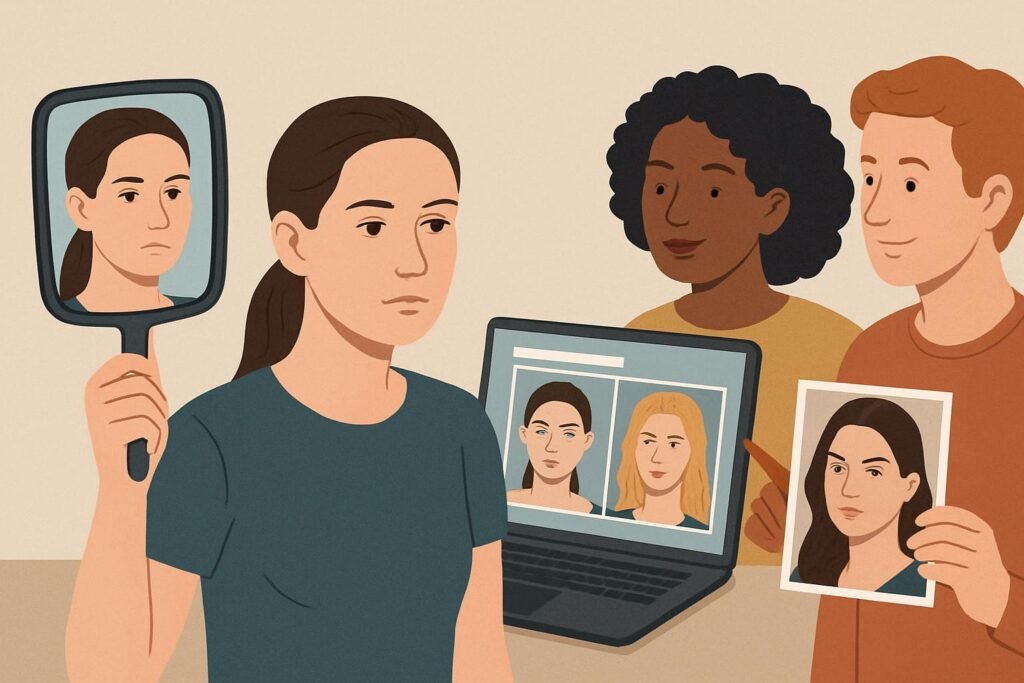
Follow these ordered steps to get a useful, realistic answer to “what celebrity do I look like.” Each step includes what you need and what to expect.
- Prepare suitable photos.Prerequisites: clear, recent frontal photos with neutral expression, good lighting, minimal makeup and hair pulled back if possible. Expected outcome: a baseline image that highlights facial structure rather than hairstyle or accessories.
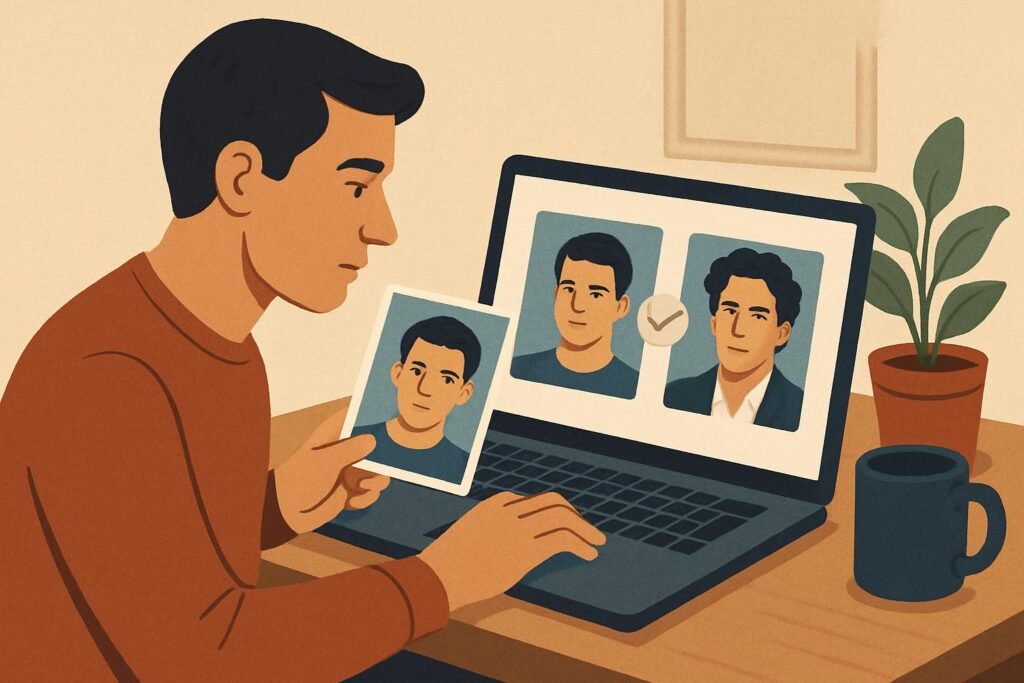
- Try a few different comparison methods.Options include mirror-based self-assessment (note your face shape, eyes, nose, lips), automated look‑alike tools, and asking friends. Expected outcome: multiple perspectives that converge on one or two plausible matches.
- Analyze facial features, not just overall vibe.Compare face shape, eyebrow placement, eye spacing, nose width, and jawline. Use close-up, side and straight-on images when comparing. Expected outcome: more accurate matches based on structure rather than hairstyle or clothing.
- Cross-check results and weigh them sensibly.If several tools or people point to the same celebrity or type, that match is more credible. If results vary widely, look for common traits instead of one name.
- Protect privacy and interpret cautiously.Prerequisites: understand the service’s privacy terms before uploading images. Expected outcome: you get a match without unnecessary sharing of personal data.
Troubleshooting and limitations
- If matches feel wrong, change the photo (angle, expression) and try again.
- Be aware of bias: many tools favor well-known faces, certain ethnicities, or popular trends, so results may not be evenly accurate for everyone.
- This approach is informal—do not use look‑alike results for identity verification or legal purposes.
- If you’re aiming for a specific celebrity look (e.g., for makeup or styling), focus on replicating key features (brows, contouring) rather than relying solely on an algorithmic match.
Practical Examples
Practical examples: how to interpret and act on a “celebrity lookalike” result
Below are real-world-style scenarios you can use to judge a celebrity match and decide what, if anything, to do with it. Each scenario labeled “Hypothetical” is made up for illustration.
Example 1 — Photo-based match (Hypothetical)
Hypothetical: A face-app returns “You look like Emma Watson.” Before accepting that as true, check whether the photo you uploaded shares expression, angle, lighting, hair, and makeup with the celebrity image. If both images are forward-facing, neutral expression, and similar lighting, the match is more meaningful than if one is a side profile with heavy makeup.
Example 2 — Style versus bone structure (Hypothetical)
Hypothetical: A friend says you look like Zendaya after you copy a hairstyle she wore. That resemblance might be driven mainly by hair and wardrobe choices rather than facial structure. If you like the comparison, emulate the style elements (haircut, parting, makeup tone) rather than expecting your face to change.
Quick checklist to evaluate a match
- Compare multiple photos of yourself in varied lighting and expressions.
- Look at jawline, brow shape, eye spacing—these are structural; hair and makeup are not.
- Consider age and ethnicity differences; algorithms and impressions can be biased.
- Ask several people, not just one app, for a broader perspective.
When this guidance may not apply
If a photo is heavily edited, contains filters, or you regularly wear theatrical makeup or prosthetics, automated or casual comparisons are unreliable. Also, celebrity matches are subjective—some viewers will see resemblance, others won’t.
Using a match constructively
If you want to adopt a look, focus on reproducible elements: haircut, color, makeup technique, and clothing silhouettes. And if a comparison affects your mood, remember that lookalike suggestions are descriptive, not prescriptive; you’re free to keep the aspects of your appearance you enjoy.
Common Mistakes
Common mistakes and how to avoid them
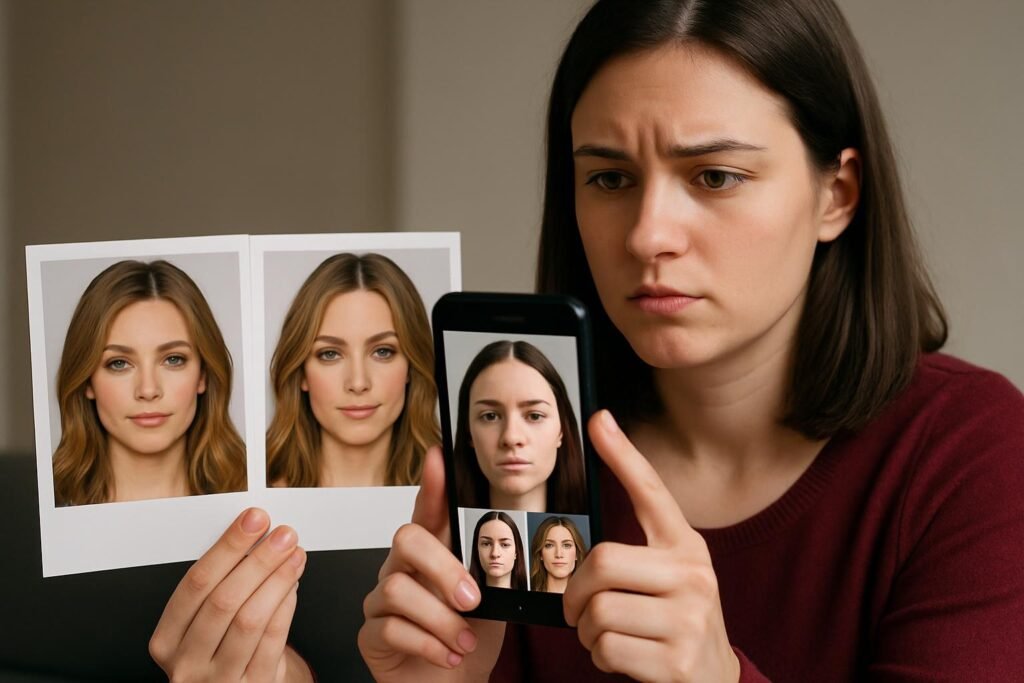
People often treat “which celebrity do I look like?” as a precise answer rather than a loose, subjective comparison. Acknowledge upfront that resemblance is interpretive: lighting, angle, hairstyle, and expression can make a fleeting similarity that disappears in another photo. Don’t assume a single result is definitive.
Another frequent error is over‑relying on one photo. A single selfie can exaggerate or hide features. Use several clear, frontal photos with neutral expressions so comparisons focus on underlying facial structure instead of mood, makeup, or a pose.
Apps and tools can be misleading. Many compare surface traits—hair color, makeup, or clothing—to celebrity images from their databases. If an app returns a match, inspect what features actually align. If the match seems driven by hairstyle or a similar smile, recognize that’s a superficial match, not a structural one.
Cultural and ethnic assumptions create problems. Matching algorithms or casual comparisons that ignore ancestry and facial feature diversity can produce inaccurate or uncomfortable results. Be cautious when using a single celebrity from a different background as a standard of identity or beauty.
Avoid absolute language. Telling someone “you look exactly like X” can offend or feel dismissive. Instead use phrases like “you remind me of…” or “there’s a resemblance in the eyes/cheekbones.”
- Don’t equate makeup, filters, or plastic surgery with natural resemblance. Remove heavy filters when seeking a genuine comparison.
- Don’t expect age‑invariant matches. Celebrities change over time; a match to a younger or older image may not reflect current similarity.
- Avoid relying on one tool—ask a few people or use multiple methods to get a balanced view.
Finally, remember social context: using celebrity comparisons playfully is fine, but avoid comparisons that touch on race, gender identity, or personal sensitivity. If unsure, ask permission before sharing comparisons publicly.
Helpful Tips
Start with clear, consistent photos. Use a neutral background, good frontal lighting, and a relaxed, natural expression. Avoid heavy makeup, extreme angles, or sunglasses for comparison photos — those change perceived bone structure.
Compare structural features first, then style. Structural features are harder to change and usually make resemblance stronger: face shape, forehead height and hairline, eyebrow shape and placement, eye spacing, nose length/width, cheekbone prominence, jawline and chin. Style features (hair color, haircut, facial hair, makeup, clothing, accessories) influence first impressions but are easier to alter.
Quick practical checks
– Side-by-side overlay: align the pupils and mouth in a photo editor or app to see how facial planes match. If eyes, nose bridge and chin line line up, structural resemblance is likely.
– Mirror test: look straight on in a mirror and then at a celebrity photo. Small adjustments in expression can reveal similar muscle patterns (smile lines, brow dips).
– Feature count: list 5–7 main features and mark which ones match. If most matches are structural, treat resemblance as stronger; if matches are mainly hair or clothing, consider it superficial.
Weigh algorithm results against human judgment. Automated “look‑alike” tools are fast but can be skewed by lighting, chosen database, or algorithmic bias. Cross-check with multiple photos and, if possible, ask a few friends for honest impressions.
Mind tradeoffs and limitations
– Age, weight changes, orthodontics, and cosmetic procedures alter resemblance.
– Ethnicity and mixed heritage affect facial feature expectations; algorithms may misclassify similarity across groups.
– Social sharing: don’t claim identity or imply endorsement. When posting, use cautious language (“someone told me I look like…”, “celebrity doppelgänger”) and avoid tagging in a way that suggests impersonation.
If you want a stronger resemblance, focus on nonpermanent changes (haircut, styling, grooming) rather than irreversible alterations.
Conclusion
Conclusion and next steps
Figuring out “what celebrity do I look like” can be fun and sometimes useful for experimenting with style, but it’s not a definitive statement about who you are. Matches are best treated as cues—small observations about shared features or a possible aesthetic—and not as identities or proof. Results often vary by the photo you use and the tool you choose, so treat any single match as provisional.
If you want clearer, more useful outcomes, try these practical next steps:
- Repeat the test with several photos: use different lighting, expressions, and hairstyles to see which features recur.
- Compare multiple tools or methods: if several independent sources point to similar matches, those shared traits are more likely meaningful.
- Ask a few trusted people: friends or family can often spot resemblances you don’t notice and help separate novelty from consistent similarity.
- Use matches constructively: if you like a celebrity’s hair, makeup, or wardrobe, use that as inspiration rather than a prescription for how you should look.
- Protect privacy: consider removing photos from apps after use and avoid uploading images of other people, especially children, without permission.
Know when this guidance may not apply. If a match affects your self-image, causes distress, or raises identity questions, consider talking with a mental health professional or trusted advisor. Also, automated matches can struggle with diverse faces, nonstandard expressions, or heavily edited images—so results can be noisy or misleading.
In short: enjoy the experiment, treat matches as tentative clues, and follow up with simple checks—multiple photos, other tools, and human opinions—before drawing any conclusions. That approach gives you clearer, more reliable insight without overinterpreting a single app or image.
Frequently Asked Questions
How accurate are celebrity look‑alike tools?
Accuracy varies. Algorithms compare facial features, lighting, and pose to a database of celebrity images, so results depend on the tool’s training data and your photo quality. Treat matches as suggestions, not identity statements.
Why do different apps name different celebrities for the same photo?
Different services measure different cues (overall face shape, eyes, nose, hairline, or even hairstyle and clothing). Databases also differ—one app’s “closest” match might not exist in another’s library. Try multiple tools if you want a broader sense.
Can resemblance mean I’ll be treated like that celebrity or share traits with them?
No. Physical resemblance is independent of personality, abilities, or life circumstances. Use resemblance only as light conversation or fun — not as a basis for expectations about behavior or success.
What if I don’t look like any celebrity in the tool’s results?
That’s normal. Many people won’t closely match a public figure in a given database. If you want a fairer comparison, use a neutral, well-lit, front-facing photo without heavy makeup, filters or extreme expressions.
Are there privacy or safety risks to uploading my photo?
Yes. Some services store or analyze images beyond a single session. If privacy matters, read the app’s terms, avoid services that keep photos permanently, or use local/offline software. Don’t upload photos of others without consent.
Do ethnicity, age, or hairstyle affect matches?
Yes—databases and algorithms can be biased toward certain ages, ethnicities, or popular hairstyles. This may skew results and underrepresent some groups. Be aware of those limitations when interpreting a match.
What is an appropriate way to use or share a celebrity match?
Share matches casually with friends or on social media if you’re comfortable, but avoid using celebrity images or claiming endorsements for commercial purposes. If a match upsets you, treat it as a trivial result and focus on how you want to present yourself instead.






1 thought on “What Celebrity Do I Look Like”