Starting a small business doesn’t have to drain your wallet. If you’re dreaming of being your own boss but worry about finances, you’re not alone.
Many successful entrepreneurs began with little money. The good news is that you can too! You’ll discover practical steps and creative strategies to kickstart your business without breaking the bank. You’ll learn how to leverage your skills, find low-cost resources, and tap into free tools that can help you succeed.
Imagine what it would feel like to turn your passion into profit, all while keeping your expenses low. It’s possible, and we’re here to show you how. Let’s dive in and unlock the secrets to launching your small business on a budget!
Choosing The Right Business Idea
Finding the right business idea is key to starting a small venture with little money. Focus on your skills and interests. Look for low-cost options that meet local needs. A thoughtful approach can lead to success without heavy investment.
Choosing the right business idea is crucial when starting a small business with limited funds. The right idea can set the foundation for your success and help you navigate challenges more effectively.Identifying Your Skills And Interests
Start by taking a close look at what you’re passionate about. What hobbies or activities excite you? Your skills and interests can lead to a business idea that feels less like work and more like a fulfilling pursuit. Make a list of your strengths. Are you great at writing, cooking, or designing? Consider how these skills can translate into a viable business. Think about your personal experiences. Have you solved a problem others face? That insight can spark a unique business concept.Researching Market Demand
After identifying potential business ideas, check if there’s a demand for them. Use online tools like Google Trends or social media platforms to gauge interest. Talk to your community. Ask friends, family, or potential customers if they would use your product or service. Their feedback can help refine your idea. Look at your competitors. Analyze what they offer and identify any gaps in the market. This could be your opportunity to stand out.Focusing On Low-cost Startup Ideas
Consider starting with a low-cost business model. Services often require minimal investment compared to product-based businesses. Freelancing, consulting, or tutoring can be great options. They leverage your skills without the need for significant upfront costs. Think about digital platforms. Selling handmade crafts, offering online courses, or starting a blog can have low initial expenses. Stay open to adjusting your business idea based on feedback and market research. Flexibility can lead you to unexpected opportunities. Finding the right business idea is about combining your passions with market needs while keeping costs manageable. What will your next step be?Creating A Lean Business Plan
A lean business plan helps you start a small business with limited funds. Focus on key elements like your idea, target market, and costs. Keep it simple and clear to make informed decisions. With careful planning, you can launch your business successfully without breaking the bank.
Creating a lean business plan is crucial for starting a small business with limited funds. A streamlined approach helps you focus on what truly matters, making it easier to launch and sustain your venture. A lean business plan emphasizes clarity, simplicity, and efficiency, allowing you to adapt quickly as you learn what works for your business.Defining Your Goals And Objectives
Start by identifying what you want to achieve. Are you looking to make a profit, build a brand, or serve a community? Set specific, measurable goals. Instead of saying, “I want more customers,” try, “I aim to gain 50 new customers in the first three months.” Write your objectives down. This makes them tangible and easier to track.Outlining Key Operations
Next, outline the core functions of your business. What are the essential activities you need to perform daily? Consider the following areas:- Customer acquisition
- Product or service delivery
- Marketing strategies
Estimating Minimal Startup Costs
Keep your startup costs as low as possible. Make a list of everything you need to get started. Include:- Licensing and permits
- Marketing expenses
- Equipment
- Initial inventory
Leveraging Free And Affordable Resources
Starting a small business does not require a large budget. Many free and low-cost resources are available. These tools and programs can help you succeed without spending a fortune.
Using Free Online Tools
The internet offers many free tools for new businesses. Websites like Canva help create graphics easily. Google Docs and Sheets allow for document and spreadsheet management.
Social media platforms provide free marketing opportunities. Use Facebook, Instagram, and Twitter to reach your audience. These platforms help you connect with potential customers without any cost.
Finding Community Support Programs
Local communities often have support programs for small businesses. Look for organizations that offer free workshops and training. Many local chambers of commerce provide valuable resources.
Networking events can connect you with other entrepreneurs. These connections may lead to partnerships or mentorship. Check local libraries or community centers for events.
Exploring Budget-friendly Marketing Channels
Marketing does not have to be expensive. Focus on low-cost channels to promote your business. Email marketing is a powerful tool. Use free platforms like Mailchimp to start.
Content marketing is another effective strategy. Write blog posts or articles to share your expertise. This builds trust and attracts customers over time.
Consider community events or local markets. These can be inexpensive ways to showcase your products. Engage with potential customers directly and build relationships.

Credit: www.shopify.com
Starting Small And Scaling Gradually
Starting a small business can feel overwhelming. Many think they need a lot of money. The truth is, you can start small. Focus on building your brand step by step. Gradual growth helps you learn and adapt. It also reduces risk. Here’s how to launch your business with little money.
Launching With Minimal Inventory
Begin with just a few items. This keeps costs low. Choose products that you know well. Selling what you understand makes marketing easier. Start with items that have good demand. You can always expand later.
Use drop shipping or print-on-demand services. These options let you sell without holding stock. You only pay for items after you sell them. This method lowers your financial risk.
Testing The Market With A Pilot Run
Before a full launch, run a small test. Offer your products to a limited audience. Gather feedback. This helps you understand what works. Adjust your approach based on real customer reactions.
A pilot run allows you to make mistakes without big losses. Learn from this experience. It helps you refine your product and marketing strategy. This step is crucial for long-term success.
Reinvesting Profits For Growth
As your business makes money, reinvest it wisely. Use profits to buy more inventory. Improve your marketing efforts. This helps your business grow steadily.
Track your finances closely. Understand where your money goes. This knowledge lets you make better decisions. Smart reinvestment builds a strong foundation for future growth.
Building A Strong Online Presence
Starting a small business means you need visibility. An online presence helps you reach more people. It builds trust and attracts customers. You don’t need to spend a lot to do this.
Focus on three main areas. A professional website, social media, and customer engagement. Each of these can boost your business without breaking the bank.
Creating A Professional Website On A Budget
A website is your online home. It shows what you offer. Use free website builders like WordPress or Wix. They have easy templates. Pick one that fits your brand.
Keep it simple. Use clear images and concise text. Include your contact information. Make sure your site is mobile-friendly. Many people browse on phones.
Update your website regularly. Fresh content keeps visitors coming back. A blog can also help. Write about topics related to your business.
Utilizing Social Media For Brand Awareness
Social media is a powerful tool. Platforms like Facebook, Instagram, and Twitter are free. Create accounts for your business. Share updates and engage with your audience.
Post regularly to stay relevant. Use eye-catching images and simple messages. Respond to comments and messages promptly. This builds a connection with your customers.
Join groups related to your industry. Share your knowledge and help others. This increases your visibility and credibility.
Engaging With Customers Through Free Platforms
Engagement is key for small businesses. Use free platforms like Google My Business. This helps customers find you easily.
Encourage reviews from satisfied customers. Positive feedback builds trust. Thank those who leave reviews to show appreciation.
Use email newsletters to share updates. Keep your messages short and informative. This keeps your brand in their minds.
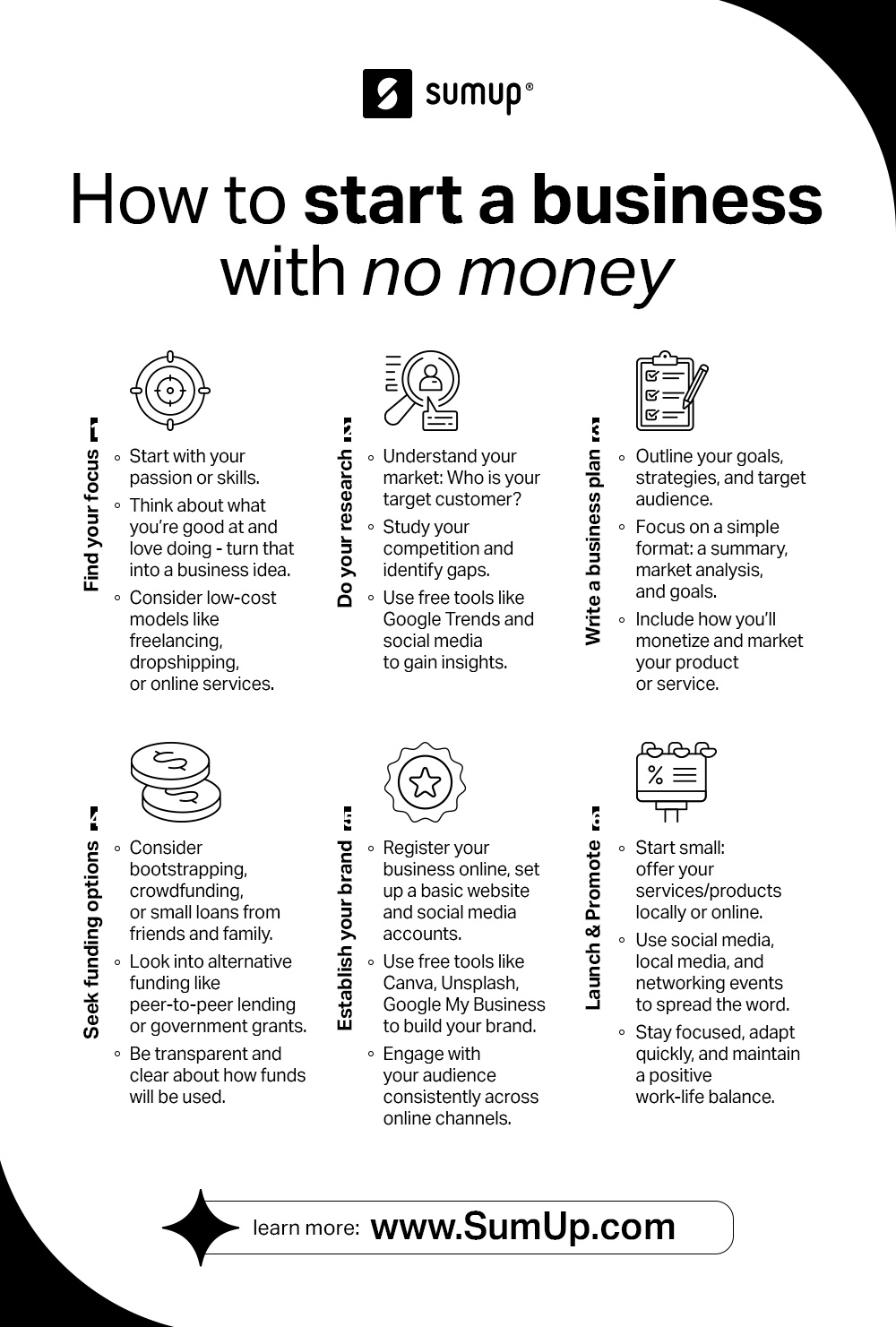
Credit: www.sumup.com
Networking And Collaboration
Building a small business starts with networking and collaboration. Connecting with others can lead to new ideas and resources. Sharing skills and knowledge helps everyone grow, even on a tight budget. Use local events or online groups to meet potential partners and customers.
Networking and collaboration play a crucial role in starting a small business with limited funds. They allow you to tap into resources, gain insights, and build relationships that can propel your venture forward. By connecting with others, you can share costs, exchange ideas, and create opportunities that you might not find on your own.Connecting With Local Entrepreneurs
Connecting with local entrepreneurs can open up a world of possibilities. Attend local meetups or workshops to engage with others who understand your journey. You might be surprised by how willing people are to share their experiences and advice. Consider joining community groups on social media or platforms like Meetup to find like-minded individuals. Sharing challenges and successes can foster a supportive environment where you all thrive. Have you thought about reaching out to someone whose business you admire? A simple coffee chat could lead to valuable insights or even a lasting partnership.Partnering With Other Small Businesses
Partnering with other small businesses can amplify your reach. Look for businesses that complement your offerings. For instance, a graphic designer could team up with a marketing consultant to provide clients with comprehensive solutions. Collaborative projects can help you share costs and cross-promote each other’s services. Think about hosting joint events or workshops to attract a larger audience. Have you assessed your local market to find potential partners? Strategic alliances can be a game changer, especially when budgets are tight.Joining Industry Groups And Events
Joining industry groups and attending events can expand your network significantly. Organizations often host events that bring together professionals in your field. These gatherings are perfect for making connections and learning about industry trends. Participating in online forums and webinars also keeps you informed and engaged without the cost of travel. Consider volunteering for events; it’s a great way to meet people and build your reputation. What skills or knowledge do you have that could benefit others in your industry? Sharing your expertise can lead to new contacts and opportunities. Embrace networking as a vital tool in your entrepreneurial journey. The relationships you build today can create pathways for growth tomorrow.Finding Creative Funding Options
Starting a small business with little money can be tough. Creative funding options can help. They allow you to gather resources without large loans. Explore different methods to find what works best for you.
Exploring Crowdfunding Opportunities
Crowdfunding is a popular way to raise money. You share your business idea online. People who like your idea can donate money. Platforms like Kickstarter and Indiegogo offer great options.
To succeed in crowdfunding, tell your story. Be clear about your goals. Offer rewards for different donation levels. This can encourage more people to support your project.
Applying For Small Business Grants
Grants provide free money for small businesses. Many organizations offer grants for new startups. Research local and national grants available in your area.
Write a strong application. Explain how your business will help the community. Highlight your unique ideas. A good proposal increases your chances of receiving a grant.
Starting With Personal Savings
Using personal savings is a straightforward option. It requires no outside help. Assess your current savings to see what you can invest.
Start small to minimize risk. Use your savings to cover initial costs. Focus on essentials first. This approach helps you grow your business steadily.

Credit: thinkmaverick.com
Tracking Expenses And Staying Frugal
Starting a small business with little money is tough. Tracking expenses helps you stay on top of your finances. Staying frugal keeps costs low. Small changes can make a big difference.
Monitoring Cash Flow
Cash flow is the money coming in and going out. Keep a close eye on your cash flow. Use simple tools like spreadsheets or apps. Regularly update your records. This helps you see where money is spent.
Identify patterns in your spending. This shows you what is necessary. Knowing when cash comes in helps you plan better. Do not let surprises catch you off guard.
Cutting Unnecessary Costs
Every expense matters. Review your spending regularly. Look for areas to cut costs. Cancel unused subscriptions. Negotiate better deals with suppliers.
Consider buying used equipment. It saves money. Use free or low-cost marketing strategies. Social media can promote your business for free.
Maximizing Budget Efficiency
Make every dollar count. Set a clear budget for all expenses. Stick to it as closely as possible. Prioritize essential spending over luxury items.
Track your budget weekly. Adjust as needed. Look for discounts and special offers. Small savings add up over time.
Frequently Asked Questions
How Can I Start A Business With No Money?
Starting a business with no money requires creativity and resourcefulness. Consider a service-based business that utilizes your skills. You can also explore drop shipping or affiliate marketing, which require minimal upfront investment. Leverage free online resources and social media to promote your business effectively.
What Are The Best Low-cost Business Ideas?
Some of the best low-cost business ideas include freelance writing, virtual assistance, pet sitting, and tutoring. These options require minimal investment and often rely on your existing skills. Additionally, consider digital products like e-books or online courses, which can be created with little to no cost.
How To Market A Small Business With No Budget?
To market a small business on a tight budget, utilize social media platforms effectively. Create engaging content that resonates with your target audience. Networking with local businesses and joining community events can also help. Don’t underestimate the power of word-of-mouth marketing and referrals from satisfied customers.
Is It Possible To Start A Business Part-time?
Yes, starting a business part-time is entirely feasible. This approach allows you to maintain your current job while building your business. It provides a safety net and gradual growth. Focus on time management and prioritize tasks to balance both responsibilities effectively.
Conclusion
Starting a small business with little money is possible. Focus on your strengths and interests. Create a solid plan that outlines your goals. Use free resources to learn and grow. Build a network of support from friends and local groups.
Stay committed, even when challenges arise. Remember, every successful business began with small steps. Take action today. Your idea could be the next big thing.
 How to Avoid Taxes As a Small Business Owner: Legal Strategies
 What is the Meaning of Small Business Entrepreneurship: Explained
 What to Do If a Small Business Scams You: Essential Steps