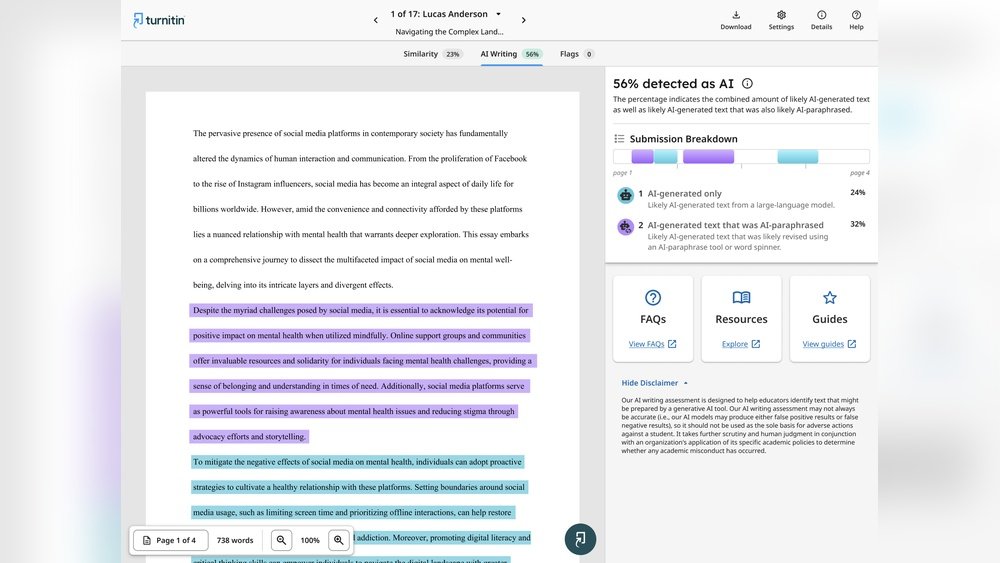
Are you wondering if Turnitin can spot AI-generated content in your papers? With the rise of AI writing tools, many students and educators are asking the same question: Does Turnitin check for AI?
The answer isn’t as simple as you might think. Understanding how Turnitin’s AI detection works—and what it means for your work—can help you navigate academic integrity with confidence. Keep reading to discover how Turnitin identifies AI writing, what the results really mean, and how you can use this knowledge to protect your academic reputation.
Turnitin’s Ai Detection Feature
Turnitin’s AI detection feature helps identify content created by artificial intelligence. This tool is part of Turnitin’s Similarity Report. It aims to assist educators in spotting AI-generated writing. The feature is not perfect and should be a starting point for further review.
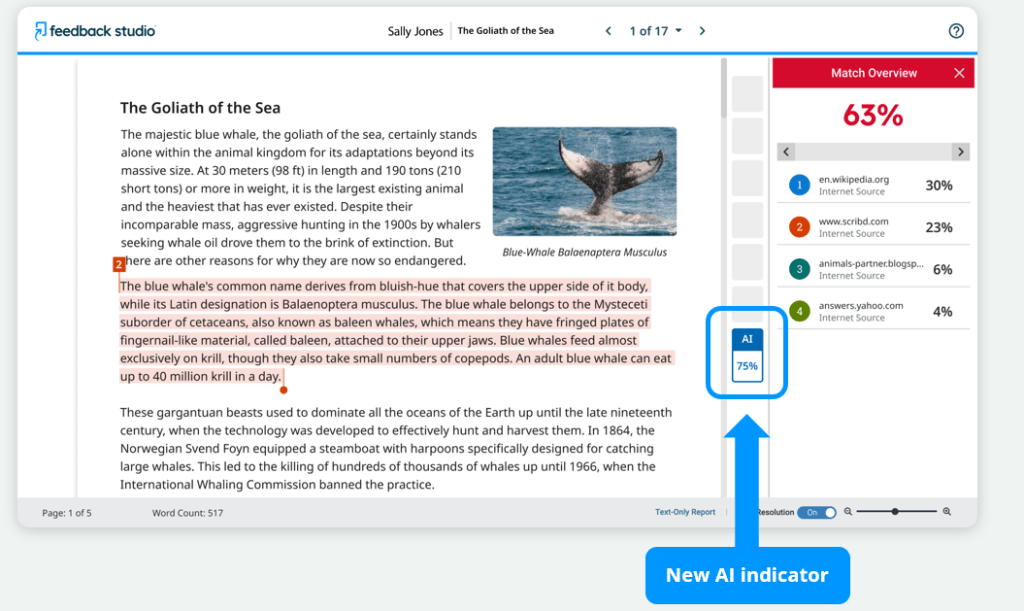
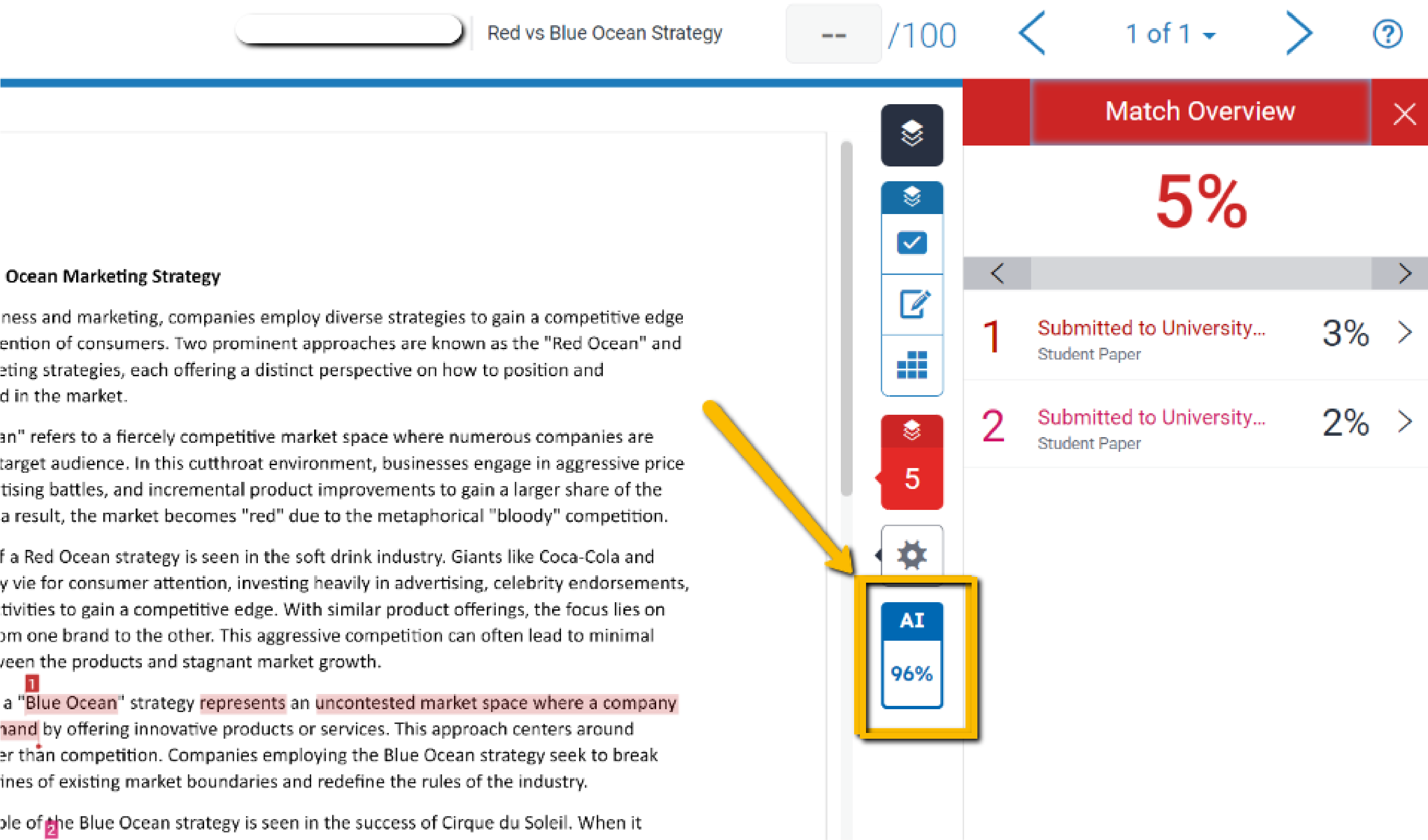
The system provides a likelihood score that shows how probable it is that AI wrote the text. It also highlights sections that may have been created or altered by AI. This helps teachers understand where AI tools might have influenced the writing.
How The Ai Detection Works
- Indicator Score: Turnitin gives a score indicating the chance the text is AI-generated.
- Highlighted Text: The tool marks parts of the document suspected to be written by AI.
- Paraphrased Content: It can detect text that AI tools have paraphrased or modified.
How To Use The Results
- Not Definitive Proof: The AI detection score is not absolute proof of misconduct.
- Guide for Discussion: Educators should use results to start conversations with students.
- False Positives: The tool can sometimes mark human writing as AI-generated.
- Missed Content: Some AI-written text may not be detected by the system.
How Ai Detection Scores Work
Understanding how AI detection scores work helps clarify Turnitin’s process.
These scores estimate the chance that a text is AI-generated.
Turnitin uses advanced algorithms to analyze writing patterns and language use.
The system compares the text to known AI writing features and styles.
Indicator Score
Turnitin assigns a percentage score to each submitted text.
This score reflects how likely the text was created by AI.
A higher score means a greater chance of AI involvement.
The score helps educators identify suspicious sections for review.
Highlighted Text
Turnitin highlights parts of the text it suspects are AI-written.
These highlights focus on unusual phrasing or unnatural sentence flow.
It can detect both direct AI output and heavily paraphrased content.
This feature guides instructors to specific areas needing attention.
Use Of Detection Scores
The AI detection score is only a tool, not final proof.
It should start conversations about writing authenticity.
False positives and misses can occur in the analysis.
Educators use these scores to support fair academic decisions.
Highlighted Ai-generated Text
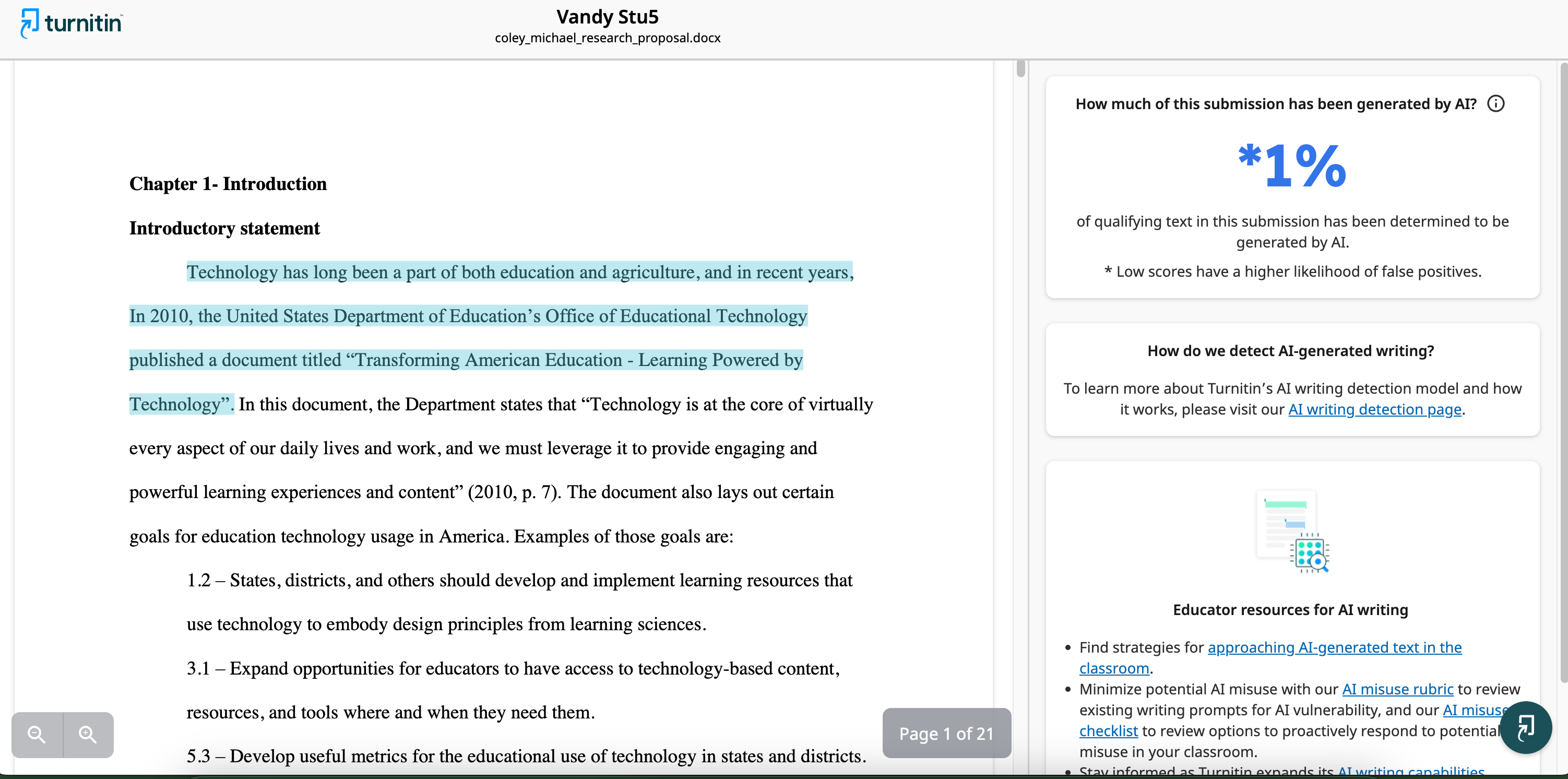
Highlighted AI-generated text is a key feature in Turnitin’s AI detection tool. It marks parts of a paper that likely come from AI writing software. This helps teachers and students see where AI might have been used.
Turnitin scans the document and assigns a score based on AI likelihood. Sections with higher chances are highlighted in the report. These highlights show exactly which sentences or phrases may be AI-generated.
The highlighted text often includes AI-rephrased content too. This means even if a student changes AI output slightly, Turnitin can still detect it. The tool focuses on patterns and writing style that match AI writing.
How Turnitin Highlights Ai-generated Text
Turnitin uses special algorithms to find AI writing traits. It looks for unusual word choices, sentence flow, and repetitive patterns. The system then highlights these parts in the submission report.
Each highlighted section is linked to a score. This score shows how likely the text is AI-generated. Teachers can review these highlights to understand the extent of AI use.
Benefits Of Highlighted Ai-generated Text
Highlighting helps spot AI use quickly. It guides educators in discussing AI and plagiarism. Students can also learn where their text may need more original work.
This feature promotes honest writing. It encourages students to use AI tools responsibly. The clear marks make it easier to spot copied or AI-made content.
Limitations Of Highlighted Ai Detection
Highlighting is not 100% accurate. Some human-written text may be marked by mistake. AI-generated writing can sometimes go undetected.
Teachers should use highlights as a guide, not final proof. They need to check the context before making decisions. This avoids unfair accusations based on the tool alone.
Credit: www.vanderbilt.edu
Accuracy And Limitations
Understanding the accuracy and limitations of Turnitin’s AI detection helps set realistic expectations. Turnitin uses AI detection as a tool, not a final judge. It gives educators clues about possible AI involvement in writing. The system is helpful but not flawless.
False positives can occur when human writing looks like AI-generated text. Some writing styles or common phrases may trigger the detector mistakenly. On the other hand, Turnitin might miss cleverly disguised AI content. Writers who edit AI text deeply can avoid detection.
This means Turnitin’s AI check should support, not replace, human judgment. Educators need to review results carefully. The tool highlights suspicious sections but does not guarantee proof of AI use.
How Accurate Is Turnitin’s Ai Detection?
Turnitin assigns a probability score showing how likely text is AI-generated. This score is based on patterns and language models typical of AI writing. The system highlights parts of the text that seem machine-written.
Accuracy varies by text type and complexity. Short or simple texts may confuse the detector. Longer texts with clear AI patterns are easier to flag.
Common Limitations Of Turnitin’s Ai Detection
The tool cannot detect all AI content perfectly. Paraphrased or heavily edited AI writing often escapes detection. False alarms happen when unusual but human writing triggers the system.
Turnitin’s database and algorithms update frequently but cannot keep pace with all AI advances. New AI models may produce text that looks human. This challenges detection accuracy.
Best Practices For Using Ai Detection Results
Use Turnitin’s AI detection as a starting point for further review. The score and highlights guide educators to check specific sections closely. Do not rely solely on the AI score to make decisions.
Combine AI detection with other methods like interviews or writing samples. Encourage transparency and discussion about AI use in assignments. This creates a fair and informed approach.
False Positives Explained
False positives occur when Turnitin flags text as AI-generated but it is not. This can confuse students and teachers. Understanding false positives helps avoid mistakes in judging work.
Turnitin uses patterns and language features to spot AI writing. Some human writing styles may look similar to AI output. This causes the system to mark them wrongly.
What Causes False Positives In Ai Detection?
Turnitin looks for uniform sentence structure and repeated phrases. Some students write very clearly or simply, which can match AI patterns. Also, use of common phrases or textbook language may trigger alerts.
How False Positives Affect Students
False positives can lead to unnecessary stress and confusion. Students may feel unfairly accused of cheating. Teachers might waste time reviewing work that is original. It is important to review flagged content carefully.
Ways To Minimize False Positives
Writing in a natural, personal style helps reduce false flags. Adding unique opinions and examples shows human thought. Avoid copying large blocks of text or using too formal language. Proofread to make your writing clear and varied.
Using Ai Detection Results Wisely
Using AI detection results wisely helps maintain fairness in academic work. Turnitin’s AI check is a tool, not a judge. Its results need careful interpretation. Educators and students should treat the findings as a starting point for conversations. This approach encourages honesty and learning rather than punishment.
AI detection tools can sometimes give false positives or miss AI-generated text. Relying solely on the detection score can lead to misunderstandings. It is important to combine these results with human judgment. This ensures a balanced and fair evaluation of the work.
Understanding The Ai Detection Score
Turnitin assigns a score showing the chance text is AI-generated. A high score does not always mean cheating. It only signals where to look closer. The score helps highlight suspicious parts but does not confirm misconduct.
Reviewing Highlighted Sections Carefully
The tool marks text that may be written by AI. These highlights can guide educators to review specific parts. Sometimes, normal writing styles or common phrases trigger the highlights. A close read helps decide if the text is original or not.
Using Results To Promote Learning
AI detection results can start discussions on proper use of technology. Educators can explain when and how AI tools may be used responsibly. Students learn to improve writing skills and understand academic integrity better.
Combining Ai Detection With Human Judgment
AI tools support but do not replace human evaluation. Teachers should consider context and student history. Asking for drafts or explanations adds clarity. This method avoids unfair penalties based only on software results.
Impact On Academic Integrity Policies
Academic integrity policies face new challenges due to AI writing tools. Schools must rethink rules to cover AI-generated content. These policies aim to keep learning fair and honest for all students.
Turnitin’s AI detection impacts how institutions enforce academic honesty. It helps identify work that may not be the student’s own. This pushes schools to update policies to include AI use guidelines.
Enhancing Policy Definitions
Academic policies now define AI-generated content clearly. Rules specify what counts as allowed and what is considered cheating. This clarity helps students understand expectations better.
Guiding Ethical Ai Use
Policies encourage responsible use of AI tools for learning. Students learn to use AI as a helper, not a shortcut. This supports skill development and honest work submission.
Supporting Educators’ Decisions
Turnitin’s AI reports offer clues, not final judgments. Educators use these reports to start conversations with students. This approach promotes fairness and learning opportunities.
Adapting Penalties And Consequences
Schools adjust consequences for misuse of AI-generated content. Penalties reflect the intent and severity of the issue. This flexibility helps maintain trust and discipline.
Turnitin’s Role In Ai And Plagiarism
Turnitin plays an important role in identifying AI-generated content and plagiarism. It helps educators and institutions maintain academic honesty. Turnitin’s technology compares submitted work against a large database of sources. This includes published papers, websites, and previous student submissions.
With the rise of AI writing tools, Turnitin has added AI detection features. These tools scan for patterns typical of AI-generated text. They flag content that may not be original or human-written. This adds a layer of protection against misuse of AI in assignments.
How Turnitin Detects Ai-generated Text
Turnitin uses advanced algorithms to analyze writing style and structure. It looks for unusual phrasing and repetitive patterns common in AI writing. The system then assigns an AI indicator score. This score estimates the chance that the text was created by AI.
Turnitin also highlights specific sections that appear AI-generated. This helps educators focus on parts needing review. The tool is not perfect but serves as a helpful guide.
Turnitin’s Role In Preventing Plagiarism
Turnitin compares submitted work to billions of sources worldwide. It detects copied or closely paraphrased text. This reduces plagiarism and encourages original work. The software creates a similarity report for teachers. The report shows matching content and the source links.
Teachers use this report to check if students followed citation rules. Turnitin supports fair grading and academic integrity. It discourages dishonest practices by making plagiarism easier to spot.
Limitations Of Turnitin’s Ai Detection
Turnitin’s AI detection is not foolproof. It can produce false positives by flagging human-written text. Sometimes, AI-generated content may go undetected. The tool is best used as a starting point for discussion. Educators should review flagged work carefully before making decisions.
Turnitin’s AI detection helps raise awareness about responsible AI use. It encourages students to create authentic and original work. The system supports academic honesty, but human judgment remains essential.
Tips To Avoid Ai Detection Flags
Detecting AI-generated content is becoming common in academic tools like Turnitin. Avoiding AI detection flags helps keep your writing clear and original. This section shares simple tips to reduce AI detection risks.
These tips focus on writing naturally and adding your own thoughts. The goal is to create content that sounds like a human wrote it. Follow these easy steps to improve your work and avoid AI flags.
Rewrite Ai-generated Text In Your Own Words
Use AI content only as a base. Change the words and structure completely. Make sentences shorter and clearer. This makes the text unique and less likely to be flagged.
Use Simple And Natural Language
Avoid very formal or robotic phrases. Write like you speak every day. Use common words and short sentences. This style feels more human and lowers AI detection chances.
Add Personal Insights And Reflections
Include your own opinions and ideas. Explain why you think a certain way. Personal touch shows originality and makes AI detection harder.
Break Up Long Sentences And Paragraphs
Split long sentences into smaller ones. Use shorter paragraphs to improve readability. This makes your writing clear and less like AI-generated text.
Write In Active Voice
Use active voice instead of passive voice. Active sentences sound direct and lively. This style is typical of human writing and avoids AI detection triggers.
Credit: digitaleducation.lincoln.ac.uk
Future Of Ai Detection In Education
The future of AI detection in education looks promising and necessary. As AI tools become common, schools need ways to ensure original student work. Detection technology will evolve to keep pace with AI advancements.
New methods will combine AI detection with human judgment. This approach helps reduce false alarms and improves accuracy. Educators will get better tools to identify AI-generated content.
Technology will focus on understanding writing style and context. It will look for unnatural patterns and inconsistencies. This will make detection more precise and fair for students.
Advanced Ai Detection Algorithms
Detection algorithms will learn to spot subtle AI writing clues. They will analyze grammar, tone, and structure deeply. These algorithms will adapt quickly as AI writing improves.
Integration With Learning Platforms
AI detection will integrate directly into popular learning systems. This allows real-time checking during assignments. Teachers and students will receive immediate feedback on originality.
Focus On Ethical Ai Use
Future detection tools will promote ethical AI use in education. They will guide students on how to use AI responsibly. This supports learning while preventing misuse.
Credit: www.lebow.drexel.edu
Frequently Asked Questions
How Can I Avoid Ai Detection By Turnitin?
Avoid AI detection by Turnitin by thoroughly rewriting AI-generated text, adding personal insights, using active voice, and varying sentence length. Ensure originality and maintain natural, human-like writing style to pass detection effectively.
Does Turnitin Detect Ai-generated Content In Essays?
Turnitin can detect AI-written text but may not be 100% accurate every time.
How Reliable Is Turnitin’s Ai Detection Feature?
The AI detection tool gives a probability score, not a guaranteed result.
Can Turnitin Highlight Specific Ai-written Sentences?
Yes, Turnitin highlights parts of the text likely created by AI.
Does Turnitin Confuse Ai Content With Human Writing?
Sometimes Turnitin may wrongly flag human writing as AI-generated or miss AI content.
Is Turnitin’s Ai Check Part Of The Plagiarism Report?
Turnitin integrates AI detection within its Similarity Report for a full review.
Can Students Bypass Turnitin’s Ai Detection Easily?
Rewriting AI content in a personal style reduces chances of detection.
Does Turnitin Penalize Students For Ai-detected Text?
Turnitin’s AI detection is a guide; penalties depend on school policies.
How Do Educators Use Turnitin’s Ai Detection Results?
Teachers use the results to discuss responsible AI use, not just to punish.
Will Turnitin Detect Ai Tools Like Chatgpt Or Grammarly?
Turnitin aims to detect text generated by popular AI writing tools.
Conclusion
Turnitin now includes AI detection to help spot AI-written text. It gives a score showing how likely text is AI-generated. This tool is not perfect and can miss or wrongly flag content. Teachers use it to start talks about honest work, not to punish right away.
Students should focus on learning and writing in their own words. Using AI wisely and understanding its limits is important for everyone.