Piston Recipe: The Ultimate Guide To Making Pistons In Minecraft
If you’ve ever played Minecraft, you have likely used or seen a piston in action. Pistons are vital for building machines, hidden doors, traps, and even farms. But for many players, especially beginners, making a piston can be confusing. What materials do you need? How do you get them? Why won’t your piston work the way you want? This guide will answer all those questions and more, helping you master the piston recipe and use pistons like a pro.
Whether you are new to Minecraft or a seasoned player looking to refresh your memory, this article will walk you through every detail of pistons. You’ll find crafting instructions, practical tips, redstone basics, advanced designs, and even troubleshooting advice. By the end, you’ll not only know how to craft a piston but also how to use it effectively in your worlds.
What Is A Piston In Minecraft?
A piston is a block that can push other blocks, players, or mobs when powered by redstone. Pistons are used to move blocks, open doors, create secret entrances, and automate many processes in the game. There are two main types:
- Regular piston: Pushes blocks in front of it when powered.
- Sticky piston: Pushes and pulls blocks using a slimeball.
Understanding the difference is important for many builds. Sticky pistons can pull blocks back, while regular pistons only push.
Why Learn The Piston Recipe?
Many Minecraft mechanisms require pistons. Without them, you can’t build secret doors, farms that harvest themselves, or many types of traps. Knowing the piston recipe is a key skill for creative and survival players. Pistons are often the first “technical” block a player learns to craft.
Ingredients Needed For The Piston Recipe
To craft a regular piston, you need the following items:
- 3 Wooden planks (any type)
- 4 Cobblestone
- 1 Iron ingot
- 1 Redstone dust
Let’s break down how to get each item, especially if you are new to the game.
How To Gather Each Ingredient
Wooden Planks
- Chop any tree to collect wood logs.
- Open the crafting menu and place logs to make planks.
- Any wood type works (oak, birch, spruce, etc. ).
Cobblestone
- Use a pickaxe to mine stone blocks underground.
- Stone drops cobblestone after mining.
Iron Ingot
- Mine iron ore with a stone pickaxe or better.
- Smelt iron ore in a furnace to make an ingot.
Redstone Dust
- Mine redstone ore deep underground (levels 1-16).
- Use an iron pickaxe to collect dust.
Tip: Many new players forget you need an iron pickaxe for redstone.
Crafting The Piston: Step-by-step
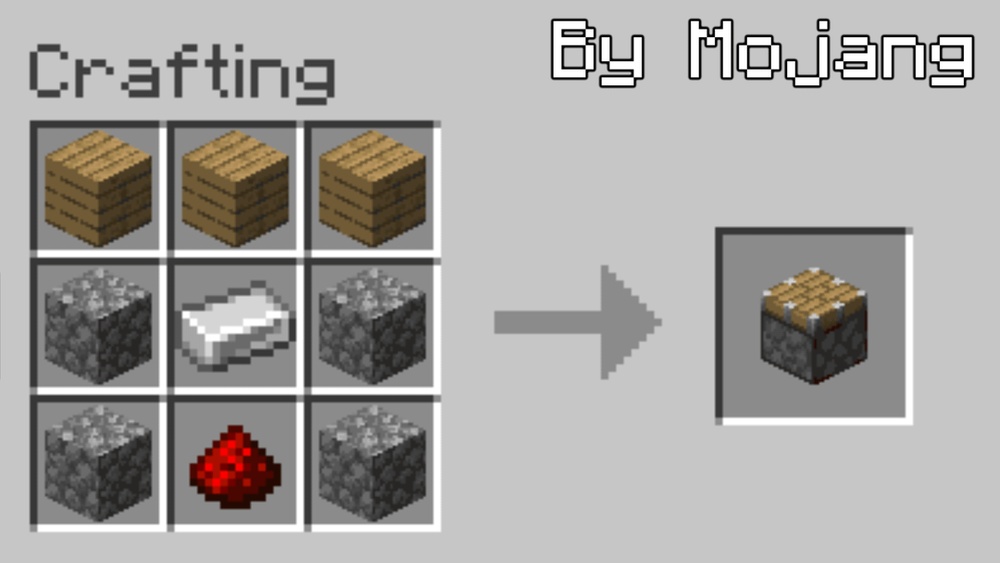
Making a piston is simple once you have the ingredients. Use a crafting table (3×3 grid), not your inventory’s 2×2 grid.
- Open the crafting table.
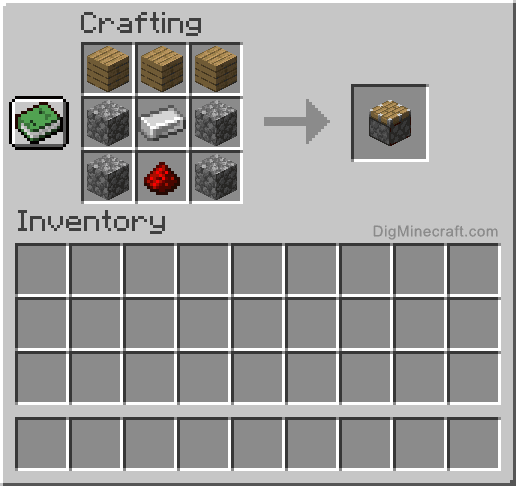
- Place wooden planks in the top row (three slots).
- Place cobblestone on the left and right sides of the middle and bottom rows (four slots).
- Put the iron ingot in the center slot.
- Place redstone dust in the bottom middle slot.
Your crafting table should look like this:
| Slot | Item |
|---|---|
| Top Left | Wooden Plank |
| Top Center | Wooden Plank |
| Top Right | Wooden Plank |
| Middle Left | Cobblestone |
| Middle Center | Iron Ingot |
| Middle Right | Cobblestone |
| Bottom Left | Cobblestone |
| Bottom Center | Redstone Dust |
| Bottom Right | Cobblestone |
Once the items are in the right spots, a piston will appear as the result. Drag it into your inventory.
Non-obvious insight: You can mix any type of wooden plank (even different colors) in the recipe.

Credit: www.reddit.com
Sticky Piston: The Upgrade
A sticky piston is almost the same as a regular piston, but it can pull blocks back as well as push them. To craft it:
- Craft a regular piston (as above).
- Collect a slimeball (dropped by slimes in swamps).
- Open the crafting table again.
- Place the piston and slimeball anywhere in the grid.
This creates a sticky piston. The position in the grid does not matter for this upgrade.
Practical tip: If you don’t have a swamp nearby, finding a slimeball can be hard. Look for full moon nights in swamps for more slimes.
Common Mistakes When Crafting Pistons
Even experienced players make small errors when crafting pistons. Here’s what to watch for:
- Using the wrong pickaxe for redstone or iron (must be stone or iron).
- Placing ingredients in the wrong slots. The shape matters.
- Forgetting to use a crafting table (2×2 grid won’t work).
- Using logs instead of planks.
- Trying to craft sticky pistons directly without making a regular piston first.
If the piston doesn’t appear in the crafting result, double-check your grid.
Pistons And Redstone: How They Work
Pistons need redstone power to move. This can be from:
- Redstone dust lines
- Levers or buttons
- Redstone torches
- Pressure plates
When powered, the piston’s “head” pushes forward one block. When power is removed, the head retracts. Only sticky pistons pull blocks back.
What Blocks Can Pistons Move?
Not all blocks can be moved by pistons. Here’s a quick guide:
| Block Type | Can Be Moved? |
|---|---|
| Stone, wood, dirt | Yes |
| Chests, furnaces | No |
| Glass | Yes |
| Obsidian, bedrock | No |
| Blocks with tile entities (e.g., beacons) | No |
Non-obvious insight: Pistons can break some blocks if pushed into a wall, like certain plants or torches.
How Many Blocks Can A Piston Push?
A piston can push up to 12 blocks in a straight line. If you try to push a 13th block, the piston will not move at all.
Pro tip: If your machine isn’t working, count the number of blocks in front of the piston.
Advanced Piston Uses
Once you know the piston recipe, you can build amazing things. Here are some popular uses:
- Secret doors: Hide entrances behind walls.
- Automatic farms: Harvest crops by pushing them.
- Traps: Drop mobs or players into holes.
- Block swappers: Swap floor or wall blocks at the press of a button.
- Elevators: Move players or items vertically.
- Drawbridges: Create retractable bridges over water or lava.
- Hidden stairs: Make staircases appear or disappear.
- Chunk loaders: Move blocks to keep game chunks active.
Each project uses pistons in creative ways. Watching online tutorials can give you many ideas.
Building Your First Piston Door
A simple piston door is a great beginner project. Here’s how to make a 2×2 hidden door in a wall.
Materials Needed
- 4 sticky pistons
- 12 blocks for the wall (any type)
- 2 pressure plates or levers
- Redstone dust
Steps
- Build a two-block wide, three-block tall doorway in your wall.
- Place two sticky pistons on each side of the doorway, facing inward.
- Place wall blocks in front of the pistons to fill the doorway.
- Run redstone dust behind the pistons to connect them.
- Put pressure plates on the floor or levers on the wall to power the redstone.
When you activate the plates or levers, the door opens. Step off, and it closes.
Tip: Hide the redstone with blocks for a secret look.
How To Use Pistons In Farms
Pistons can harvest sugar cane, bamboo, and other crops. For example, set up pistons to push crops when a redstone signal is triggered (like when the crop grows tall enough to activate an observer).
- Place pistons beside the crop.
- Use an observer to detect growth.
- Connect with redstone dust.
- When triggered, pistons harvest crops automatically.
This method saves you time and increases efficiency.
Piston Trap Ideas
Want to protect your base? Pistons make effective traps.
- Pitfall trap: Use pistons to remove the floor under trespassers, dropping them into a pit.
- Arrow trap: Move blocks to reveal dispensers that shoot arrows.
- Wall crusher: Push blocks from both sides to crush anything in the middle.
Always test traps to avoid harming yourself by accident.
Tips For Using Pistons In Redstone Machines
- Timing matters: Use repeaters to control when pistons activate.
- Avoid block updates: Some blocks only move if updated. Learn how to use block updates for advanced machines.
- Stacking pistons: You can chain pistons for bigger builds, but remember the 12-block push limit.
Advanced insight: “Quasi-connectivity” means some pistons activate even if redstone isn’t directly touching them. This can be confusing but useful for compact circuits.
Sticky Vs Regular Pistons: When To Use Each
| Feature | Regular Piston | Sticky Piston |
|---|---|---|
| Push block | Yes | Yes |
| Pull block back | No | Yes |
| Crafting cost | Cheaper | Requires slimeball |
| Used for doors | Sometimes | Best choice |
| Available early game | Yes | Maybe |
Sticky pistons are best for doors and machines needing both push and pull. Regular pistons are fine for simple push actions.
Troubleshooting Piston Problems
Even expert builders face piston issues. Here’s how to solve the most common ones:
- Piston won’t move: Check if the block is immovable (e.g., chest, obsidian).
- Piston doesn’t activate: Make sure redstone is connected and powered.
- Piston doesn’t retract block: Only sticky pistons pull blocks back.
- Piston pushes too many blocks: Remember the 12-block limit.
- Redstone doesn’t reach piston: Repeaters can extend the signal.
If your piston is acting strangely, break and replace it to reset.
Gathering Materials Efficiently
If you need lots of pistons, gathering resources fast is important.
- Cobblestone: Mine in caves or dig a quarry.
- Wooden planks: Chop trees with an axe and replant saplings.
- Iron ingots: Explore caves or strip mine at Y-level 16.
- Redstone dust: Deep mining (Y-level 11) gives both iron and redstone.
Efficiency tip: Build a simple iron or redstone farm in late game.
Piston Recipe In Different Minecraft Editions
The piston recipe is the same in Java, Bedrock, and Education Edition. But some details change:
- In Bedrock, pistons can move more block types.
- Controls for crafting may feel different on mobile vs PC.
- Education Edition adds chemistry but keeps pistons the same.
Always check the edition if playing on a new platform.
Automating With Pistons: What’s Possible?
Pistons are the heart of many automation builds:
- Auto-harvesters: For sugar cane, bamboo, and melon farms.
- Block breakers: For mining machines.
- Redstone clocks: Timed machines.
- Flying machines: Pistons and slime blocks can move themselves and other blocks.
Creative tip: Combine pistons with observers for “smart” machines.
Pistons In Multiplayer And Servers
On servers, pistons can sometimes be limited to prevent lag or cheating. If your piston machine doesn’t work:
- Ask admins if pistons are disabled.
- Build smaller machines to reduce lag.
- Some servers ban flying machines but allow other piston uses.
Fact: Some technical servers use thousands of pistons to build huge machines.
Pistons And Game Updates
Over time, Minecraft has changed how pistons work. For example:
- Before 1.7, pistons could cause “ghost blocks.”
- In 1.13, many block behaviors were updated.
- In 1.17, powdered snow added new piston interactions.
Check the Minecraft Wiki for the latest changes if you notice something different after updates.
Real-life Applications And Learning
Learning about pistons in Minecraft teaches basics of automation and engineering. Many young players use pistons as an introduction to logic, circuits, and even programming.
Fun fact: Real pistons in engines push and pull, just like in Minecraft.
Modded Pistons And Variations
Mods add new piston types, such as:
- Super pistons: Push more than 12 blocks.
- Rotating pistons: Spin blocks instead of just pushing.
- Sticky pistons with honey: Vanilla now supports honey blocks in creative ways.
If you use mods, always check recipes and block limits.
Credit: www.digminecraft.com
Piston Recipe For Speedrunners
Speedrunners sometimes use pistons for fast nether portals or traps. If you want to build quickly:
- Keep resources handy.
- Practice the recipe until you can craft without thinking.
- Use hotkeys to move items into the crafting table fast.
Advanced tip: Some runners use macro tools, but this can be risky on servers.
Piston Recipe For Builders
For builders, pistons are less about automation and more about hidden mechanics. They help create:
- Moving walls
- Dynamic floors
- Animated statues
- Light shows
Experiment with lighting and block types to make your builds stand out.

Credit: www.reddit.com
Creative Ways To Use Pistons
Here are some creative uses for pistons:
- Moving art: Push colored blocks to create changing patterns.
- Secret safe: Hide your valuables behind a piston-powered wall.
- Jump pads: Use slime blocks with pistons to launch players.
- Maze traps: Change the maze layout as players walk through.
Inspirational tip: Watch YouTube tutorials for more piston ideas.
Myths And Misunderstandings About Pistons
Many new players believe:
- Pistons can break bedrock (they can’t).
- Sticky pistons can pull any block (some blocks can’t be moved).
- Pistons can push players through walls (not reliably).
Always test piston builds in a safe area before adding to your main world.
Final Thoughts
Mastering the piston recipe opens up a world of possibilities in Minecraft. From simple doors to giant machines, pistons are the backbone of redstone engineering. Start by gathering basic resources, craft your first piston, and practice simple builds. As you gain skill, you’ll discover more advanced uses and develop your own creations.
Pistons are not just for experts—any player can learn to use them with patience and creativity. Keep experimenting, learn from mistakes, and your Minecraft worlds will become more dynamic and fun.
For more technical details and updates, you can visit the official Minecraft Wiki.
Frequently Asked Questions
What Is The Piston Recipe In Minecraft?
To craft a piston, place 3 wooden planks in the top row, 4 cobblestone in the sides and bottom, 1 iron ingot in the center, and 1 redstone dust in the bottom middle slot of a crafting table.
What Is The Difference Between A Piston And A Sticky Piston?
A piston only pushes blocks when powered. A sticky piston can both push and pull blocks because it has a slimeball attached.
Can Pistons Move All Blocks In Minecraft?
No, pistons can’t move blocks like chests, furnaces, obsidian, or bedrock. Most solid blocks can be moved, but not blocks with inventories or special properties.
Why Isn’t My Piston Working?
Common reasons include: not enough redstone power, using the wrong block type, exceeding the 12-block push limit, or using a regular piston when you need a sticky piston.
How Do I Get Slimeballs For Sticky Pistons?
Slimeballs drop from slimes, which spawn in swamps at night or in slime chunks underground. Killing slimes gives slimeballs for crafting sticky pistons.