Minecraft is more than just mining and building. For many players, farming is the key to survival, progress, and creative expression. Whether you’re playing Survival or Creative, knowing how to make efficient farms can change your whole experience. Farming gives you food, resources, and even rare items. But Minecraft farming is not just about planting crops. It includes animals, automation, and clever designs. Many beginners see farming as simple, but the details matter. Learning the best methods can save you hours and unlock new possibilities in the game.
This guide will cover everything you need to know about Minecraft farming. You’ll learn about basic crops, animal breeding, advanced redstone automation, and even unusual farms for mobs and rare resources. By the end, you’ll see why farming is one of the most important—and interesting—parts of Minecraft.
Why Farming Matters In Minecraft
Farming is essential if you want to survive and thrive. Food is the main reason. Hunger slows you down and stops you from healing. Reliable farms mean you never have to worry about running out. But farming goes further:
- Renewable resources: Many materials, like wool, leather, and paper, come from farms.
- Trading: Villagers often trade items grown on farms for emeralds and other goods.
- XP and rare drops: Some advanced farms give you experience points and items you can’t get easily by hand.
- Building materials: Plants like bamboo and cactus are great for building and decoration.
Many players ignore farming at first, but soon realize that it makes everything else in the game easier.
The Basics: Crop Farming
Farming in Minecraft usually starts with crops. These are plants you grow for food or materials. The most common are wheat, carrots, potatoes, and beetroot. Each has its own uses, growth speed, and best ways to farm.
Key Crop Types
- Wheat: Used for bread, breeding animals, and cakes. Grows in 4–8 stages.
- Carrots: Eaten raw or used for breeding pigs and rabbits.
- Potatoes: Can be eaten or baked for better food value.
- Beetroot: Less useful for food, but good for breeding pigs and making red dye.
- Pumpkins and melons: Grow as blocks beside their stems. Used for food, trading, and crafting.
- Sugar cane: Grows next to water. Used for paper and sugar.
- Bamboo: Grows quickly, used for scaffolding, sticks, and fuel.
- Cactus: Used for dye and XP farms, destroys items it touches.
- Nether wart: Only grows in the Nether on soul sand, used in potion brewing.
- Sweet berries and glow berries: Provide food and decoration.
How To Start A Simple Crop Farm
- Find seeds: Break grass for wheat seeds, dig up carrots or potatoes from villages, or find beetroot seeds in chests.
- Prepare soil: Use a hoe on dirt or grass to make farmland.
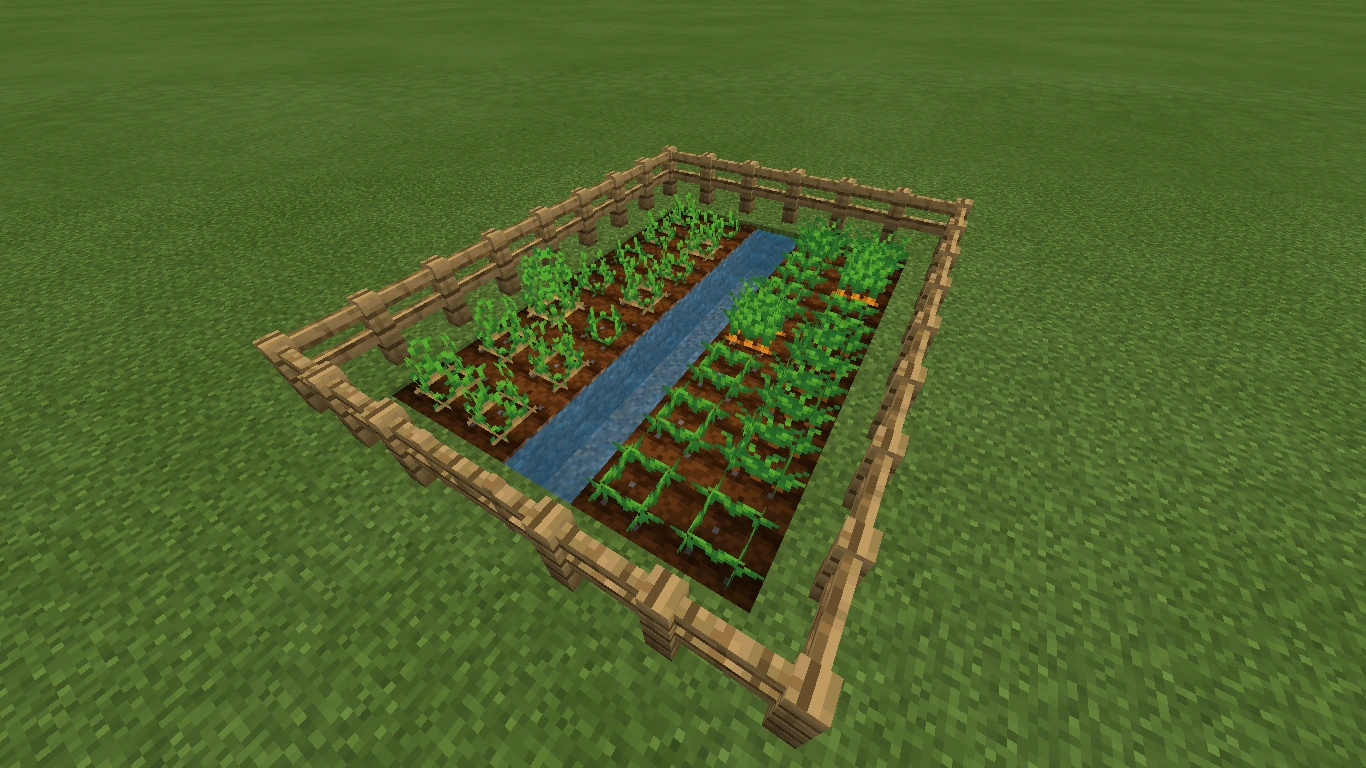
- Water: Each farmland block needs water within 4 blocks to stay wet and grow faster.
- Plant seeds: Right-click the farmland with seeds or crops.
- Light: Crops need a light level of 9 or higher to grow. Use torches if farming underground.
- Wait and harvest: Crops grow in stages. Break them when ready and replant.
Growth Rates And Efficiency
Some crops grow faster than others. For example, wheat takes about 60 minutes to fully grow, while carrots and potatoes are a bit faster. Using bone meal speeds up growth instantly. For the best results, keep your farm well-lit and near water.
Common Mistakes
- Not using water: Dry farmland grows crops much slower.
- Planting in straight lines: A “checkerboard” pattern with water and crops is more space-efficient.
- Forgetting light: Crops won’t grow in the dark.
Animal Farming
Animals are just as important as crops. They give you meat, leather, wool, eggs, milk, and more. Each animal has its own needs and best practices for farming.
Key Animals To Farm
- Cows: Give beef, leather, and milk.
- Sheep: Provide wool and mutton.
- Pigs: Good for porkchops.
- Chickens: Drop eggs, feathers, and chicken.
- Rabbits: Drop rabbit meat, hides, and feet (rare).
- Bees: Give honey and honeycomb.
- Horses, llamas, and other mobs: Useful for transport, but less for farming.
How To Start An Animal Farm
- Build a pen: Use fences or walls so animals don’t escape.
- Find animals: Lure them with their favorite food. Wheat for cows and sheep, carrots for pigs, seeds for chickens.
- Breed animals: Feed two animals of the same type to make a baby.
- Expand your herd: Wait for babies to grow and repeat breeding.
Tips For Animal Farming
- Keep animals in separate pens to avoid crowding.
- Use carpet on fences to jump in and out easily.
- Kill adults only when you have enough for breeding.
- Shear sheep for wool instead of killing them.
Efficiency And Automation
You can make automatic animal farms using water currents, trapdoors, and even redstone devices. For example, a chicken cooker uses hoppers to collect eggs and dispensers to hatch chicks, then cooks them automatically.
Mistakes To Avoid
- Overcrowding: Too many animals in one space can cause lag.
- Forgetting to breed: Farms won’t grow if you don’t keep breeding adults.
- Mixing animals: Keep species separate for easier management.
Advanced Crop Farms
Once you master basics, you can automate your farms. Automation saves time and gives you resources even when you’re busy mining or building.
Redstone-powered Farms
Redstone is the wiring system in Minecraft. It lets you build machines that plant, harvest, and collect crops for you.
Example: Automatic Wheat Farm
- Use villagers as farmers. Give them a place to work and they’ll plant and harvest crops.
- Use hoppers and minecarts to collect dropped items and move them to chests.
- Add water streams to push harvested crops into a collection point.
Example: Sugar Cane Or Bamboo Farm
- Place sugar cane or bamboo next to water and use pistons to break them when they grow.
- Use observers to detect growth and trigger pistons.
- Items fall onto hoppers or into water streams for collection.
Pros And Cons Of Automation
Automated farms are efficient but can be resource-intensive and require more space. They’re great for players who want to focus on other parts of the game.
Two Useful Farm Designs
| Farm Type | Automation Level | Best For | Resource Cost |
|---|---|---|---|
| Manual Wheat Farm | None | Early Game | Low |
| Villager Auto Farm | High | Mid/Late Game | Medium–High |
| Redstone Sugar Cane | Medium | Paper/Emeralds | Medium |
Common Mistakes In Advanced Farming
- Not enough hoppers: Items can despawn if not collected quickly.
- Overcomplicating designs: Simple farms are often just as effective.
- Not lighting up farms: Mob spawns can ruin redstone machines.
Credit: minecraft.fandom.com
Unusual And Mob Farms
Farming in Minecraft goes beyond plants and animals. You can farm mobs for drops, experience, and rare items.
Types Of Mob Farms
- Passive mob farms: For cows, sheep, pigs, and chickens. Usually open-air grass platforms.
- Hostile mob farms: For zombies, skeletons, creepers, spiders, and more. Use darkness and water to funnel mobs into a trap.
- Spawner farms: Use found mob spawners (usually in dungeons) to create focused XP and drop farms.
- Iron golem farms: Use villagers and beds to spawn golems, which drop iron ingots.
- Villager breeder farms: Auto-breed villagers for trading or iron farms.
Key Mob Drops And Uses
- Bones: Bone meal for crops
- Arrows: Combat
- Gunpowder: TNT and fireworks
- String: Bows, fishing rods, wool
- Iron ingots: Tools, anvil, hoppers
Example: Simple Hostile Mob Farm
- Build a dark room high above the ground.
- Mobs spawn and walk or fall into water channels.
- Water pushes them to a drop or a killing chamber.
- Collect drops with hoppers.
Risks And Tips
- Mob farms can be dangerous—light up your base to avoid unwanted spawns.
- Farms high in the sky or far from other spawnable areas work best.
- Some farms require AFK time (away from keyboard) for best results.
Specialty Farms And Rare Resources
Some resources in Minecraft need special farms. These include honey, kelp, mushrooms, sea pickles, chorus fruit, and more.
Specialty Farms Overview
| Resource | How to Farm | Uses |
|---|---|---|
| Honey | Beehives, flowers, bottles | Food, blocks, sugar |
| Kelp | Underwater farms, pistons | Food, fuel |
| Mushrooms | Dark rooms, mycelium | Soup, stew, blocks |
| Chorus fruit | End stone in the End | Popped chorus, blocks |
| Sea pickles | Coral reefs, bone meal | Light, decoration |
Two Non-obvious Insights
- Mushroom farming works best on mycelium or podzol. These blocks let mushrooms grow even in higher light, making your farm safer from mobs.
- Bee farming requires flowers, but the type and arrangement of flowers can affect honey production speed. Placing different flower types can attract bees more reliably.
How To Build A Simple Bee Farm
- Place beehives or bee nests near crops and flowers.
- Use campfires under hives to collect honey safely.
- Breed bees with flowers to expand your farm.
Tips For Specialty Farming
- Always use silk touch tools for breaking beehives or spawners.
- Kelp grows fastest in warm oceans and is a great fuel source.
- Chorus fruit can only be grown in the End dimension.

Credit: www.ign.com
Automating Your Farms
Automation is a big part of Minecraft farming. It allows you to collect resources with less effort. There are many ways to automate, from simple water flows to complex redstone machines.
Simple Automation Methods
- Use water buckets to harvest large areas of wheat or potatoes.
- Place hoppers under animals or crop drops to collect automatically.
- Use observers and pistons to detect growth and harvest instantly.
Advanced Automation
Some players build full-scale farms that handle thousands of items per hour. This often involves:
- Sorting systems: Using item filters and chests to organize drops.
- Zero-tick farms: For rapid crop growth (note: fixed or limited in new versions).
- Villager trading halls: Automated setups where villagers restock and trade efficiently.
Automation Comparison
| Automation Type | Complexity | Resources Needed | Output Per Hour |
|---|---|---|---|
| Manual Harvest | Low | Minimal | 50–200 items |
| Simple Water Harvest | Medium | Water, redstone | 500–1000 items |
| Full Redstone Automation | High | Pistons, hoppers, observers | 1000+ items |
When To Automate
Automate when you need large quantities or want to save time. For example, if you trade a lot with villagers, an automated carrot or potato farm will help you earn more emeralds.
Villager Farming And Trading
Villagers are a powerful tool for farming. They can plant and harvest crops, breed animals, and trade valuable items.
How Villager Farms Work
- Farmer villagers: Plant and harvest crops in a fenced area.
- Trading: Exchange crops, paper, and other items for emeralds and gear.
- Breeding: Villagers need beds and food to multiply.
Setting Up A Villager Farm
- Build a safe area with beds and workstations.
- Bring at least two villagers to start.
- Supply crops (bread, carrots, potatoes) to encourage breeding.
- Assign a composter to make a farmer.
- Let them work and collect the crops they drop.
Tips For Villager Trading
- Trade crops for emeralds and buy valuable items.
- Level up villagers for better trades.
- Protect villagers from zombies and raids.
Two Insights For Advanced Villager Farming
- Villager pathfinding: Villagers need open space and direct paths to workstations. Barriers or water can confuse them and slow farming.
- Crops and beds: More beds encourage breeding, but you need enough crops for food, or villagers will stop.
Redstone, Hoppers, And Water: Making Farms Work
Redstone, hoppers, and water are the key components of automated farms.
Redstone Basics
- Redstone dust carries power like wires.
- Repeaters and comparators control timing and direction.
- Pistons move blocks; observers detect changes.
Hopper Usage
- Hoppers move items from one container to another.
- Place under animals or crops to collect drops.
- Link to chests for storage.
Water Mechanics
- Water flows up to 8 blocks from the source.
- Can push items or mobs into collection areas.
- Used for both crop harvesting and mob moving.
Combining Systems
For example, a sugar cane farm might use observers to detect growth, pistons to break the cane, and water to move the drops to hoppers.
Common Redstone Mistakes
- Power lines crossing or looping, causing glitches.
- Not enough power for pistons or dispensers.
- Items getting stuck on blocks or missing the collection area.
Designing An Efficient Farm: Layout And Lighting
A good farm is more than just functional. It should be efficient, safe, and fit your world’s style.
Layout Tips
- Use rows for wheat, potatoes, and carrots.
- For pumpkins and melons, leave empty spaces for stems to grow onto.
- Build multi-level farms for space efficiency.
Lighting
- Use torches, glowstone, or lanterns to keep crops growing at night.
- Redstone lamps can light and automate at the same time.
- Keep animal pens well-lit to avoid hostile mobs.
Crop Rotation And Mixed Farms
Mixing crops can help with aesthetics and efficient harvesting. For example, alternate wheat and carrots for variety and easy replanting.
Protection
- Fence farms to keep out animals and mobs.
- Use gates or carpets for easy access.
Common Farming Challenges And Solutions
Every Minecraft farmer faces problems. Here are common issues and how to solve them.
Animals Escaping
Animals can glitch through fences or escape if you open gates. Use double fences or walls, and carpets for your entrance.
Crop Trampling
Jumping on crops or mobs walking on farmland will turn it back to dirt. Use slabs or fences around fields.
Mob Griefing
Some mobs, like pillagers or zombies, can break crops or attack villagers. Always light up and defend your farm area.
Resource Shortages
If you need more seeds or animals, explore villages or trade with villagers. Bone meal from skeletons can speed up early crop growth.
Creative Farming: Decorating And Building Unique Farms
Farming doesn’t have to be boring. Many players design beautiful and creative farms.
Ideas For Creative Farms
- Use different blocks for paths, like cobblestone or wood.
- Decorate pens with flowers, hay bales, and lanterns.
- Build greenhouses with glass roofs for indoor farms.
- Make themed farms, such as medieval or futuristic styles.
Adding Functionality
- Build a windmill or waterwheel as a farm centerpiece.
- Use trapdoors and slabs for details.
- Add automatic gates or lighting for convenience.
Efficiency: Getting The Most From Your Farms
To make the most of your farm:
- Always replant after harvesting.
- Breed animals regularly, but don’t overcrowd.
- Use composters to turn extra crops into bone meal.
- Store items in organized chests or barrels.
Non-obvious Efficiency Tip
Many players ignore composters. Turning extra seeds and crops into bone meal is a great way to boost growth, especially for trees and flowers.
Minecraft Farming For Multiplayer And Servers
Farming changes when you play with others. Resources may be shared, and lag can become a problem.
Server Farming Tips
- Build away from spawn to reduce lag and overcrowding.
- Share farms with friends for more efficient resource gathering.
- Set up public farms for trading and community building.
Rules And Etiquette
- Don’t grief (destroy) other players’ farms.
- Always replant community crops.
- Respect server limits on mob and redstone farms.
Exploring Further: Farm Tutorials And Inspiration
There are many ways to farm in Minecraft. For new designs, check out YouTube tutorials or the official Minecraft Wiki. For automation, look for guides by top Minecraft builders. For more inspiration, visit Minecraft Wiki.
Frequently Asked Questions
How Do I Start Farming In Minecraft?
Start by breaking grass for wheat seeds. Use a hoe on dirt to make farmland, plant seeds, and keep the area near water. Light the area for faster growth, and harvest when mature.
What Is The Fastest-growing Crop In Minecraft?
Bamboo grows the fastest, followed by kelp and sugar cane. Among food crops, carrots and potatoes grow quickly, especially with bone meal.
How Can I Breed Animals In Minecraft?
Lead two animals of the same type into a pen. Feed them their favorite food—wheat for cows and sheep, carrots for pigs, seeds for chickens. Hearts appear, and a baby spawns.
How Do I Automate My Farms?
Use redstone, pistons, observers, and hoppers. For example, build a piston-based sugar cane farm, or use a villager to plant and harvest crops. Water can help collect and move items.
What Are The Best Resources To Farm For Trading?
Wheat, carrots, potatoes, pumpkins, melons, and paper (from sugar cane) are great for trading with villagers for emeralds and useful gear.
Minecraft farming is a rich, rewarding part of the game. Whether you’re a new player or a seasoned builder, learning more about efficient, creative, and automated farming can make your world more fun and successful. Try out different designs, experiment with automation, and soon you’ll have a farm that powers everything you do in Minecraft.

Credit: www.reddit.com