How to Interview a Celebrity Well
A good celebrity interview is not a contest to ask the most surprising question. It is a prepared conversation that helps an audience understand someone’s work, experiences, and ideas. Whether you are a student journalist, podcast host, entertainment writer, or aspiring television presenter, the essentials are similar: research the subject, decide what your audience needs to know, ask clear questions, listen closely, and represent the answers accurately. Famous guests may have limited time, but careful preparation can make even a short interview informative.
Start by identifying the purpose. Are you discussing a new film, a music release, a sports achievement, or a career milestone? What can the guest explain that a press release cannot? The strongest questions invite concrete stories and thoughtful answers rather than repeating biographical facts. You do not need to behave as though you are close friends with the guest. Professional courtesy, curiosity, and accurate reporting matter more than forced familiarity or dramatic personal questions.
Research the Person and the Project
Before the interview, review the guest’s current work using reliable primary sources where possible. For a film, consult official production information and watch the work if access is available. For an author, read the book or relevant excerpts. For a musician, listen to the new release. For a sports figure, verify the event, team, and relevant results. Check the spelling and pronunciation of names. Do not rely on a viral social-media post for a sensitive claim that could be inaccurate or taken out of context.
Prepare a short briefing with the guest’s role, the project’s release context, and a few verified milestones. Then identify what remains unknown. You might know when a film was released but not why the actor chose a particular interpretation. You might know a song’s title but not how its arrangement changed during recording. Those gaps lead to useful questions. Research should help you avoid basic errors while leaving space for the guest to tell you something new.
Request the Interview Through Legitimate Channels
For professional interviews, contact a publicist, publisher, record label, team media office, or another authorized representative. Explain who you are, where the interview would appear, the topic, the expected duration, and whether you want audio, video, or written responses. Include examples of previous work if you have them. Be honest about the size of your audience; a small but focused publication can still make a clear, professional request.
Do not use private phone numbers, leaked addresses, or repeated personal messages to bypass the guest’s team. If you receive no response, follow up politely once after a reasonable interval and then move on. An invitation is not an entitlement to access. Some guests are unavailable because of scheduling, contractual restrictions, or personal preference. You can still report on public work using verified information and clearly identified sources, without implying that an interview occurred when it did not.
Build Questions That Invite Stories
Open-ended questions usually produce more useful answers than questions that can be answered with “yes” or “no.” Instead of asking, “Was filming difficult?” try, “Which part of the production challenged you most, and how did you solve it?” Instead of “Do you love your fans?” ask, “What has changed about how you communicate with your audience?” These questions ask for specific experiences rather than a predictable compliment or denial.
A practical interview plan includes an opening question, several core questions, and optional follow-ups. Arrange them in a natural sequence: begin with the current project, move into the creative process, explore a meaningful challenge, and close with what the guest hopes audiences will notice. Do not cram several unrelated questions into one sentence. If you ask about casting, rehearsals, music, and future projects all at once, the guest may answer only the easiest part. One clear question at a time makes the conversation easier to follow.
Listen Instead of Reading a Script
A prepared list is a safety net, not a set of lines you must deliver in order. Listen for a detail that deserves clarification. If an actor says a scene changed at the last minute, ask what changed and why. If a musician mentions an unexpected influence, ask how listeners can hear it in the finished recording. A genuine follow-up often produces the most memorable part of an interview because it responds to something the guest actually said.
Do not interrupt simply to show that you know the subject’s biography. Allow a short pause after an answer; sometimes the guest will add an important detail. At the same time, guide the conversation when a response becomes unclear or moves far away from the agreed topic. A helpful phrase is, “Could you give an example?” Another is, “When you say that, do you mean the writing stage or the filming stage?” Good listening combines curiosity with the discipline to make the answer understandable for people who were not in the room.
Handle Sensitive Topics Responsibly
Fame does not erase a person’s privacy. Questions about family, health, relationships, or allegations can cause real harm when handled carelessly. If a sensitive subject is genuinely relevant to the public interest, verify the facts, explain the context, and give the person a fair opportunity to respond. Do not treat rumors as established facts or use emotional pressure to force a disclosure. An interview about a new film does not automatically justify intrusive questions about a guest’s private life.
The Society of Professional Journalists’ Code of Ethics emphasizes accuracy, minimizing harm, and distinguishing the public’s need for information from needless intrusion. Those principles are useful even for informal entertainment interviews. If a guest declines a personal question, you can acknowledge the boundary and move on unless there is a strong, defensible journalistic reason to pursue it. A respectful interview can still ask challenging questions; respect is not the same as avoiding accountability.
Prepare the Recording Setup
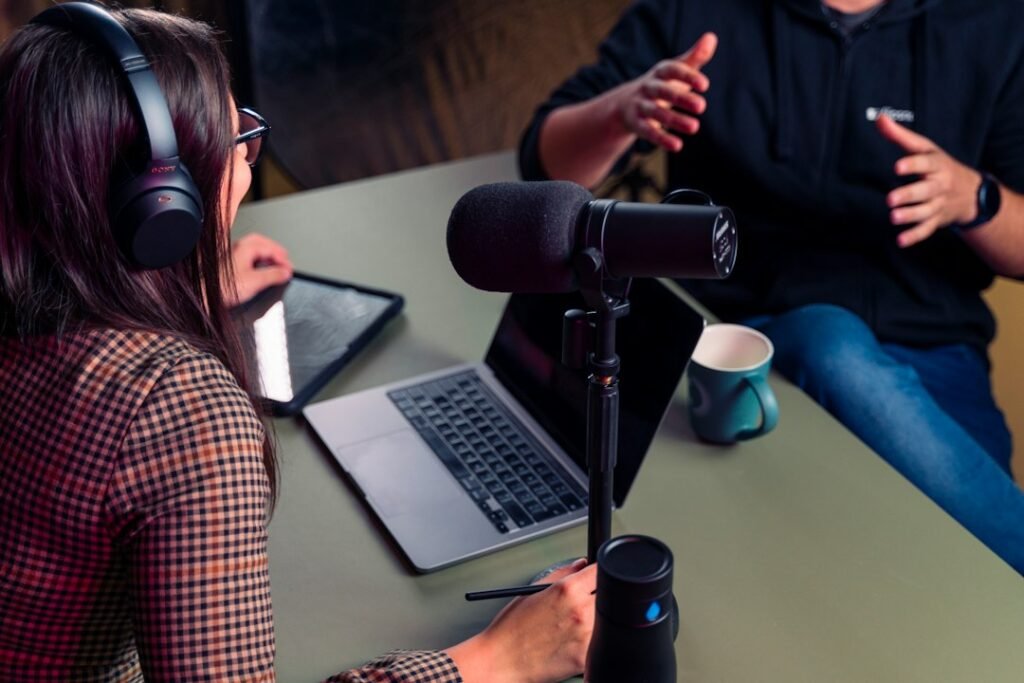
For a video interview, test the camera, microphone, lighting, framing, and internet connection before the guest joins. A simple, quiet room with clear audio often works better than a visually impressive setting with echo. Record a short test and listen on headphones. Confirm that the recording software is saving to the intended location and that you have enough storage space. If the interview is remote, prepare a backup communication method in case the video call fails.
Tell the guest how the material will be used and obtain appropriate permission to record. Clarify whether the conversation is live, edited, or intended for written publication. If you plan to include clips in promotional posts, explain that as part of the arrangement. Avoid promising editorial control or confidentiality that you cannot provide. A clear agreement before recording prevents confusion afterward and lets both sides focus on the conversation itself.
Manage Time Without Rushing the Guest
A twenty-minute interview may allow only a handful of substantive questions once introductions, technical checks, and follow-ups are included. Prioritize the questions that matter most to the audience. Put essential questions near the beginning in case the session ends early. Keep optional lighter questions for the end. If the guest has a firm stop time, respect it and avoid extending the call without asking.
Watch for answers that are too long for your format. You can redirect politely: “That background is helpful. Could we return to the decision you made on set?” If an answer is unusually short, ask for a concrete example rather than immediately changing topics. A good host balances the guest’s comfort with the audience’s need for useful information. Time management is not about speaking faster; it is about choosing the right questions and leaving room for the answers.
Fact-Check Before Publishing
After recording, verify names, dates, titles, and factual claims that can be independently checked. If the guest says something surprising, do not assume that a celebrity’s status makes it correct. Where possible, consult official records, the relevant production, or other reliable reporting. Clearly distinguish a person’s opinion from a verified fact. If you cannot confirm a significant claim, either investigate further or present the uncertainty accurately.
Transcribe carefully and avoid changing the meaning through selective editing. Removing repeated words for readability can be reasonable in some formats, but altering an answer to imply a different position is not. Keep the original recording securely for editorial reference. If you make a substantive correction after publication, explain it clearly. The same ethical standards apply to a student podcast and a major entertainment outlet: the audience deserves to know what was actually said and what has been verified.
Turn the Interview Into a Useful Article or Video
An interview should have a clear structure for readers or viewers. Lead with the most informative insight, then provide context about the guest and project. Use selected quotations accurately, and add explanation where a general audience may not understand industry terminology. For video, trim technical delays and irrelevant repetition without manufacturing reactions or misleading transitions. Captions should reflect the spoken words rather than embellishing them.
Do not make the headline promise a scandal when the conversation contains a routine answer. Avoid thumbnails that falsely imply anger, romance, or a confession. A strong title can still be engaging: “How the Actor Prepared for a Demanding Role” tells readers what they will learn. Link to the relevant official project information when helpful, and disclose any promotional arrangement that affects the interview. If you want to develop on-camera skills more broadly, our guide to what a TV presenter does covers preparation, interviewing, and production teamwork.
Sample Questions for Different Guests
For an actor: “What changed in your understanding of the character between the first script and the final scene?” For a musician: “Which decision in the studio had the biggest effect on the finished track?” For a comedian: “How do you know when a joke needs another rewrite?” For a television presenter: “What do you do when a live interview takes an unexpected turn?” For an athlete: “Which part of preparation receives less attention than it deserves?” These examples are starting points, not a rigid script.
Notice that each question is grounded in work the guest can discuss from firsthand experience. You can adapt the wording to a particular project and follow up with “Can you describe a moment when that happened?” Avoid asking several guests identical questions if their careers are very different. Personalized questions show that you have done the research and give the audience information they could not get from a generic biography. They also make the conversation more enjoyable for someone who has answered hundreds of repetitive promotional questions.
Frequently Asked Questions
How do I get a celebrity interview with a small audience?
Make a focused, honest pitch through an authorized contact. Explain the topic, format, expected reach, and why the interview fits your publication. There is no guarantee of acceptance, but professional preparation and a relevant audience can make a request clearer.
Should I send questions in advance?
Some guests or publicists request topics or sample questions. You can share the broad areas you plan to discuss while remaining transparent about the interview’s purpose. Do not promise to avoid legitimate questions unless you intend to honor that agreement.
What if the guest refuses a question?
Acknowledge the response and assess whether the topic is essential to the public interest. For routine entertainment coverage, moving on is often appropriate. For serious accountability reporting, you may need to explain the unanswered issue and seek other reliable sources.
Can I edit the answers for clarity?
Editing for length and readability may be acceptable if it preserves the meaning and follows your publication’s standards. Never rearrange words or clips to create a false statement. Keep the original recording and correct significant errors transparently.
Final Takeaway
Interviewing a celebrity well requires the same fundamentals as interviewing anyone with relevant expertise: preparation, clear questions, careful listening, respect for boundaries, and accurate editing. Focus on the person’s work rather than fame alone. Use official channels to request access, verify claims before publication, and create a final story that teaches the audience something worthwhile. The best interview leaves viewers with insight, not merely proof that you met someone famous.
 How to Become a TV Presenter: Skills, Training, and First Jobs
 What Is a Celebrity Crush? Meaning, Feelings, and Healthy Boundaries
 What Is a Celebrity Hall Pass? Meaning and Relationship Boundaries