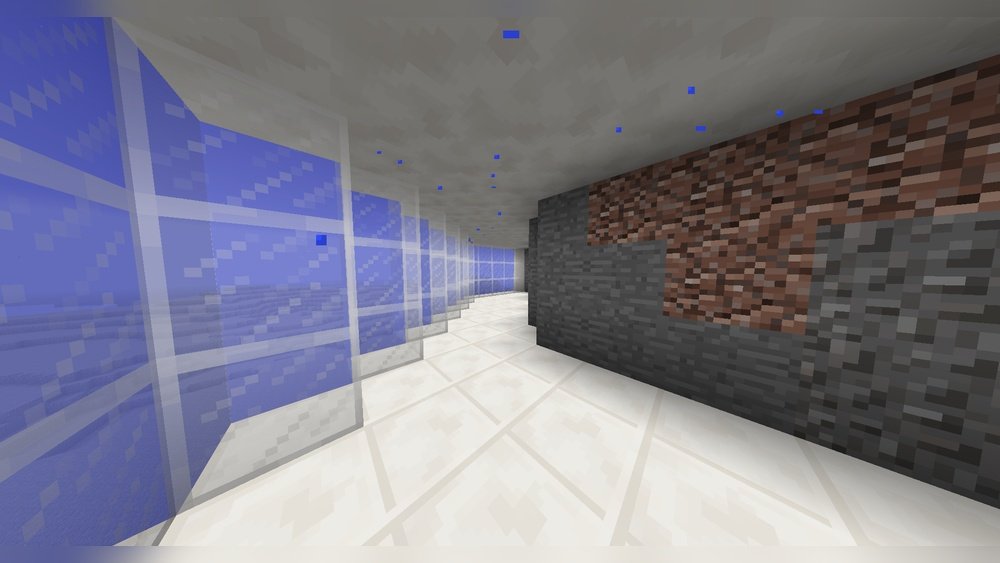
When you build in Minecraft, understanding how water moves is essential. Whether you’re creating a secret base, a hidden redstone door, or a simple farm, you need to know which blocks water does not leak through. This knowledge helps you control floods, protect your builds, and design clever mechanisms. But water behavior in Minecraft is more complex than many new players realize. Some blocks completely block water, others let water flow around or through them, and a few behave differently based on placement or game version.
Let’s dive deep into what stops water in Minecraft, with examples, specific block behaviors, and tips to help you master water control in your worlds.
How Water Works In Minecraft
Before we examine the blocks, it’s important to know how water itself behaves in Minecraft. Water comes in two main forms: water source blocks and flowing water. A water source block is a full block of water that can create an infinite water source when placed next to other source blocks. Flowing water spreads up to seven blocks away from the source, following the path of least resistance.
Water tries to flow into empty spaces, but not all blocks let water pass. Some blocks are solid and stop water, while others are considered non-solid or transparent, allowing water to flow around or even through them. The game’s rules for water movement are based on the block’s properties, such as collision box, transparency, and block type.
Blocks That Completely Stop Water
Let’s start with the most reliable way to stop water: solid blocks. These are blocks that water cannot flow through, into, or around. If you want to keep an area dry, use these blocks.
1. Full Solid Blocks
Most building blocks in Minecraft are full solid blocks. These include:
- Stone
- Cobblestone
- Dirt
- Planks
- Bricks
- Sandstone
- Concrete
When you place a full solid block, water will never leak through or around it. This makes them ideal for walls, floors, and ceilings in underwater or flood-prone builds.
2. Ores And Mineral Blocks
Blocks like iron ore, gold ore, diamond ore, and their solid block forms (e.g., block of iron) are also solid and stop water completely. They behave just like stone or dirt.
3. Glass And Stained Glass
Glass and stained glass are transparent, but they are still full blocks with a solid collision box. Water cannot leak through them, making them great for underwater viewing windows or aquariums.
4. Terracotta And Glazed Terracotta
Terracotta and glazed terracotta are solid blocks often used for decoration. They fully block water, so you can use them for colorful, water-tight builds.
5. Logs And Wood Blocks
All types of logs, stripped logs, wood, and stripped wood are solid. Water cannot pass through them, so they are safe for underwater builds or as structural supports in wet areas.
6. Purpur, Prismarine, And Other Solid Decorative Blocks
Blocks like purpur blocks, prismarine, sea lanterns, and quartz blocks are all solid and will stop water. Even though sea lanterns are made for underwater use, they block water like any other solid block.
7. Metal Blocks
Blocks like block of iron, block of gold, and block of diamond are solid. They’re rarely used for building due to their value, but if you have them, they stop water perfectly.
8. Nether Blocks
Netherrack, nether bricks, and other nether blocks are all solid and will keep water out. This is useful for builds that mix overworld and nether materials.
9. Block Variants
Slabs, stairs, and walls made from solid materials behave differently (covered below), but the full block versions always stop water.

Credit: www.reddit.com
Partial Blocks And Water Behavior
Not all blocks are created equal. Some blocks look solid but actually allow water to flow around or through them. This is where newer players often get confused.
1. Slabs
Slabs are half-blocks that cover either the top or bottom half of a space.
- Bottom slabs: Placed on the lower half of a block space, water cannot flow on top of them.
- Top slabs: Placed on the upper half, water can flow underneath but not above.
- Double slabs: Act as full blocks and block water completely.
Important tip: Water will not flow through a slab, but it can flow around it if there is space.
2. Stairs
Stairs are used for smooth elevation changes.
- Upright stairs: Water will not flow through the solid parts but can flow into the open space below the stair.
- Upside-down stairs: Water can flow under the stair, but not above.
Water does not “leak” through the solid part, but it can flow through air gaps created by stairs.
3. Fences And Walls
Fences and walls act as barriers but do not completely fill a block space.
- Water cannot flow through the middle of a fence or wall, but it can flow around the edges if there is space.
- If a fence or wall is the only thing between water and air, water will not leak through.
4. Glass Panes And Iron Bars
These are thin blocks used for decoration or security.
- Water cannot flow through a glass pane or iron bar if the pane or bar is the only thing in the block space.
- However, water can flow around these blocks if there is an open space next to them.
5. Trapdoors
Trapdoors can block water only when closed. If open, water can flow through the gap.
- Closed trapdoor: Water cannot pass through.
- Open trapdoor: Water flows freely.
6. Doors
Wooden and iron doors block water only when closed.
- Closed door: Blocks water.
- Open door: Water flows through the doorway.
7. Signs And Banners
Signs and banners are commonly used to stop water in mob farms and underwater bases.
- Water cannot flow through a sign or banner, even though they look like thin objects.
- This property is used to create airlocks and to stop water while letting players and mobs pass.
8. Ladders And Vines
Both ladders and vines can block water, but only in a specific way.
- Water will not flow through a block with a ladder or vine attached to the side.
- Water above the ladder or vine can still flow downward if there is an open space.
9. Leaves
Leaves are a special case. In modern versions, water cannot flow through leaves. This makes them useful for “natural” underwater builds or hidden water barriers.
10. Carpets
Carpets do not stop water at all. Water can flow over carpets with no resistance.
Redstone Components And Water
Redstone builds often need special water handling. Here’s how redstone components interact with water.
1. Redstone Dust
Redstone dust is destroyed if water flows over it. It does not block water.
2. Redstone Torches And Repeaters
Both will pop off if water touches them. They do not stop water flow.
3. Pistons And Sticky Pistons
When extended, the piston head is a solid block and stops water. When retracted, water can flow into the empty space.
4. Observers, Droppers, And Dispensers
These are solid blocks, so they stop water completely.
5. Redstone Blocks
A redstone block is solid and blocks water like any other full block.
Special Blocks: How They Interact With Water
Some blocks have unique behaviors when it comes to water. These often surprise new and experienced players alike.
1. Sponges
Sponges are made to absorb water. When placed, a sponge will absorb water in a 7x7x7 cube around it, up to a maximum of 65 blocks. Once full, a wet sponge will not absorb more water, but it will act as a solid block and stop water from leaking through.
2. Shulker Boxes
Shulker boxes are solid blocks and stop water. This is helpful for underwater storage or secret compartments.
3. Honey Blocks And Slime Blocks
Both are considered solid and will block water flow. However, water does not stick to them the way it does to other blocks.
4. End Portal Frames And Bedrock
Both are unbreakable and completely block water. Bedrock is often used in map boundaries, and end portal frames are only found in strongholds.
5. Enchanting Tables, Brewing Stands, And Anvils
These blocks are solid and stop water. They’re rarely used in bulk, but if you build with them, water won’t leak through.
Waterlogging: The Modern Twist
Since Minecraft 1.13 (“The Update Aquatic”), many blocks can be waterlogged. This means the block and water can occupy the same space. Waterlogging is an important concept for builders and redstone engineers.
What Blocks Can Be Waterlogged?
- Slabs
- Stairs
- Fences
- Walls
- Glass Panes
- Iron Bars
- Trapdoors
- Leaves
When waterlogged, these blocks do not stop water because water is inside the block. The block looks solid, but water can flow through and around it.
How To Waterlog A Block
Place water on or next to the block using a water bucket. If the block can be waterlogged, you’ll see water fill the space. Removing the water leaves the block dry.
Waterlogging And Leaks
If you use waterloggable blocks in your build, remember that water can exist in the same space as the block. This means that, for example, a waterlogged fence will look like a normal fence but will not stop water from spreading.
Blocks That Never Let Water Leak Through
With all these categories, what are the blocks that absolutely never let water leak through, under any circumstance? Here’s a summary:
- Full solid blocks (stone, cobblestone, planks, etc.)
- Mineral blocks (iron, gold, diamond, etc.)
- Glass blocks (not panes)
- Terracotta and glazed terracotta
- Logs and wood
- Purpur, prismarine, sea lanterns, quartz
- Bedrock and end portal frames
- Shulker boxes, honey blocks, slime blocks
- Enchanting tables, anvils, brewing stands
- Obsidian
If your build uses only these blocks for walls and floors, water will never leak through, even with the waterlogging mechanic.
Block Comparison: Which Blocks Stop Water?
Let’s compare some of the most common blocks used in builds.
| Block Type | Blocks Water? | Waterloggable? |
|---|---|---|
| Stone | Yes | No |
| Slab (full) | Yes | Yes |
| Fence | Partial | Yes |
| Glass Pane | Partial | Yes |
| Bedrock | Yes | No |
| Trapdoor | When Closed | Yes |
| Leaves | Yes | Yes |
Common Mistakes With Water And Blocks
Even experienced players sometimes make errors with water control. Here are some common mistakes and how to avoid them.
1. Using Waterloggable Blocks Thinking They Block Water
A frequent beginner mistake is to use fences, panes, or slabs, expecting them to block water. In versions after 1. 13, these blocks can be waterlogged, and water will flow through them. Always use full blocks if you need a 100% watertight barrier.
2. Forgetting About Gaps
If your wall has even a single block gap, water will find its way through. Check your builds carefully, especially corners and edges.
3. Doors And Trapdoors Left Open
Remember, water will flow through any open door or trapdoor. Always close these if you want to keep water out.
4. Using Carpets For Water Barriers
Carpets offer no protection against water. They are purely decorative.
5. Redstone Components Getting Washed Away
Redstone dust, torches, and repeaters are destroyed by water. Build with this in mind, or use solid blocks to protect your redstone lines.
Underwater Building Tips
Building underwater or making water-tight structures is a challenge, but here are some tips:
- Use solid blocks for all exterior walls, floors, and ceilings.
- Double-check for any holes or gaps before removing the water.
- Use sponges to remove water quickly from enclosed spaces.
- Seal doors and trapdoors before flooding an area.
- Avoid waterloggable blocks in critical watertight areas.
- Test with a small amount of water before flooding a large build.

Credit: bugs.mojang.com
Special Uses For Water-blocking Blocks
Knowing which blocks stop water can help in clever ways:
- Mob farms: Use signs or ladders to stop water but let mobs pass.
- Secret doors: Use pistons to quickly block or unblock water flow.
- Aquariums: Glass blocks let you watch fish without leaks.
- Redstone machines: Full blocks protect wiring from accidental floods.
Data Table: Block Types And Water Behavior
Here’s a detailed look at how popular blocks interact with water in Minecraft:
| Block | Completely Blocks Water? | Can Be Waterlogged? | Notes |
|---|---|---|---|
| Stone | Yes | No | Standard for walls/floors |
| Glass | Yes | No | Good for windows |
| Glass Pane | No | Yes | Water can flow around |
| Slab | No | Yes | Double slab acts as full block |
| Fence | No | Yes | Water can flow around |
| Sign | Yes | No | Used to stop water, let mobs through |
| Trapdoor | When closed | Yes | Must be closed to block water |
| Bedrock | Yes | No | Unbreakable, always watertight |
| Leaves | Yes | Yes | Useful for “natural” walls |
| Carpet | No | No | Purely decorative |
Water And Mobs
Some blocks that stop water can also block mobs, while others do not. For example, a sign will stop water but allow mobs and players to move through. A solid block stops both water and mobs. Knowing this helps you design mob farms or player traps.
How Updates Changed Water Behavior
Minecraft 1.13 changed the way water and blocks interact. The introduction of waterlogging made many blocks behave differently. Before this update, fences, panes, and slabs could always block water. Now, they only do so if not waterlogged.
This update made underwater building both more realistic and more challenging. If you play on older versions, always check how water behaves with your chosen blocks.
Advanced Building: Water-tight Redstone
Building redstone machines underwater or near water requires careful planning. Here are some advanced tips:
- Use solid blocks to encase redstone wiring.
- Use signs or trapdoors to create air pockets for redstone torches.
- Avoid placing redstone dust directly under waterloggable blocks.
- Test your machines in creative mode before building in survival.
Real-life Examples In Minecraft
Let’s look at some real-world-style builds and how they use water-stopping blocks:
- Underwater base: Uses glass blocks for walls, stone for structure, and sponges to remove water.
- Aquarium: Glass blocks keep fish in and water out of the room.
- Hidden door: Pistons push stone blocks to open or close a waterway.
- Mob grinder: Signs or trapdoors control water flow to move mobs without flooding redstone.

Credit: www.walmart.com
What About Lava?
Lava behaves similarly to water in Minecraft but has a few differences. Most blocks that stop water also stop lava. However, wooden doors and trapdoors burn in lava, so avoid them for lava containment. Always use stone or another non-flammable solid block for lava control.
Useful External Resource
For a full list of blocks and their properties, see the Minecraft Wiki: Water.
Frequently Asked Questions
What Blocks Are Completely Waterproof In Minecraft?
Any full solid block is waterproof. This includes stone, planks, bricks, glass blocks, terracotta, bedrock, obsidian, and mineral blocks. If you build your walls and floors with these, water will never leak through.
Can Mobs Pass Through Blocks That Stop Water?
Most solid blocks stop both water and mobs. However, signs, banners, and trapdoors (when open) can stop water but allow mobs or players to pass through. Use these for mob farms or secret passages.
What Is Waterlogging And How Does It Affect Water Leaks?
Waterlogging allows water and a block to share the same space. Slabs, fences, panes, and some other blocks can be waterlogged. If a block is waterlogged, it does not stop water from passing through, so be careful when building water-tight structures.
Do Doors And Trapdoors Always Stop Water?
Doors and trapdoors only stop water when closed. If you leave them open, water will flow through. Also, in some older versions, doors did not always behave the same way. Always test your build if you’re unsure.
Does Water Flow Through Leaves Or Vines?
In current versions, leaves block water. Vines attached to a block will stop water from entering that block’s space, but water can still flow around them if there is an open path.
Minecraft’s water system is both simple and complex. By understanding which blocks water cannot leak through, you can design better, safer, and more creative builds. Whether you’re building an underwater fortress, a mob farm, or a redstone device, using the right blocks will keep your creations dry and your game running smoothly.