Free apps mainly earn through ads, in‑app purchases, subscriptions, and data partnerships.
I’ve built and tested mobile products and studied app marketplaces for years, so I know how free apps make money in practical terms. This article explains the main revenue models, the metrics that matter, legal and privacy trade-offs, and real tactics I’ve used and seen work. Read on to learn how free apps make money and how you can use those models smartly and ethically.
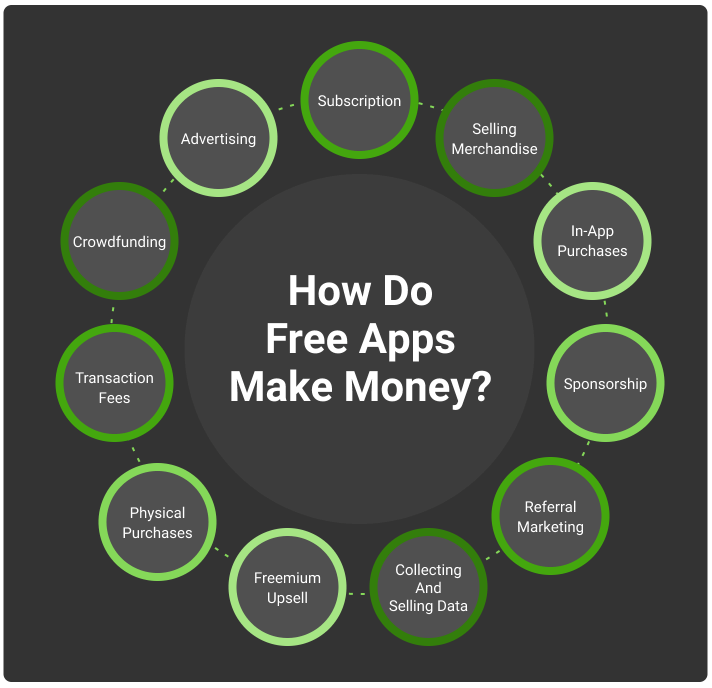
Main ways free apps make money
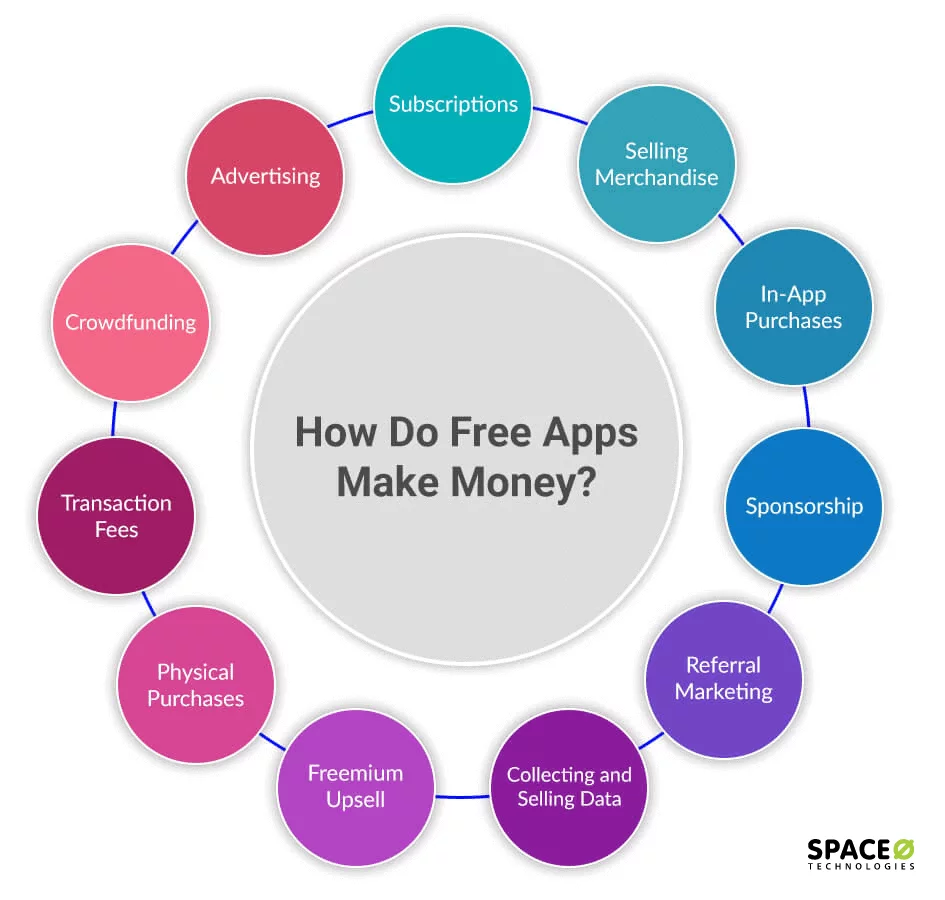
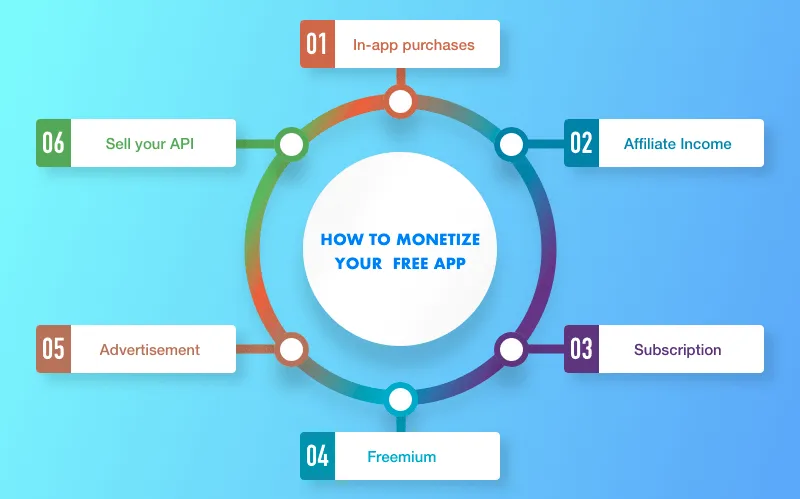
Free apps make money with several proven methods. Each model fits different audiences and product goals. I’ll break down the most common approaches and show how they play together.
- Advertising revenue
- Many free apps show ads to users. Ads can be display, video, native, or rewarded. Ad networks pay per impression or per click. Advertising is easy to start but needs large active users to scale.
- In-app purchases (IAP)
- Users buy items or features inside the app. IAP works well for games and creative tools. Microtransactions can add up if design is fair and useful.
- Subscriptions
- Recurring fees give predictable revenue. Subscriptions work best with ongoing value like cloud sync, premium content, or ongoing features. Churn is the main risk.
- Freemium upgrades
- The app is free with basic features. Power users pay to unlock advanced tools. Freemium balances growth and monetization.
- Data partnerships and analytics
- Some apps monetize aggregated, anonymized data or offer analytics to partners. This must follow privacy rules and user consent. It can be lucrative for niche apps.
- Affiliate marketing and referrals
- Apps recommend products and earn commissions. This fits content apps, shopping helpers, and travel guides.
- Sponsorships and branded content
- Big or niche apps can partner with brands for sponsored content or features. This requires trust and careful integration.
- Merchandising and physical sales
- Games and fandom apps may sell branded goods. This extends revenue beyond the app itself.
- White-labeling and enterprise licensing
- Sell the app or its backend to businesses. This is common for B2B apps and tools.
How free apps make money depends on product fit, user intent, and scale. Choose models that respect users and match the app’s value.
How advertising models work and when to use them
Ads are the fastest route to revenue for many free apps. But not all ads are equal.
- Cost-per-impression and cost-per-click
- Networks pay per thousand impressions or per click. CPM and CPC rates vary by region and app niche.
- Rewarded ads
- Users watch a short video to get a reward. This boosts engagement and feels optional to the user.
- Native and sponsored placements
- Ads that match app style can perform better. But they must be labeled clearly to keep trust.
- Programmatic vs direct deals
- Programmatic ad exchanges automate sales. Direct deals give higher rates but need sales effort.
Ads scale when you have many active users. They are less effective if monetization relies on a small, niche audience. I once ran a casual game that earned steady revenue from rewarded ads while keeping user retention high by pacing ad frequency.
Building in-app purchases and subscriptions that convert
IAP and subscriptions need clear value to succeed. The right UX is critical.
- Offer a free baseline
- Let users try core features without paying. This builds trust.
- Create obvious upgrades
- Make premium features visible and desirable inside the app.
- Price and trial strategies
- Offer short free trials for subscriptions. Use multiple price points for IAP.
- Reduce friction
- One-tap purchases and clear benefit descriptions help conversion.
How free apps make money through IAP and subscriptions takes time. You must measure conversion rates and tweak offers. In a photo app I shipped, a 7-day trial doubled conversion, but pricing had to be adjusted for different markets.
Metrics and economics: what to measure
Good decisions come from clear metrics. Track these closely.
- Monthly active users (MAU) and daily active users (DAU)
- They show reach and engagement.
- Conversion rate
- Percentage who pay or click ads.
- Average revenue per user (ARPU)
- Total revenue divided by users.
- Customer acquisition cost (CAC)
- How much you spend to get a new user.
- Lifetime value (LTV)
- Expected revenue from a user over time.
- Churn rate
- How fast paying users leave.
How free apps make money is mostly a math problem. If LTV is less than CAC, scale will lose money. Use short tests to measure CAC and LTV before doubling spend.

Privacy, compliance, and ethical limits
Money matters, but trust matters more. Privacy and rules shape how free apps make money.
- Follow consent rules
- Get clear user consent before tracking or selling data.
- Anonymize and aggregate
- Share only grouped data to reduce risk.
- Provide transparency
- Explain what you collect and why.
- Watch regional laws
- Different countries have different rules for data and ads.
I once paused a monetization plan after realizing it would confuse users about their privacy. We redesigned the flow to ask fewer, clearer permissions and still recovered revenue while keeping trust.
Revenue mix and product fit: choosing the right model
Most successful apps blend models. A smart mix can boost revenue and resilience.
- Start with a core model
- Pick the model that fits user intent first.
- Layer secondary revenue
- Add ads or affiliate links where they don’t harm experience.
- Test and iterate
- Run small experiments on pricing and ad formats.
- Localize pricing and offers
- Adjust for markets with different willingness to pay.
How free apps make money is about balance. A music app may focus on subscriptions, then add merchandising and limited ads. A casual game may rely on rewarded ads and IAP. Try one main path, then diversify as you scale.
Implementation tips and common mistakes
Practical tips help you avoid wasted effort.
- Measure before you build
- Validate demand and price sensitivity with prototypes.
- Don’t surprise users
- Make purchases clear and reversible.
- Avoid intrusive ads
- Too many ads kill retention.
- Price testing matters
- Small changes can greatly affect revenue.
- Respect app store rules
- Follow store policies for billing and ads.
From my experience, the worst mistake is rushing monetization before the product fits user needs. Launch monetization after you understand how users use the app, not before.
.png)
Frequently Asked Questions of how free apps make money
How do free apps make money with ads without annoying users?
Free apps balance ad frequency and placement so users still enjoy the app. Rewarded and native ads are less intrusive and often keep users happy.
Can a small app make money without many users?
Yes, by using high-value niches, premium pricing, or B2B licensing. A focused audience can yield high ARPU even with low user counts.
Are subscriptions better than one-time purchases?
Subscriptions give predictable revenue and work well for ongoing value. One-time purchases suit durable features or collectibles.
Is selling user data necessary to profit?
No. Selling user data carries legal and trust risks. Many apps earn more sustainably with ads, IAP, or subscriptions.
How long before a free app starts making money?
It varies. Some apps monetize within weeks if they find product-market fit. Others take months to build users and tune revenue models.
Conclusion
Free apps make money through a mix of ads, in-app purchases, subscriptions, partnerships, and more. The right path depends on your users, product value, and scale. Start simple, measure outcomes, and evolve the revenue mix to match real user behavior. Try one tested model, run small experiments, and keep user trust at the center of every decision. If you’re building an app, pick a primary revenue approach, test it fast, and iterate based on data—then share what you learn or subscribe for updates and tips.