What is Gen AI? If you’ve ever wondered how computers create stories, art, or even music on their own, you’re about to find out.
Gen AI, short for Generative Artificial Intelligence, is a powerful technology that can produce new, original content just like a human would. Imagine having a tool that can help you write, design, or brainstorm ideas instantly. Sounds exciting, right? By understanding how Gen AI works and what it can do, you’ll unlock new ways to boost your creativity and productivity.
Keep reading to discover how this smart technology can transform the way you work and create.
Gen Ai Basics
Generative AI, or Gen AI, is a type of artificial intelligence that creates new content. It can produce text, images, music, and even videos. This technology learns from existing data to generate fresh and original outputs.
Gen AI models study patterns in data and use them to create something unique. They mimic human creativity but work much faster. These systems power tools like chatbots, art generators, and writing assistants.
What Is Generative Ai?
Generative AI is a branch of AI focused on content creation. It uses complex algorithms to produce new data based on learned examples. This content can be a story, a picture, or a song.
The AI does not just copy; it creates new combinations and ideas. It helps people by automating creative tasks and providing inspiration.
How Does Gen Ai Work?
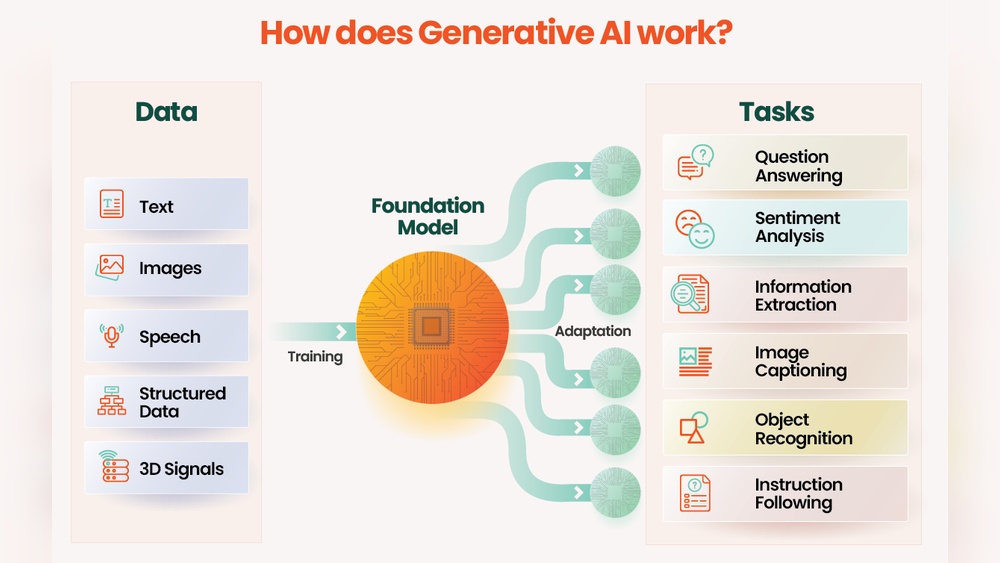
Gen AI works by training on large amounts of data. It finds patterns in this data and learns how to recreate them. Then, it uses this knowledge to generate new content that fits those patterns.
For example, if trained on many photos of cats, the AI can create new cat images. This process involves complex math and machine learning techniques.
Types Of Generative Ai Models
There are different models in Gen AI, such as language models and image generators. Language models create text, while image models produce pictures. Some models combine both for multimedia content.
Popular examples include GPT for text and DALL·E for images. Each model has strengths depending on the task it performs.
Applications Of Gen Ai
Gen AI is used in many fields. Writers use it to draft articles. Artists create digital art with AI tools. Businesses use it to improve customer support and marketing.
It also helps in education, gaming, and software development. This technology expands creative possibilities and saves time.
Core Technologies
Generative AI relies on several key technologies that make content creation possible. These technologies work together to understand data and produce new, original outputs. Each plays a distinct role in the AI’s ability to learn and generate.
Understanding these core technologies helps explain how Generative AI functions and why it is so powerful.
Neural Networks
Neural networks are the backbone of Generative AI. They mimic the human brain’s network of neurons. These networks process information through layers, learning patterns from data. This learning allows the AI to generate new content based on what it has seen before.
Deep Learning
Deep learning is a type of neural network with many layers. It helps the AI understand complex data like images and language. The deeper the network, the better the AI can capture details and nuances. This improves the quality of the generated content.
Natural Language Processing (nlp)
NLP enables AI to understand and create human language. It breaks down sentences into parts and finds meaning. This technology powers chatbots and text generators. It allows AI to write stories, answer questions, and translate languages.
Transformer Models
Transformer models use attention mechanisms to focus on important data parts. They handle sequences, such as sentences, more efficiently than older models. These models generate coherent and context-aware content. Examples include GPT and BERT, widely used in text generation.
Reinforcement Learning
Reinforcement learning helps AI improve by trial and error. The AI tries actions and learns from feedback. This method fine-tunes models to create better and more relevant outputs. It is often used to enhance interactive AI systems.
Content Creation Types
Generative AI creates many types of content using advanced algorithms. This technology helps produce text, images, videos, and music. It mimics human creativity by learning from data patterns. Each content type serves different purposes and audiences.
Understanding these content creation types helps to see how Gen AI impacts various fields. It makes tasks faster and often easier. Let’s explore the main types of content Gen AI creates.
Text Generation
Gen AI can write articles, stories, and reports quickly. It understands language rules and context to make coherent text. This type helps bloggers, marketers, and authors save time. It can also answer questions or create summaries.
Image Creation
AI generates realistic or artistic images from descriptions or examples. Designers and advertisers use this for visuals without needing a camera. It can create new art styles or enhance photos. This expands creative options in graphic design.
Video Production
Videos can be made or edited with AI tools. These tools add effects, create animations, or generate scenes from scripts. Video creators use this to speed up production and reduce costs. It supports making engaging visual stories.
Music Composition
AI composes songs and background music by learning patterns in sound. Musicians and producers use it to find new melodies or beats. It can create music in different genres and moods. This helps with creative inspiration and production.
Training And Data
Training and data form the backbone of Generative AI. These systems learn by analyzing vast amounts of information. The quality and quantity of data directly affect AI’s performance.
Data includes text, images, videos, and sounds. AI models study patterns, structures, and relationships within this data. This process allows them to generate new, original content.
How Training Works
Training involves feeding data into AI models. The model adjusts its internal settings to understand the data better. This step repeats many times to improve accuracy.
The model learns to predict what comes next in a sequence. For example, predicting the next word in a sentence. This skill helps it generate coherent and relevant content.
Importance Of Large And Diverse Data
More data means the AI can learn about more topics and styles. Diverse data prevents bias and improves creativity. It helps AI handle various languages and cultures.
Without enough variety, the AI might produce repetitive or narrow content. Using balanced data ensures AI creates useful and fair outputs.
Cleaning And Preparing Data
Raw data often contains errors or irrelevant information. Cleaning removes mistakes and unwanted parts. Preparing data formats it for better AI learning.
This step is crucial for efficient training. Clean data leads to faster learning and better results. Poor data quality can confuse the AI and lower output quality.
Popular Gen Ai Models
Popular Generative AI (Gen AI) models have changed how machines create content. These models learn from large data sets to generate text, images, or sounds. They help businesses, artists, and developers produce new ideas fast. Understanding key models shows how Gen AI works and its uses.
Each model has unique strengths. Some excel in writing, others in creating visuals or answering questions. Below are some well-known Gen AI models shaping the technology today.
Gpt (generative Pre-trained Transformer)
GPT is a leading text-based Gen AI model. It understands and writes human-like text. Many chatbots and content tools use GPT to answer questions and create stories. It learns language patterns from books, websites, and more.
Dall·e
DALL·E focuses on generating images from text descriptions. Users type what they want to see, and DALL·E creates matching pictures. This model helps designers and marketers make visuals quickly without drawing skills.
Stable Diffusion
Stable Diffusion is another image generation model. It creates high-quality images based on user prompts. Open source and flexible, it allows customization for various creative projects.
Bert (bidirectional Encoder Representations From Transformers)
BERT specializes in understanding text and context. It helps improve search engines and language apps by grasping the meaning behind words. BERT reads text both ways, making it smart at interpreting sentences.
Codex
Codex generates computer code from natural language instructions. Developers use it to write and debug programs faster. It supports many programming languages and boosts software creation efficiency.
Credit: aitglobalinc.com
Applications Across Industries
Generative AI (Gen AI) is changing how many industries work. It creates new content like text, images, and music. Different sectors use Gen AI to improve services and products. This technology helps save time and cut costs. Many businesses apply Gen AI to make smarter decisions and better customer experiences.
Healthcare
Gen AI assists doctors by analyzing medical data fast. It helps predict diseases and suggest treatments. This AI creates medical images and reports. It supports drug discovery and speeds up research. Patients get better care through personalized plans.
Finance
In finance, Gen AI detects fraud quickly. It improves risk management and investment strategies. AI generates reports and automates customer service. Banks use it to understand customer needs better. It helps reduce errors and increase profits.
Retail
Retailers use Gen AI to personalize shopping experiences. It creates product descriptions and marketing content. AI predicts trends and manages inventory efficiently. Chatbots powered by Gen AI answer customer questions. This leads to higher sales and satisfaction.
Education
Gen AI creates custom lessons and tests for students. It helps teachers grade work faster. AI supports language learning and tutoring. It makes education more accessible and engaging. Students get help tailored to their skill levels.
Entertainment
In entertainment, Gen AI writes scripts and composes music. It generates art and special effects for movies and games. AI creates new story ideas and characters. This technology helps produce content faster and cheaper.
Gen Ai Vs Chatbots
Understanding the difference between Gen AI and chatbots helps clarify their roles in technology. Both involve artificial intelligence but serve distinct purposes. Gen AI creates original content in many forms. Chatbots focus mainly on conversation and answering questions.
This section breaks down how Gen AI and chatbots differ. It highlights their unique strengths and use cases. Clear examples show what each technology can do.
What Is Generative Ai?
Generative AI is a type of artificial intelligence that produces new content. It can write stories, create images, compose music, and much more. This AI learns patterns from data and then generates original results. It works across various fields, including art, science, and language.
What Are Chatbots?
Chatbots are computer programs designed to simulate human conversation. They use rules or AI to respond to user questions. Many chatbots rely on scripted answers or simpler AI models. Their main goal is to assist users quickly and clearly.
How Does Gen Ai Differ From Chatbots?
Gen AI focuses on creating new, unique content across many formats. Chatbots mainly handle interactive dialogues and customer support. Gen AI can write a poem or design an image, while chatbots answer questions or guide users. Gen AI is broader and more creative. Chatbots are narrower but specialized in conversation.
Credit: www.miquido.com
Benefits And Challenges
Generative AI brings many benefits and some challenges. It can create text, images, and music quickly.
Understanding these benefits and challenges helps us use this technology better.
Benefits Of Generative Ai
Generative AI saves time by producing content fast. It helps in writing articles, designing graphics, and composing music.
This technology can assist in education, making learning materials easier to create. It supports creativity by offering new ideas and perspectives.
Businesses use generative AI to improve customer service and automate routine tasks. It reduces costs and increases efficiency.
Challenges Of Generative Ai
Generative AI sometimes creates incorrect or biased content. This can mislead users or spread false information.
It requires large amounts of data and computing power, which can be expensive. Privacy concerns also arise due to data use.
People may misuse generative AI to produce fake news or harmful content. Ensuring ethical use is a key challenge.
Ethical Considerations
Ethical considerations play a vital role in the development and use of Generative AI (Gen AI). These concerns ensure that AI technologies remain safe, fair, and respectful to all users. Ignoring ethics can lead to misuse and harm society.
Developers and users must think carefully about the impact of Gen AI. This includes privacy, bias, and accountability issues. Responsible AI helps build trust and benefits everyone.
Privacy And Data Protection
Gen AI needs large amounts of data to learn and create. This data often includes personal information. Protecting user privacy is essential to prevent misuse or leaks.
Clear rules must guide how data is collected and stored. Users should know how their information is used. Data protection builds confidence in AI systems.
Bias And Fairness
Gen AI can reflect biases found in its training data. This can cause unfair or harmful results for some groups. Detecting and reducing bias is critical.
Developers must test AI outputs for fairness. They should adjust models to avoid discrimination. Fair AI respects diversity and treats everyone equally.
Accountability And Transparency
It is important to know who is responsible for AI decisions. Transparency helps users understand how Gen AI works. Clear explanations make AI less of a “black box.”
Organizations should provide ways to report problems with AI. Accountability ensures that creators fix issues and improve systems. This leads to safer AI use.

Credit: www.gartner.com
Future Trends
Generative AI is changing fast. New uses appear every day.
It will shape how we create, work, and communicate soon. Companies and people will rely more on AI tools.
Understanding future trends helps us prepare for what is coming.
Advances In Multimodal Ai
Multimodal AI uses text, images, sounds, and videos together.
This lets AI understand and create content in many forms at once.
Future AI will blend different media for richer and smarter outputs.
More Personalized Ai Experiences
AI will learn more about individual preferences and habits.
This will allow AI to offer advice, content, and help tailored just for you.
Personalized AI will improve customer support, education, and health services.
Integration With Everyday Devices
AI will be part of many devices around us.
Smartphones, home assistants, and cars will use AI to work better.
This makes AI a normal part of daily life, helping constantly.
Ethical Ai And Regulation
Concerns about AI ethics will grow stronger.
Rules will emerge to ensure AI is fair and respects privacy.
Responsible AI use will be a major focus for governments and companies.
Ai-assisted Creativity And Innovation
AI will help artists, writers, and designers explore new ideas.
It will speed up invention by suggesting solutions and designs.
Creativity will expand with AI as a helpful partner.
Frequently Asked Questions
What Is Genai In Simple Terms?
Generative AI (GenAI) creates new content like text, images, music, and videos by learning patterns from large data sets. It mimics human creativity to produce original ideas, stories, or designs. GenAI powers tools such as chatbots, art generators, and music composers, enhancing productivity and innovation.
What Is Genai Vs Chatgpt?
Generative AI (GenAI) creates new content like text, images, and music using learned patterns. ChatGPT is a GenAI tool specialized in conversational text generation using the GPT model. GenAI covers many content types; ChatGPT focuses on interactive, human-like chat responses.
What Is The Difference Between Genai And Regular Ai?
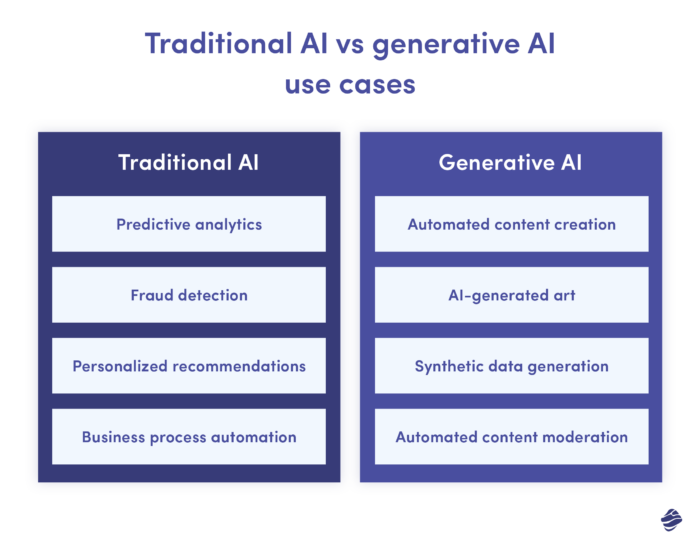
Generative AI creates new content like text, images, or music using learned patterns. Regular AI focuses on specific tasks without content creation. GenAI generates original data, while regular AI analyzes or predicts based on existing data.
What Is The Difference Between Genai And Agi?
Generative AI creates new content like text, images, or music using learned data patterns. AGI aims to perform any intellectual task a human can, with full understanding and reasoning. GenAI specializes in content generation, while AGI represents general human-like intelligence.
What Is Generative Ai (gen Ai)?
Generative AI is a type of artificial intelligence that creates new content like text, images, or music.
How Does Gen Ai Work?
Gen AI learns from large data sets and uses patterns to generate new, similar content.
What Are Common Uses Of Gen Ai?
It is used for writing, image creation, chatbots, music, and even coding assistance.
Is Gen Ai The Same As Chatgpt?
No, ChatGPT is a specific chatbot built using generative AI technology.
Can Gen Ai Create Original Ideas?
Gen AI generates new content based on learned data but does not create true original ideas.
What Industries Benefit From Gen Ai?
Healthcare, marketing, entertainment, education, and software development use Gen AI to improve tasks.
Conclusion
Generative AI creates new and useful content from data. It helps people by making tasks easier and faster. Many industries use it to improve work and creativity. Understanding Gen AI helps us see its growing role today. It changes how we interact with technology every day.
The future will bring even more ways to use it. Staying informed about Gen AI is important for everyone.