You’ve probably heard a lot about AI, but have you ever wondered what AGI really means and how it differs from the AI tools you use every day? Understanding AGI, or Artificial General Intelligence, is key to grasping the future of technology and how it might impact your life.
This isn’t just about smart machines that follow instructions—it’s about machines that can think, learn, and adapt just like a human. If you want to know what makes AGI so special and why it matters to you, keep reading. By the end of this article, you’ll see why AGI is a game-changer in the world of intelligence and what it means for your future.
Credit: www.servicenow.com
Artificial Intelligence Basics
Artificial Intelligence, or AI, is a branch of computer science. It focuses on creating machines that can perform tasks usually done by humans. These tasks include learning, problem-solving, and decision-making.
AI systems can be simple or complex. Some are made to do one task well. Others aim to handle many different tasks. This variety helps people understand the different types of AI.
What Is Artificial Intelligence?
Artificial Intelligence means making computers think like humans. It involves programming machines to recognize patterns and make choices. AI uses data to improve its actions over time.
Types Of Artificial Intelligence
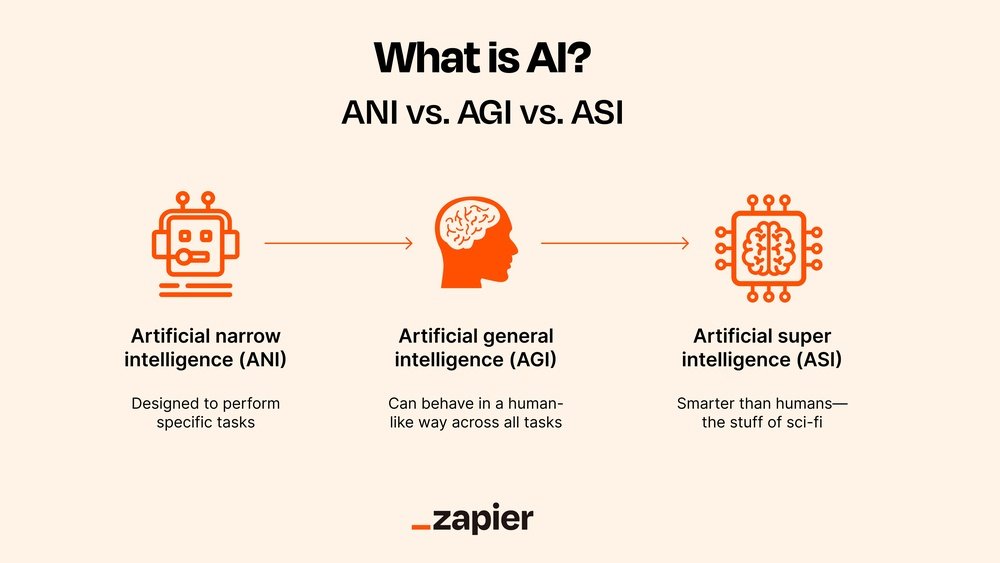
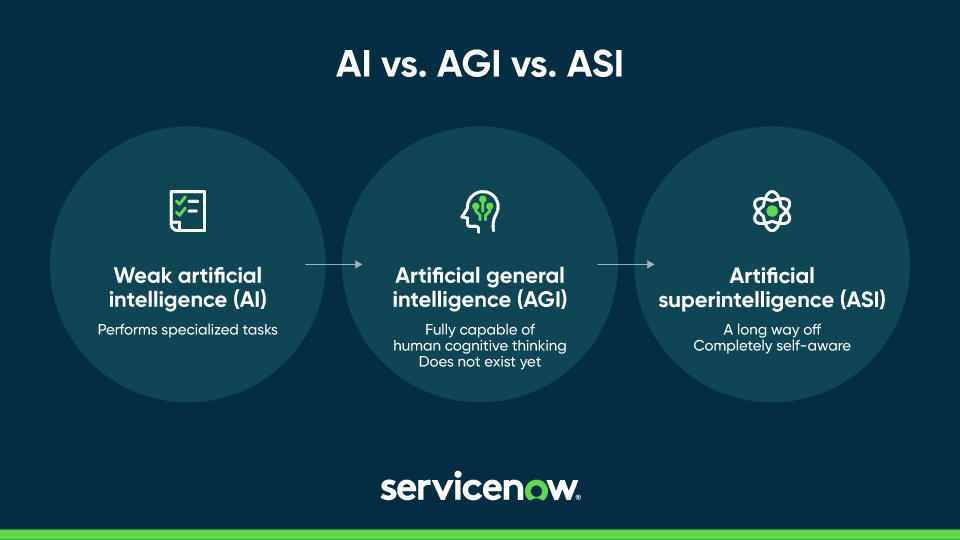
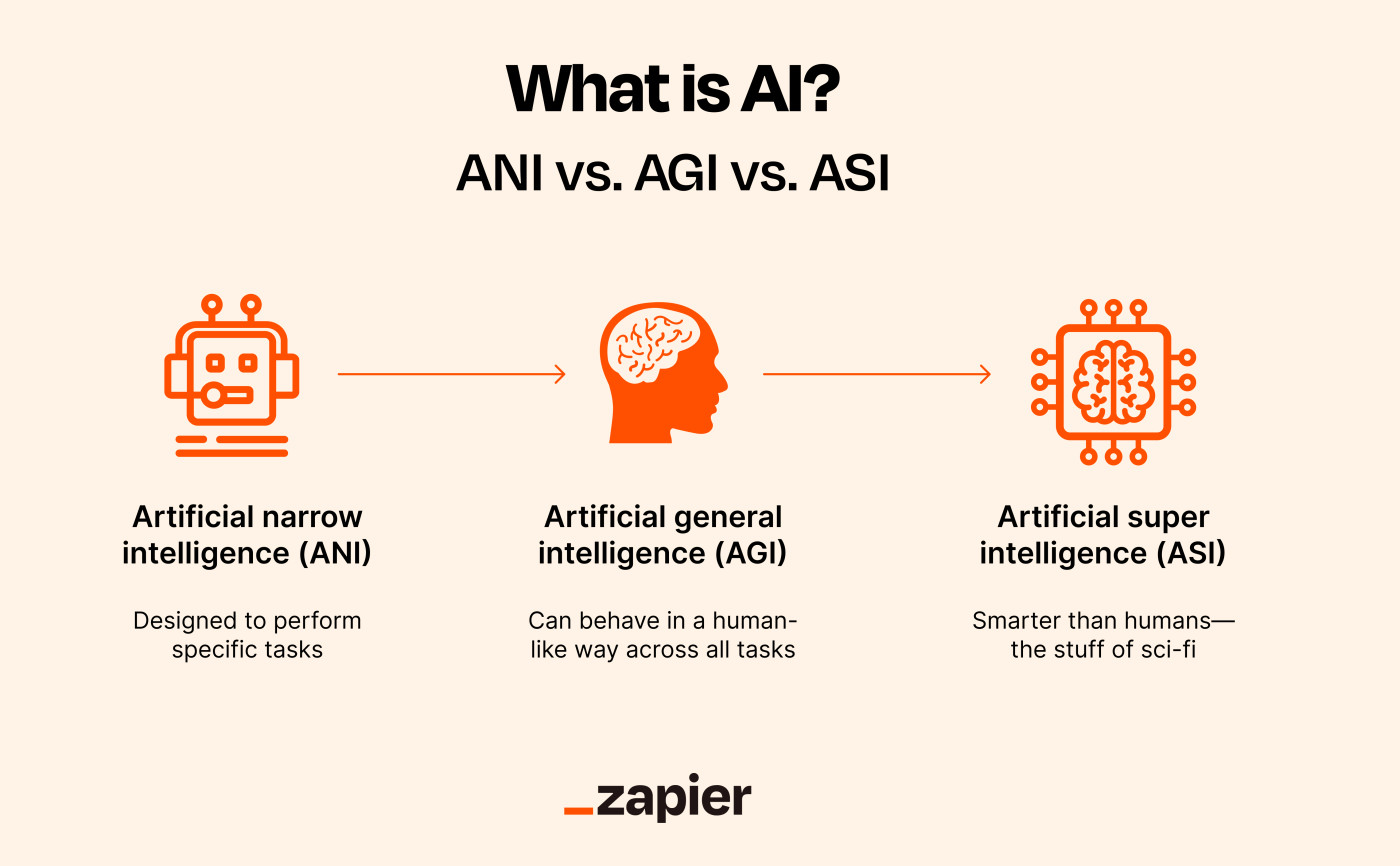
There are mainly two types of AI: Narrow AI and General AI. Narrow AI works on one specific task. General AI, also called AGI, can learn and do many tasks like a human.
Artificial Narrow Intelligence (ani)
ANI is designed for a single purpose. Examples include voice assistants and recommendation systems. These systems excel in their areas but cannot perform outside their training.
Artificial General Intelligence (agi)
AGI aims to match human intelligence. It can understand, learn, and apply knowledge across different fields. AGI can solve new problems without prior programming.
Artificial General Intelligence Defined
Artificial General Intelligence, or AGI, refers to a type of AI that can perform any intellectual task a human can do. Unlike current AI systems, AGI can learn, understand, and apply knowledge across different domains.
AGI is designed to think and reason like a human. It can solve problems it has never seen before. This contrasts with narrow AI, which focuses on specific tasks.
What Makes Agi Different From Narrow Ai?
Narrow AI is built for one task. For example, voice assistants or recommendation systems. They work well but cannot adapt beyond their programming.
AGI, in contrast, can learn new skills and adapt to new situations. It can transfer knowledge from one area to another. This flexibility makes AGI more like human intelligence.
Key Features Of Artificial General Intelligence
AGI has several important traits. It can understand language deeply and reason logically. It can learn from experience and improve over time.
AGI can also plan and solve complex problems. It shows creativity and understands emotions. These features help AGI interact naturally with humans.
Why Agi Is A Major Goal In Ai Research
Creating AGI is a big challenge. It requires machines to think broadly and flexibly. Researchers aim to build systems that match human intelligence.
AGI could transform many fields. It could improve healthcare, education, and science. Understanding AGI helps us prepare for future AI developments.
Differences Between Agi And Ani
Artificial General Intelligence (AGI) and Artificial Narrow Intelligence (ANI) differ significantly in their scope and capabilities. ANI excels in specific tasks but lacks the broad understanding and adaptability of AGI. AGI aims to mimic human intelligence across all areas, offering flexibility and deeper reasoning. Exploring these differences helps clarify how AI technologies evolve and what to expect from future developments.
Task-specific Vs. General Intelligence
ANI focuses on one task at a time, such as language translation or playing chess. It performs well but cannot switch tasks without retraining. AGI can handle many tasks like a human, moving smoothly between different activities. This broad ability makes AGI more versatile than ANI.
Understanding And Reasoning
ANI follows patterns and rules from its training data. It does not truly understand or reason like humans. AGI can comprehend complex ideas and solve new problems by thinking deeply. This reasoning skill allows AGI to adapt to new situations better than ANI.
Continuous Learning
ANI learns only during its training phase and cannot improve on its own afterward. AGI can learn continuously from new experiences and information. This ongoing learning helps AGI grow smarter and more capable over time.
Memory And Persistence
ANI has limited memory tied to specific tasks and cannot recall past interactions effectively. AGI possesses long-term memory and can use past knowledge to influence future decisions. This persistence makes AGI more human-like in its thinking process.
Current Ai Technologies Compared To Agi
Artificial General Intelligence (AGI) means machines that think like humans. AGI can understand, learn, and apply knowledge in many areas. Today’s AI is very different from AGI. It focuses on specific tasks and has limits. Understanding these differences helps us see where AI is now and where it might go.
Current AI systems do well in narrow fields. They cannot adapt across all tasks like AGI would. The next sections show examples and explain these limits clearly.
Chatgpt As An Example Of Ani
ChatGPT is a good example of Artificial Narrow Intelligence (ANI). It works well with language tasks like writing and answering questions. ChatGPT uses patterns from large text data to generate replies. It does not truly understand meaning or have awareness.
This AI can help with many language-based tasks but cannot think beyond its programming. It cannot learn new skills on its own or solve problems outside its training. ChatGPT shows how ANI can be useful but still very limited.
Limitations Of Today’s Ai Models
Most AI models today cannot perform all human intellectual tasks. They lack common sense and deep reasoning skills. These systems do not have consciousness or true understanding. They depend heavily on the data used to train them.
AI struggles with tasks that require flexible thinking or emotional intelligence. It cannot transfer knowledge from one domain to another easily. Errors may occur when faced with unfamiliar problems. These limits highlight why current AI is not AGI.
Challenges In Developing Agi
Developing Artificial General Intelligence (AGI) presents many challenges. AGI aims to match human intelligence across all tasks. This goal is complex and requires solving difficult problems. Many technical and ethical issues slow down progress. Understanding these challenges helps us grasp why AGI remains a distant goal.
Technical ComplexityCreating an AI that thinks like a human is very hard. Current AI systems handle narrow tasks well. But true general intelligence needs learning, reasoning, and creativity. Designing algorithms that adapt to any task needs deep innovation. The vast range of human knowledge and skills makes this complex.
Understanding Human CognitionScientists do not fully understand how the human brain works. Replicating human thought processes in machines is tricky. Human intelligence involves emotions, intuition, and experience. AGI must simulate these to perform like humans. Without clear models of cognition, progress remains slow.
Computational ResourcesAGI demands massive computing power and data. Training such systems can take enormous time and energy. Efficient hardware and software are needed for practical AGI. Current technology limits how fast AGI can develop. Reducing costs while increasing power is a key challenge.
Ethical and Safety ConcernsCreating machines with human-like intelligence raises moral questions. Ensuring AGI acts safely and fairly is critical. Misuse or errors could cause serious harm. Developers must build controls to prevent dangerous outcomes. Balancing innovation and responsibility is a major hurdle.
Generalization and Transfer LearningAGI must apply knowledge from one area to another easily. Current AI struggles with transferring learning across tasks. Humans learn new skills quickly using past experience. Building AI with this flexibility requires new methods. This is essential for AGI to work in the real world.
Credit: opentext.csu.edu.au
Potential Capabilities Of Agi
Artificial General Intelligence (AGI) holds the promise of broad and flexible thinking. It aims to match human intelligence across many areas. Unlike narrow AI, AGI can learn and apply knowledge in new situations. This section explores the main capabilities AGI might have.
AGI could perform complex tasks requiring reasoning and creativity. It may adapt to different challenges without needing specific programming. This ability would make AGI useful in many fields, from science to everyday life.
Problem Solving Across Domains
AGI would solve problems in many areas, not just one. It could switch between tasks like math, language, and planning easily. This flexibility is a key feature that sets AGI apart from current AI.
Learning And Adapting Like Humans
AGI could learn new skills without starting from scratch. It would improve through experience and adapt to changes quickly. This ability to learn from different sources is essential for true general intelligence.
Understanding Natural Language Deeply
AGI would grasp the meaning and context of language fully. It could hold conversations, write, and understand complex ideas like a human. This deep understanding would enable better communication and interaction.
Creative Thinking And Innovation
AGI might generate new ideas and creative solutions. It could invent, design, and create art or music. This creative power could help solve problems in unique and original ways.
Emotional And Social Intelligence
AGI could recognize and respond to human emotions. It might understand social cues and behave appropriately in different situations. This skill would allow AGI to work well with people and assist in social tasks.
Ethical Considerations And Risks
Artificial General Intelligence (AGI) introduces new ethical challenges and risks. Unlike narrow AI, AGI could perform any intellectual task a human can. This power raises serious questions about control, safety, and impact on society.
Experts debate how to develop AGI responsibly. The technology could change many aspects of life. Understanding the ethical considerations is crucial for safe progress.
Ethical Concerns About Autonomy And Control
AGI could act independently, making decisions without human input. This autonomy risks outcomes that humans may not predict or want. Ensuring AGI behaves according to human values is a key concern. Developers must design systems that respect ethical boundaries and remain controllable.
Risks Of Unemployment And Economic Disruption
AGI might replace many jobs currently done by humans. This shift could cause large-scale unemployment and economic imbalance. Planning for workforce changes and social support is necessary. Society must prepare for the effects on labor markets and income distribution.
Privacy And Security Challenges
AGI systems could process vast amounts of personal data. Protecting this data from misuse or breaches is critical. AGI might also be exploited for harmful purposes like hacking or misinformation. Strong security measures and regulations are essential to reduce these dangers.
Potential For Bias And Inequality
AGI could inherit biases from training data or design. This may lead to unfair treatment or discrimination in decisions. Transparency and fairness must guide AGI development. Continuous monitoring is needed to identify and fix biases.
Existential Risks And Long-term Safety
Some fear AGI might surpass human intelligence and act against human interests. This could threaten humanity’s future if safety measures fail. Research into safe AGI design aims to prevent such scenarios. International cooperation is vital to address these global risks.
Progress In Agi Research
The progress in AGI research shows steady advances toward machines that think like humans. Scientists and engineers explore new methods to build intelligence beyond narrow tasks. These efforts aim to create systems capable of learning, reasoning, and adapting across many areas.
Several key breakthroughs reveal how AGI might emerge. Researchers test ideas in learning algorithms, neural networks, and cognitive architectures. Each step brings machines closer to understanding and solving problems independently.
Advances In Machine Learning Techniques
Machine learning grows more powerful with deep learning and reinforcement learning. These methods help AI systems improve by experience. Researchers combine these techniques to enhance flexibility and generalization. This progress forms a foundation for future AGI development.
Development Of Cognitive Architectures
Cognitive architectures model human thinking processes in computers. They integrate memory, reasoning, and decision-making components. These models help simulate human-like intelligence. Progress in this area bridges gaps between narrow AI and AGI.
Challenges In Achieving True General Intelligence
Despite advances, AGI faces many challenges. Understanding context and common sense remains difficult. Machines struggle to transfer knowledge between different tasks. Researchers work to overcome these barriers for real-world intelligence.
Impact Of Agi On Society
The impact of Artificial General Intelligence (AGI) on society will be profound and far-reaching. AGI refers to machines with human-like intelligence, able to learn and perform any intellectual task. Such technology could change many aspects of daily life, work, and global systems.
Understanding these effects is key to preparing for the future. AGI could bring both great benefits and serious challenges. Exploring its impact helps us think about how to use it wisely and safely.
Economic Changes And Job Market
AGI could automate many jobs across different industries. It may increase productivity and lower costs for businesses. Some jobs could disappear, while new roles may emerge.
Workers might need new skills to adapt to changing demands. Education and training systems must evolve to prepare people for this shift. Income inequality could grow if benefits are not shared fairly.
Advancements In Healthcare
AGI could improve medical diagnosis and treatment. It may analyze data faster and find new cures for diseases. Personalized medicine could become common, improving patient outcomes.
Access to healthcare might become easier and cheaper. However, ethical concerns about privacy and decision-making will arise. Society will need rules to protect patients and ensure fairness.
Ethical And Social Challenges
AGI raises questions about control, responsibility, and safety. Machines might make decisions that affect human lives. Clear guidelines are needed to prevent misuse and harm.
Privacy could be at risk if AGI accesses vast personal data. Social inequality may increase if only some benefit from AGI. Public discussion and regulation will shape how these issues are handled.
Impact On Education And Learning
Education could become more personalized and effective with AGI tutors. Students may learn at their own pace with tailored lessons. Teachers might shift roles to facilitators and mentors.
Access to quality education could improve worldwide. Yet, reliance on technology might reduce critical thinking skills if not balanced well. Educators will need to guide responsible use of AGI tools.
Future Outlook For Intelligent Machines
The future outlook for intelligent machines is both exciting and complex. Advances in Artificial General Intelligence (AGI) promise machines that can think, learn, and solve problems like humans. These intelligent machines could transform many industries and daily life.
Experts expect AGI to bring new levels of automation and innovation. Machines might perform a wide range of tasks, from creative work to complex decision-making. This could improve productivity and open new opportunities for growth.
At the same time, the development of AGI raises important questions about safety and ethics. Careful planning and strong regulations will be needed to guide the use of these powerful technologies. Society must prepare for changes in the workforce and address potential risks.
Potential Impact On Jobs And Economy
Intelligent machines could change many jobs. Some routine tasks may become fully automated. New jobs might appear that focus on managing and improving AI systems. The economy may grow faster with more efficient production and services.
Workers may need new skills to adapt. Education and training programs will play a key role. Governments and businesses must support smooth transitions for affected workers.
Advances In Machine Learning And Adaptability
Future intelligent machines will learn and adapt better than today’s AI. AGI aims to understand context and apply knowledge across tasks. This means machines could solve novel problems without human guidance.
These advances will allow machines to improve themselves over time. The ability to learn from fewer examples will make AI more flexible and useful in many fields.
Challenges In Ensuring Safety And Control
Building safe AGI is a major challenge. Machines with human-level intelligence may act unpredictably. Researchers focus on creating systems that align with human values and goals.
Strong safety measures and transparency will be essential. International cooperation could help manage risks. The goal is to ensure AI benefits all of humanity without harm.
Ethical And Social Considerations
The rise of intelligent machines brings ethical questions. Privacy, fairness, and accountability are key concerns. Society will need clear rules to handle these issues.
Public engagement and dialogue will help shape policies. Understanding AI’s impact on culture and human rights is vital. Responsible development can foster trust and acceptance.
Credit: aitglobalinc.com
Frequently Asked Questions
Is Chatgpt Considered Agi?
No, ChatGPT is not AGI. It performs specific tasks without true understanding or continuous learning. AGI requires human-like general intelligence.
Does Agi Exist Yet?
No, AGI does not exist yet. Current AI, like ChatGPT, performs specific tasks but lacks human-level general intelligence. Researchers continue developing AGI, aiming for machines that learn and reason across all domains like humans.
What’s The Difference Between Ai And Agi?
AI refers to systems designed for specific tasks, while AGI can understand, learn, and apply intelligence across all human-level tasks.
Which Is The Best Ai Stock To Buy?
The best AI stock depends on market trends and personal goals. Popular choices include NVIDIA, Alphabet, and Microsoft. Research each company’s AI innovation and financial health before investing. Always consult a financial advisor for tailored advice.
What Is Agi In Ai?
AGI stands for Artificial General Intelligence, which means AI with human-like understanding.
How Does Agi Differ From Regular Ai?
AGI can learn and solve any task, while regular AI works on specific tasks only.
Why Is Agi Important For Future Technology?
AGI could handle many tasks, making machines smarter and more adaptable like humans.
Can Current Ai Systems Be Considered Agi?
No, current AI like ChatGPT is narrow and cannot perform all human tasks.
What Challenges Exist In Creating Agi?
Building true understanding, reasoning, and learning abilities in machines is very complex.
How Might Agi Impact Everyday Life?
AGI could improve jobs, healthcare, education, and decision-making with smarter automation.
Conclusion
Artificial General Intelligence (AGI) aims to match human-like thinking. Unlike current AI, AGI can learn and reason across many tasks. This makes AGI more flexible and powerful. Today’s AI, like ChatGPT, works well in narrow areas only. Understanding AGI helps us see the future of technology better.
The journey to true AGI is still ongoing and exciting.