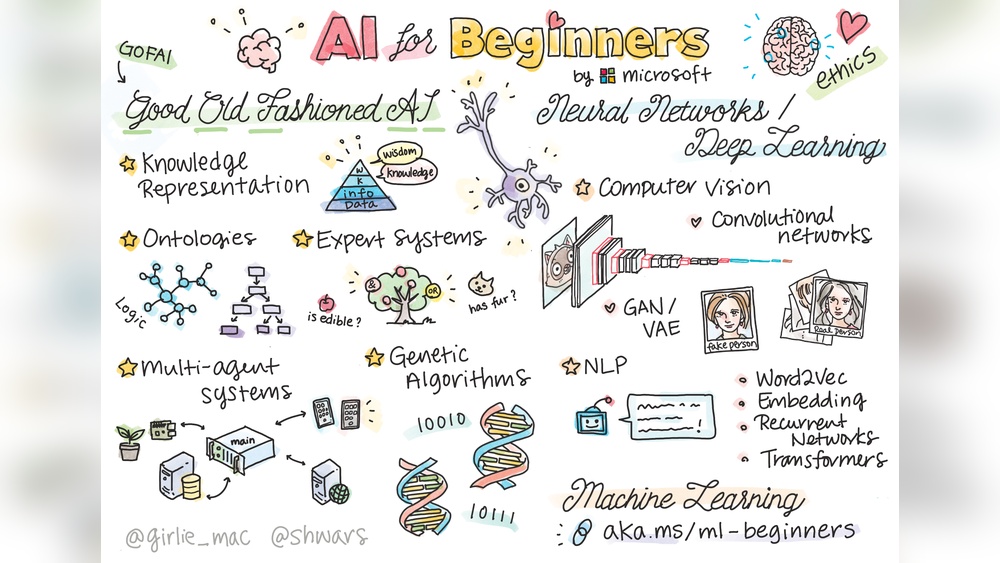
Are you curious about how to learn AI but unsure where to start? You’re not alone.
AI might seem complex, but with the right approach, you can master it step by step. Imagine gaining skills that let you build smart systems, solve real problems, and boost your career—all within your reach. You’ll discover clear, simple steps to learn AI on your own, even if you have no prior experience.
Ready to unlock your potential and see how AI can work for you? Keep reading, and you’ll find a straightforward path to becoming AI-savvy faster than you think.
Foundation Skills
Building a strong foundation is key to learning artificial intelligence (AI). Before diving into complex models, focus on essential skills. These basics will make AI concepts clearer and easier to understand. Start with math, programming, and the right tools. Each skill supports your AI learning journey.
Mathematics Essentials
Math is the backbone of AI. Learn basic algebra to work with equations. Study probability to understand data patterns and uncertainty. Linear algebra helps with vectors and matrices used in AI models. Calculus is important for learning how models improve. Focus on these topics step by step.
Python Programming
Python is the most popular language for AI. It is simple and has many libraries for data work. Learn Python basics like variables, loops, and functions. Practice writing small programs to solve problems. This skill lets you build and test AI models easily.
Data Libraries
Python libraries make AI coding faster and easier. Start with NumPy for math and arrays. Use pandas to handle and analyze data tables. Matplotlib helps create graphs and charts to visualize data. These libraries prepare you to work with real AI projects.
Core Ai Concepts
Understanding core AI concepts is essential for anyone learning artificial intelligence. These ideas form the foundation of how AI systems work and solve problems. Grasping these basics makes advanced topics easier to explore later.
Machine Learning Basics
Machine learning is a key part of AI. It teaches computers to learn from data instead of being programmed. Algorithms find patterns in data to make predictions or decisions. Examples include recognizing images or predicting prices.
Supervised learning uses labeled data to train models. Unsupervised learning finds hidden patterns in unlabeled data. Reinforcement learning trains models through rewards and penalties.
Neural Networks
Neural networks are inspired by the human brain. They consist of layers of nodes called neurons. Each neuron processes input and passes it to the next layer. This structure helps AI recognize complex patterns.
Neural networks are widely used in image and speech recognition. They improve accuracy by adjusting connections during training. This process is called backpropagation.
Deep Learning Tools
Deep learning uses large neural networks with many layers. It handles big data and complex tasks better than basic machine learning. Popular tools include TensorFlow, PyTorch, and Keras.
These tools provide libraries and frameworks to build AI models easily. They support training, testing, and deploying deep learning systems. Beginners can start with tutorials and simple projects.
Online Courses
Online courses offer a flexible way to learn artificial intelligence (AI). They suit beginners and advanced learners alike. You can study at your own pace from anywhere. Courses range from free tutorials to paid, in-depth specializations. This variety helps you pick what fits your needs and budget.
Free Resources
Many platforms provide free AI courses. These cover basics like machine learning and data science. YouTube channels and websites offer tutorials and lectures. Some top universities share course materials online for free. These resources help you start without spending money. They are perfect for those new to AI. You can learn concepts and try simple projects. Free courses often include quizzes and forums for support. This builds a strong foundation before moving to advanced topics.
Paid Specializations
Paid courses offer deeper knowledge and hands-on experience. They usually include projects, certificates, and expert guidance. Platforms like Coursera and Udacity have AI specializations. These cover topics like neural networks, deep learning, and AI ethics. Paid courses often update content to keep up with AI trends. You get access to mentors and peer communities. This support helps solve problems quickly. Investing in paid courses speeds up learning and improves job prospects.
Hands-on Projects
Diving into hands-on projects is essential to learn AI effectively. Projects turn theory into practice and improve your skills quickly. They help you understand AI concepts deeply and solve real problems.
Working on projects also keeps you motivated. You see your progress and feel confident. It builds a strong foundation for advanced learning and job readiness.
Real-world Applications
Choose projects that solve real-world problems. This approach shows how AI works outside textbooks. For example, build chatbots, recommendation systems, or image classifiers. These projects teach you practical skills and common AI tools.
Real-world projects expose you to data cleaning, model training, and evaluation. You learn to handle challenges like missing data or noisy inputs. This experience is valuable in any AI role.
Building Your Portfolio
A portfolio showcases your AI skills to employers or clients. Include detailed project descriptions and your code on platforms like GitHub. This demonstrates your problem-solving ability and coding style.
Update your portfolio regularly with new projects. Highlight diverse skills such as data analysis, machine learning, and neural networks. A strong portfolio increases your chances of landing AI jobs or freelance work.
Ai Research Papers
Reading AI research papers is key to learning about the latest developments. These papers share new ideas, methods, and results from experts worldwide. They help you understand how AI works behind the scenes. Studying them builds a strong foundation in AI concepts.
Research papers can seem hard at first. They use technical words and complex math. But with practice, you can learn to read them effectively. Focus on the main ideas and important results. This will improve your knowledge and keep you updated.
Where To Find Papers
Many websites host AI research papers for free. ArXiv.org is a popular place to start. It has thousands of AI papers from universities and labs. Google Scholar also helps you search for papers by topic or author. Conferences like NeurIPS and ICML publish new research online. University websites and AI labs often share papers too.
Reading Strategies
Start by reading the abstract to get the main idea. Next, look at the introduction and conclusion for context. Focus on the problem the paper solves and the results. Skip detailed math on your first read. Use a notebook to write down key points and questions. Re-read the paper after understanding the basics. Discuss papers with others to deepen your understanding.

Credit: extension.harvard.edu
Ai Communities
Joining AI communities helps learners connect with others who share the same passion. These communities offer support, resources, and real-world advice. Engaging with fellow AI enthusiasts accelerates learning and keeps motivation high. The exchange of ideas and experiences makes complex topics easier to understand.
Forums And Groups
Forums and online groups provide spaces to ask questions and share knowledge. Platforms like Reddit, Stack Overflow, and specialized AI forums host active discussions. Members post tutorials, project ideas, and troubleshooting tips. These communities welcome beginners and experts alike. Regular participation helps build confidence and deepens understanding.
Meetups And Conferences
Meetups and conferences bring AI learners together face-to-face or virtually. Attending these events exposes you to industry trends and expert talks. Networking with professionals can lead to mentorship and collaboration opportunities. Workshops at these gatherings often include hands-on learning sessions. Such experiences boost skills and inspire new project ideas.
Advanced Topics
Advanced topics in AI open doors to exciting and complex areas of study. These topics build on basic AI skills and explore deeper concepts. Learning these subjects helps you understand how AI can mimic human abilities.
Focus on areas like language understanding, image recognition, and decision-making. Each topic requires practice and patience. They form the backbone of many AI applications used today.
Natural Language Processing
Natural Language Processing (NLP) deals with how computers understand human language. It helps machines read, interpret, and generate text or speech. Common uses include chatbots, translation apps, and voice assistants. Learn about text analysis, sentiment detection, and language modeling to get started.
Computer Vision
Computer Vision lets machines see and interpret images or videos. It powers facial recognition, object detection, and self-driving cars. Study image processing, feature extraction, and neural networks. These skills help computers recognize patterns and understand visual data.
Reinforcement Learning
Reinforcement Learning teaches AI to make decisions by learning from experience. It uses rewards and penalties to improve over time. This method applies in robotics, gaming, and real-time systems. Explore concepts like agents, environments, and reward signals to grasp this topic.

Credit: www.geeksforgeeks.org
Ai Tools And Frameworks
AI tools and frameworks help you build and test artificial intelligence models. They offer ready-made functions and structures. These tools make learning AI easier and faster. Many are open source and free to use. Choosing the right tool depends on your goals and skill level.
Tensorflow
TensorFlow is a popular AI framework by Google. It supports deep learning and machine learning tasks. TensorFlow works well for large-scale projects. It has many tutorials and a strong community. Beginners can find simple guides to get started quickly.
Pytorch
PyTorch is another widely used AI library. It is known for its easy-to-use interface. PyTorch allows fast model building and testing. Researchers prefer PyTorch for its flexibility. It supports dynamic computation, which helps in experimentation.
Other Libraries
Besides TensorFlow and PyTorch, many AI libraries exist. Scikit-learn offers tools for data mining and analysis. Keras is a user-friendly library that runs on top of TensorFlow. OpenCV helps with computer vision tasks. Each library serves different AI needs.
Ethics In Ai
Ethics in AI is a vital topic for learners. Understanding ethical issues helps create responsible AI systems. AI affects many parts of life. It can influence decisions in healthcare, finance, and law enforcement. Ethical AI aims to protect people and society from harm. It ensures AI respects human rights and values.
Bias And Fairness
AI systems can show bias if trained on unfair data. Bias leads to wrong or unfair decisions. It can hurt certain groups or individuals. Fairness means treating all people equally. Learning about bias helps build AI that is just and balanced. Developers must check and fix bias in AI models.
Privacy Concerns
AI often uses large amounts of personal data. Protecting this data is crucial. Privacy means keeping personal information safe and private. AI should not expose or misuse data. Understanding privacy laws and practices is important. Ethical AI respects user privacy at all times.
Career Paths
Choosing a career path in AI opens many exciting opportunities. AI touches various industries and roles. Knowing where to focus helps plan your learning and growth. This section explores common AI job roles, how to build a strong resume, and tips for interview preparation.
Job Roles
AI offers diverse roles for different skills and interests. Machine learning engineer builds and trains AI models. Data scientist analyzes data to find trends and patterns. AI researcher explores new algorithms and techniques. AI product manager guides AI projects from idea to launch. Each role has unique tasks and tools to learn.
Building A Resume
Your resume should highlight AI skills and projects. Include programming languages like Python or R. Show experience with machine learning frameworks such as TensorFlow or PyTorch. Add personal or school projects that use AI. Mention any AI courses or certifications completed. Use clear, simple language to explain your work. Keep the resume short and focused.
Interview Preparation
Prepare for technical and behavioral questions. Practice coding problems on AI and data structures. Review basic math concepts like linear algebra and statistics. Be ready to explain your AI projects clearly. Show problem-solving skills and willingness to learn. Research the company’s AI work to tailor your answers. Confidence and clear communication matter most.

Credit: www.analytixlabs.co.in
Frequently Asked Questions
Can I Learn Ai By Myself?
Yes, you can learn AI by yourself using online courses, books, and projects. Focus on math, Python, and machine learning fundamentals. Stay consistent and practice regularly to build skills effectively.
What Is The 30% Rule In Ai?
The 30% rule in AI limits the amount of biased or unreliable data to 30% for model training. It ensures better accuracy and fairness.
Is Ai Easy To Learn For Beginners?
AI is approachable for beginners with dedication. Start by learning Python, basic math, and simple machine learning concepts. Online courses and projects help build skills quickly.
Can I Learn Ai For Free?
Yes, you can learn AI for free using online courses, tutorials, and resources from platforms like Coursera, Google, and ServiceNow. Focus on Python programming, math fundamentals, and practical projects to build your skills effectively.
What Is The Best Way To Start Learning Ai?
Begin with basic AI concepts and take free online courses to build a strong foundation.
Which Programming Languages Are Essential For Ai Beginners?
Python is the most popular language for AI due to its simplicity and rich libraries.
How Long Does It Take To Learn Ai Skills?
It varies, but consistent study over 3 to 6 months can provide solid basics.
What Are Key Topics To Focus On In Ai Learning?
Focus on machine learning, neural networks, data processing, and AI algorithms.
Can I Learn Ai Without A Math Background?
Yes, start with basic math like algebra and statistics, then learn AI step-by-step.
Are There Free Resources To Learn Ai Online?
Many platforms offer free AI courses, including Coursera, Google AI, and ServiceNow University.
Conclusion
Learning AI takes time and steady effort every day. Start with simple lessons and practice often. Use free resources and online courses to build skills. Work on small projects to understand ideas better. Stay curious and keep asking questions along the way.
With patience and focus, AI learning becomes easier. Remember, every expert once began as a beginner. Keep moving forward, and AI knowledge will grow naturally.