Keeping water from freezing in Minecraft is a challenge that many players face, especially when building in cold biomes. Whether you’re designing a farm, a decorative fountain, or an automated contraption, frozen water can ruin your plans and stop machinery.
Understanding why water freezes and the best ways to prevent it is important for any player who wants to build successfully in all environments. This guide will break down every method, from basic tricks to advanced solutions, so you can keep your water flowing and your builds functional in any temperature.
Why Does Water Freeze In Minecraft?
Minecraft has its own set of rules for water freezing. When water blocks are exposed to cold enough conditions, such as in Snowy Tundra or Ice Plains biomes, they can turn into ice. This usually happens at night or when exposed to the sky. Even if your build looks perfect during the day, you might wake up to find your water source completely frozen.
The freezing is not random. It depends on several factors:
- Biome temperature: Colder biomes have a much higher chance of water freezing.
- Altitude: Water at higher altitudes freezes more often.
- Exposure to sky: Water blocks with open sky above freeze more easily.
Understanding these mechanics helps you use the right solution for your needs.
Basic Methods To Prevent Water Freezing
There are several simple ways to stop water from freezing. These methods are easy to apply and require little or no rare resources. They are perfect for beginners or for small-scale builds.
1. Cover The Water
One of the easiest ways to keep water from freezing is to cover it with a block. Minecraft checks if there is a block above the water before deciding if it should freeze.
Common cover choices include:
- Slabs: Place a slab one block above the water. This blocks the sky but still lets you walk over the water.
- Stairs: Similar to slabs, stairs block the sky and look more decorative.
- Full blocks: Any solid block (like dirt, stone, or wood) will also work.
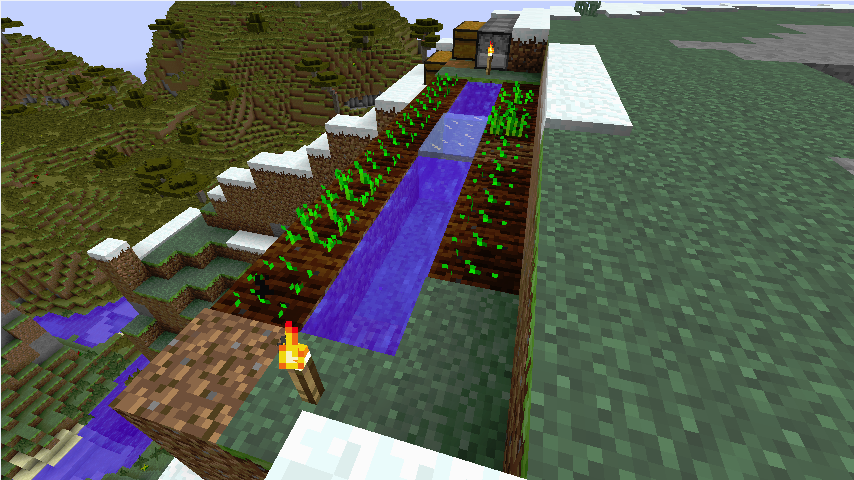
For example, if you’re making a wheat farm, placing slabs over your water channels will keep them unfrozen and still let crops grow. Just make sure the cover is directly above the water block.
2. Use Light Sources
Water blocks will not freeze if they are close enough to a light source. This is because light blocks raise the “light level” of the area, and water only freezes when the light level is 11 or less.
Some effective light sources:
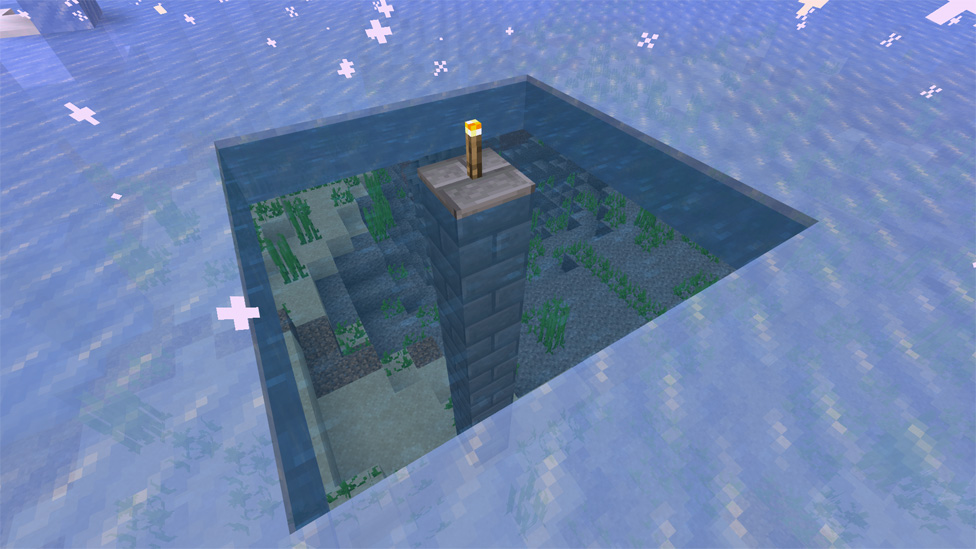
- Torches: Cheap and easy to craft.
- Glowstone: Bright and decorative, works well underwater.
- Lanterns: Stylish and provide strong light.
- Sea Lanterns: Great for underwater builds.
Place your light source near the water. Usually, one torch per water block is enough, but you can space them out and test to see if the water stays liquid.
3. Surround With Blocks
Surrounding your water with solid blocks (on all sides) prevents it from being exposed to freezing conditions. This method is useful for underground builds or hidden water sources.
For example, if you hide your water beneath dirt blocks in a farm, it won’t freeze because there’s no exposure to the cold sky.
4. Use Signs Or Trapdoors
You can place signs or trapdoors above water. These count as blocks for the freezing check, but they don’t block movement like solid blocks. This is a handy trick for decorative builds where you don’t want solid covers.
Trapdoors also allow you to create secret entrances or hidden water pools that stay unfrozen.
Advanced Techniques For Larger Builds
If you are working on larger farms, big decorative fountains, or technical builds, basic methods may not be enough. Here are more advanced ways to keep water from freezing in complicated or large-scale projects.
1. Use Slabs Or Glass Blocks For Aesthetic Builds
While regular blocks work, glass and slabs are often used in public builds and servers for looks. Glass lets you see the water, and slabs can be used in patterns.
You can use combinations, like glass panes with slabs on top, for both aesthetics and function.
2. Use Jack O’ Lanterns Or Glowstone Underwater
For underwater lighting, Jack o’ Lanterns and Glowstone are great because they emit enough light to prevent freezing, even from below the water.
Place them beneath the water source or hidden inside the floor. This keeps the area well-lit and ensures no freezing, even in cold biomes.
3. Use Waterlogged Blocks
Some blocks can be “waterlogged” in Minecraft. This means the block itself holds water. Examples include stairs, slabs, and leaves.
Waterlogged blocks don’t freeze, so you can use them to create streams or decorate without worrying about ice.
4. Use Carpet Or Snow Layers
Placing carpet or snow layers above water also prevents freezing. Carpets don’t block movement and can match the surrounding area for a seamless look.
For example, in an ice biome, placing white carpet above your water blends it into the snow, keeping your build natural-looking.
5. Build Underground Or In Closed Spaces
If your water is never exposed to the sky, it won’t freeze. Building your farm or contraption underground or inside a structure completely prevents freezing.
This is a common strategy for automated farms and redstone builds.
Using Game Rules And Commands
For those who play in Creative mode or have access to commands, there are ways to change the game rules to prevent water from freezing completely.
1. Disable Random Tick Updates
Minecraft water freezing is controlled by “random ticks. ” You can disable these to stop water from freezing.
Use the command:
/gamerule randomTickSpeed 0
This will stop all random ticks, including crop growth and ice formation. But be careful—this also stops many other game processes.
2. Use The Doweathercycle Rule
Sometimes, water freezes because of snow or changing weather. Disabling weather cycles with:
/gamerule doWeatherCycle false
Can prevent snow from falling, though it doesn’t stop freezing directly.
3. Use Fill And Setblock Commands
If you want to replace ice with water automatically, you can use commands like:
/fill x1 y1 z1 x2 y2 z2 minecraft:water
Or use:
/setblock x y z minecraft:water
This is useful for map makers or large servers who need to keep water unfrozen in large areas.
Comparing Methods: Effectiveness And Use
Here’s a comparison of the most common methods to prevent water freezing, including their strengths and best use cases.
| Method | Effectiveness | Best For | Resource Cost |
|---|---|---|---|
| Covering with Slabs/Blocks | High | Farms, Fountains | Low |
| Using Light Sources | Medium-High | Decorative Builds | Medium |
| Surrounding with Blocks | High | Hidden Water, Technical Builds | Low |
| Waterlogged Blocks | High | Streams, Aesthetic Projects | Low-Medium |
| Game Rules/Commands | Very High | Creative/Servers | None |
Real Examples: Where Water Freezing Matters
Water freezing can affect many kinds of builds. Here are some practical scenarios where it’s a big deal:
1. Crop Farms
Crops like wheat, potatoes, and carrots need water nearby to grow quickly. If your water source freezes, your crops will dry out and grow much slower. Covering your water with slabs or adding torches is the best solution here.
2. Automatic Sugar Cane Farms
Sugar cane also needs water. In cold biomes, ice can break your farming machines. Using glowstone under the water or building your farm underground are the most effective fixes.
3. Decorative Fountains And Ponds
If you build a fountain in a snowy village, you don’t want it turning to ice. Glass covers, underwater lighting, or even carpets can keep the water looking good year-round.
4. Redstone Contraptions
Some redstone machines use water for item movement or mob transportation. Freezing water can break these systems. Hiding water in blocks or using waterlogged blocks often works best.
5. Ice Roads And Boat Highways
Sometimes, you want water to freeze! For fast travel, players make ice roads. In these cases, use the opposite methods—keep water exposed to sky and in cold biomes. Knowing both sides helps you control your builds better.
Credit: scalacube.com
Common Mistakes And How To Avoid Them
Many players make mistakes when trying to stop water from freezing. Avoid these for best results:
- Using Too Few Light Sources: Not all light blocks have the same power. Make sure the light level stays above 11.
- Leaving Gaps in Covers: Even a small gap above water can cause freezing.
- Using Transparent Blocks Incorrectly: Glass blocks work, but glass panes do not always stop freezing.
- Forgetting About Biome Edges: Sometimes, your build overlaps two biomes. Parts may freeze while others stay liquid.
- Not Testing Your Solution: Always wait through a night cycle to check if your water freezes.
How Water Freezing Works: Behind The Scenes
Understanding Minecraft’s freezing rules can help you plan better. Here’s a look at the mechanics:
- Water checks if it can freeze every tick (randomly).
- If the biome temperature is below 0.15, water can freeze if exposed to the sky and the light level is 11 or lower.
- Water surrounded completely by blocks does not freeze.
- If water freezes, it turns to ice, which you can break to get water back (unless you’re in the Nether).
This explains why methods like covering or lighting work—because they change the block’s exposure or the light level.
Water And Temperature: Biome Effects
Different biomes have different risks for water freezing. Here’s a quick look:
| Biome | Freezing Chance | Special Notes |
|---|---|---|
| Snowy Tundra | Very High | Water will freeze quickly if exposed |
| Taiga | High | Light sources needed to keep water liquid |
| Plains | Low | Rare freezing, usually safe |
| Desert | None | Water never freezes |
| Mountain | Medium | Higher altitudes increase freezing risk |
If you build in a cold biome, always plan for water freezing and use the right protection.
Practical Tips And Non-obvious Insights
Many players overlook simple tricks that can make a big difference. Here are two insights beginners miss:
- You Can Stack Methods: Combining covers with light sources offers double protection. For example, use slabs above water with glowstone underneath for a zero-fail solution.
- Biome Detection Is Key: Before building, press F3 (Java Edition) to check your biome and temperature. Sometimes, a few blocks can make the difference between freezing and not.
Another tip: for infinite water sources, always protect the center block. If the middle freezes, your source breaks.
Credit: gaming.stackexchange.com
When Should You Allow Water To Freeze?
There are times when you want water to freeze. Some players use ice for decoration, quick travel, or mob control. You can reverse the above strategies: remove covers, lower light, and build in cold biomes.
For example, ice roads allow boats to move at record speeds. In these cases, build your water channel, make sure it’s exposed to the sky, and let it freeze.
Bedrock Vs Java: Differences In Water Freezing
Minecraft has two main versions: Java Edition and Bedrock Edition. Freezing works a bit differently between them.
- In Java, water freezing is more common at higher altitudes and in cold biomes.
- In Bedrock, the freezing area can be larger, and sometimes light sources don’t prevent freezing as well as in Java.
Always test your build in your specific version to ensure your solution works.
Automation: Keeping Water Unfrozen On Servers
On large servers or adventure maps, water freezing can break games for many players. Admins use plugins or command blocks to keep water unfrozen, but regular players can use the above tricks.
Some servers use the WorldGuard plugin to prevent water freezing in certain areas. For more on server management, see Minecraft Server Wiki.
Debugging And Testing Your Build
After building, always test:
- Wait through several Minecraft nights to check for freezing.
- Try removing one method (like light) to see if the water still stays liquid.
- Check all biomes and edges of your build for missed spots.
If you find a frozen block, try adding light or a cover and retest.

Credit: www.youtube.com
Frequently Asked Questions
How Do You Keep Water From Freezing In Minecraft Without Light?
You can use slabs, trapdoors, or any solid block above the water to stop freezing. The water needs to be covered directly above, not just nearby. This blocks the freezing check even without any light source.
Does Water Freeze In All Minecraft Biomes?
No, water only freezes in cold biomes, such as Snowy Tundra, Taiga, and mountains at high altitude. In warm biomes like deserts, jungles, or savannas, water will never freeze, no matter what.
Can You Stop Water From Freezing In Minecraft Using Commands?
Yes, you can set the randomTickSpeed gamerule to 0, which stops all random updates, including water freezing. You can also use the /fill or /setblock commands to replace ice with water. These methods require Creative mode or admin rights.
Do Torches Always Stop Water From Freezing?
Torches work if they are close enough to the water. The light level must be above 11 at the water block. If your torch is too far, the water may still freeze. For best results, place torches right next to or above the water.
What Is The Best Way To Keep A Large Water Area From Freezing?
For big areas, combine methods: use slabs or glass to cover the surface, and place light sources like glowstone underwater. For huge projects, using commands or building indoors is the most reliable way.
Keeping water from freezing in Minecraft is simple once you know the rules. With these strategies, your farms, fountains, and machines will work perfectly in any biome. Don’t let ice slow you down—plan ahead and enjoy building in every corner of your Minecraft world!