Have you ever wondered how much water powers the AI services you use every day? From chatting with virtual assistants to streaming smart recommendations, AI is quietly consuming a surprising amount of water behind the scenes.
You might think water use is only about drinking or farming, but the truth is AI’s thirst runs deep—cooling massive data centers, fueling power plants, and even in the tiny chips that make AI possible. If you care about your environmental impact or just want to understand the hidden costs of AI, keep reading.
This article breaks down exactly how much water AI uses and why it matters to you.
Credit: www.washingtonpost.com
Ai And Water Use Basics
Artificial intelligence relies heavily on data centers and power sources. These systems require large amounts of water to function efficiently. Understanding the basics of AI’s water use helps reveal its environmental impact.
Water is essential in cooling the hardware that runs AI programs. Without proper cooling, servers can overheat and fail. This cooling process often consumes millions of gallons of water daily in large data centers.
Water Usage In Data Centers
Data centers house thousands of servers that generate a lot of heat. To keep these servers cool, many data centers use water-based cooling systems. These systems absorb heat and release it safely.
Some data centers use direct cooling methods, where water flows directly through cooling towers. This method uses the most water but is very effective at managing temperature.
Indirect Water Use In Ai
AI systems also use water indirectly through electricity generation. Power plants, especially thermoelectric and hydroelectric plants, consume large amounts of water to produce energy.
The electricity needed to run AI servers contributes significantly to total water consumption. This hidden water use often goes unnoticed but is part of AI’s water footprint.
Water Use In Hardware Production
Manufacturing the hardware for AI requires water too. Producing microchips uses water in cleaning and cooling during fabrication. A single chip can use over two gallons of water to produce.
This manufacturing water adds up because AI systems need many chips and hardware components to operate.

Credit: www.reddit.com
Water In Data Center Cooling
The scale of AI water consumption is vast and growing. AI systems need a lot of water to function properly. This is mainly due to the cooling requirements of data centers and power generation.
Data centers house thousands of servers that generate heat. To keep them cool, these centers use millions of gallons of water every day. Without efficient cooling, servers would overheat and fail.
Besides direct cooling, AI’s water use includes electricity production. Power plants, especially thermoelectric ones, consume large amounts of water to produce energy. AI’s demand for power indirectly increases water consumption.
Direct Cooling Water Usage
Cooling systems in data centers are the biggest water consumers. Water absorbs heat from the servers and carries it away. Some data centers use open-loop cooling, drawing water from natural sources. Others use closed-loop systems to recycle water and reduce usage.
Indirect Water Use Through Electricity
AI relies on electricity, which often depends on water. Thermoelectric power plants use water to cool turbines and condense steam. Hydroelectric power consumes water in a different way but still affects water resources. This indirect use adds significantly to AI’s water footprint.
Water Footprint Of Hardware Production
Manufacturing AI hardware also consumes water. Creating microchips takes around two gallons of water per chip. This includes water for cleaning, cooling, and chemical processing. As AI hardware demand grows, so does water use in production.
Company-reported Water Consumption
Major tech companies report billions of gallons of water used yearly. Microsoft and Google disclose water use for their global data centers. Their water consumption increases with AI development and expansion. Monitoring these figures helps raise awareness of AI’s environmental impact.
Electricity’s Water Footprint
AI’s demand for water grows as technology expands. The long-term water impact covers more than daily use. It includes effects on water sources and ecosystems over time. Understanding these effects helps plan sustainable AI growth.
Continuous Cooling Needs
Data centers run AI systems nonstop. Cooling servers requires constant water flow. This ongoing demand strains local water supplies. Over years, water tables may drop near large centers. This can harm nearby communities and nature.
Electricity Generation And Water Use
AI uses vast electricity to operate. Many power plants rely on water for cooling. Thermoelectric plants pull large amounts of water. Hydroelectric plants affect river flows. Long-term water use for power adds pressure on freshwater sources.
Water Footprint Of Hardware Production
Manufacturing AI hardware consumes water too. Producing microchips can use gallons of water per chip. This adds up as AI devices multiply. The long-term effect means more water is tied to hardware making. This demand can increase water stress globally.
Impact On Regional Water Resources
Data centers often cluster in specific regions. These areas may face water shortages from AI growth. Local rivers and groundwater face extra depletion. Wildlife and agriculture may suffer from less water. Careful resource management is essential to prevent damage.
Water In Hardware Manufacturing
Artificial intelligence (AI) is growing fast in many industries. This growth comes with environmental concerns. One major issue is how much water AI systems use. Water is vital for cooling, power, and hardware production. Understanding AI’s water demand helps us see its impact on nature.
Many people do not realize that AI needs large amounts of water. Data centers, where AI runs, consume millions of gallons daily. This water use affects local water supplies and ecosystems. It is important to explore where this water goes and why it matters.
Water Usage In Data Centers
Data centers house powerful computers for AI tasks. These machines generate a lot of heat. Cooling systems use water to lower temperatures and protect equipment. Some data centers use direct cooling, which relies heavily on water.
Large centers can use millions of gallons per day. This heavy water use can strain local resources, especially in dry regions. Cooling is the biggest water consumer in data centers.
Indirect Water Use From Electricity
AI systems need electricity to run. Power plants that produce this electricity also use water. Thermoelectric plants cool their machinery with water, adding to the total water footprint. Hydroelectric plants rely on water flow but do not consume it.
The water used in electricity generation adds to AI’s overall water consumption. This indirect use is often overlooked but is significant.
Water In Hardware Production
AI requires specialized hardware like microchips. Making these chips uses water in cleaning and manufacturing. Estimates suggest one chip can need over two gallons of water. This adds up as AI devices multiply worldwide.
The hardware production water footprint contributes to AI’s environmental impact. Reducing water use here can help lower AI’s total water demand.
Scale Of Ai Water Consumption
Reducing AI’s water footprint is crucial for a sustainable future. AI technology relies heavily on data centers and power plants, both of which consume large amounts of water. Cutting down this water use can help protect scarce water resources. Small changes in how AI systems operate can lead to big savings in water.
Data centers use water mainly for cooling servers. Improving cooling methods reduces water use. Also, choosing energy sources that use less water helps lower indirect water consumption. Companies and users can support these practices to shrink AI’s water impact.
Optimizing Cooling Systems
Cooling servers with water is common but water-intensive. Switching to air cooling or liquid cooling with recycled water cuts water use. Using advanced cooling designs can reduce the need for fresh water. These changes keep servers cool while saving millions of gallons.
Using Renewable Energy Sources
Power plants supplying electricity to AI often consume water. Renewable energy like solar or wind uses little to no water. Moving AI operations to renewable-powered data centers lowers water footprints. This shift also reduces pollution and supports clean energy growth.
Designing Energy-efficient Ai Models
AI models that require less computing power use less electricity and water. Developing efficient algorithms reduces the need for constant training and processing. Efficient AI cuts down energy and water use during operation. This approach makes AI more sustainable and affordable.
Encouraging Water-smart Ai Practices
Companies can track and report water use in AI operations. Setting water reduction goals encourages smart resource management. Users can support services that prioritize water efficiency. Transparency and awareness drive better decisions and lower water waste.
Credit: engineeringprompts.substack.com
Frequently Asked Questions
How Much Water Does Ai Need?
AI consumes millions of gallons of water daily, mainly for cooling servers and powering data centers. Hardware production also adds to its water footprint.
How Much Water Does Chatgpt Use Per 100 Words?
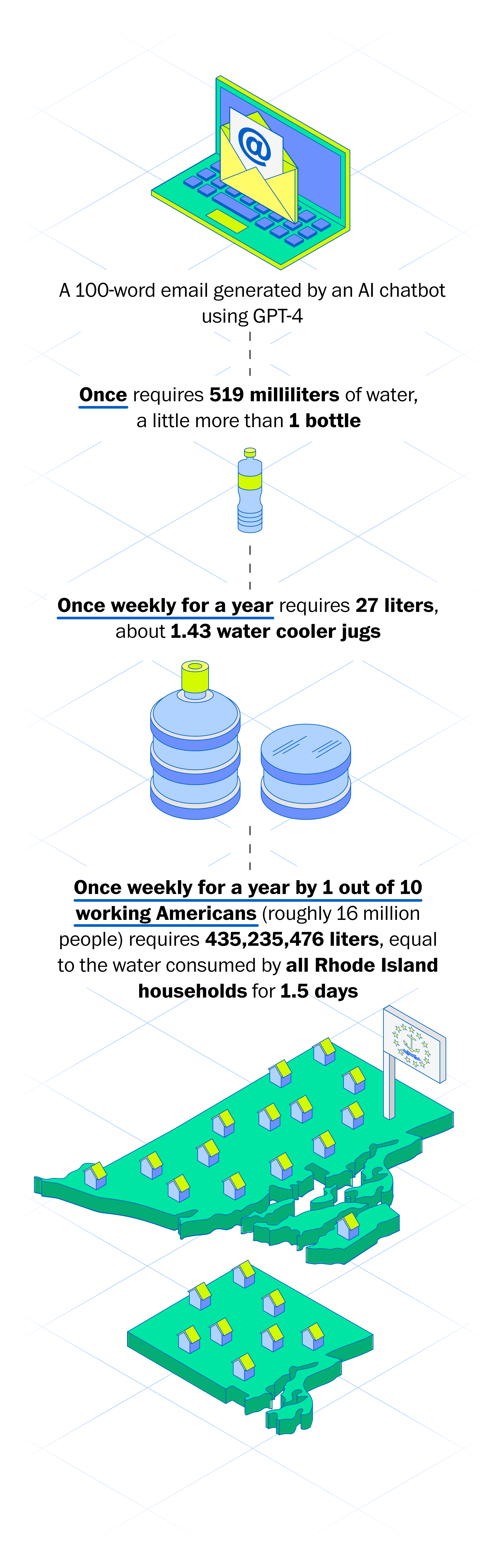
ChatGPT indirectly uses about 1. 5 to 3 liters of water per 100 words. This water cools data centers and powers electricity generation.
Does Ai Cost A Lot Of Water?
AI consumes a large amount of water mainly for cooling data centers and powering electricity plants. Hardware production also uses water.
What Is 70% Of The World’s Water Used For?
Seventy percent of the world’s water is used for agriculture, mainly irrigation to grow crops and feed livestock.
How Much Water Does Ai Consume Daily?
AI systems use millions of gallons daily, mainly for cooling data centers and generating electricity.
Why Do Ai Data Centers Use So Much Water?
Water cools servers in data centers to prevent overheating and maintain performance.
How Does Electricity Affect Ai’s Water Use?
Power plants need large water volumes to produce electricity for AI operations.
What Is The Water Footprint Of Ai Hardware Production?
Manufacturing AI chips can use over two gallons of water per chip.
Which Part Of Ai Uses The Most Water?
Cooling servers in data centers accounts for the largest share of water use.
How Do Companies Report Ai Water Consumption?
Big firms like Google and Microsoft report billions of gallons yearly for data centers.
Conclusion
AI systems consume a lot of water, mainly for cooling servers. Data centers use millions of gallons daily to keep machines from overheating. Power plants also use water to create electricity that runs AI. Making AI hardware adds to this water use too.
As AI grows, so does its water footprint. Understanding this helps us think about sustainability. Small changes can reduce water use in technology. Everyone can play a part in saving this vital resource. Awareness leads to better choices for the planet’s future.