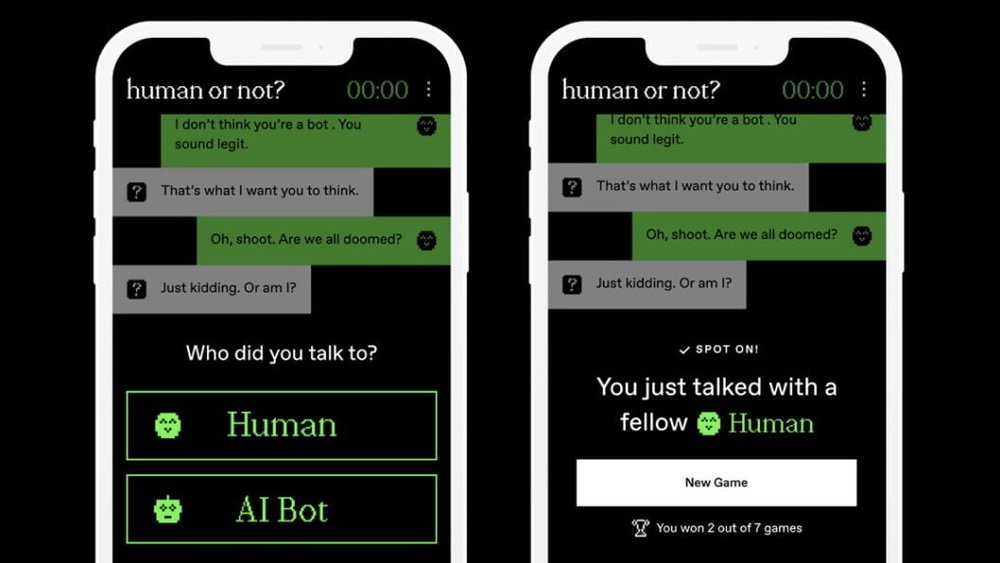
Have you ever found yourself wondering, “Am I talking to a human or AI?” It’s not always easy to tell. You might notice something feels off—maybe the replies come too fast, or the language seems too perfect.
But what exactly should you look for? You’ll discover simple yet powerful clues that reveal whether the person—or bot—on the other side is real. By the end, you’ll have the confidence to spot AI-generated responses and avoid being fooled. Ready to sharpen your detection skills?
Let’s dive in.

Credit: www.reddit.com
Speed Of Responses
Speed of responses offers a clear hint about whether you are talking to a human or AI. Humans need a moment to read, think, and type their replies. AI systems, however, can generate answers almost instantly. This difference in timing helps you detect the nature of your conversation partner.
Fast replies do not always mean AI, but unusually quick responses might raise suspicion. Humans usually have small pauses, typos, or corrections. AI tends to reply smoothly and without delay. This smoothness can seem unnatural in a casual chat.
Instant Replies Without Pauses
AI often answers immediately after you send your message. No hesitation or thinking time is visible. Humans take a few seconds to type or consider their answers. If the reply is too fast and perfect, it might be AI.
Consistent Speed In Every Response
AI maintains a steady response speed throughout the conversation. Humans vary their typing speed depending on the question. Some answers take longer, others come quickly. If the speed never changes, you might be talking to a bot.
Fixed Delay Patterns
Some AI use fixed delays to seem more human. They reply exactly after a set number of seconds. This pattern feels mechanical and predictable. Humans rarely respond with such regular timing.
Credit: www.youtube.com
Language Flaws And Perfection
Language is a key clue in telling humans and AI apart. Humans naturally make small errors in speech and writing. These flaws include typos, slang, and varied sentence lengths. Such imperfections make human language feel real and relatable.
AI, on the other hand, often produces flawless and consistent language. It rarely makes spelling mistakes or uses slang incorrectly. The sentences tend to be perfectly structured and formal. This can make AI language sound robotic or unnatural.
Noticing these differences helps to identify who or what you are talking to. Language flaws are signs of human presence. Too much perfection might indicate an AI is responding.
Human Language Flaws
Humans often mix formal and informal language. They pause, hesitate, or correct themselves. Typos and misspellings appear in casual chats. People use slang and idioms naturally. Emotions also affect how sentences are formed. These small errors add authenticity and warmth.
Ai’s Language Perfection
AI generates text with perfect grammar and spelling. It follows strict rules of syntax and style. AI avoids slang or complex idioms. The tone remains steady and consistent. Replies come quickly and without hesitation. This polished style can feel cold or mechanical.
Spotting The Difference
Look for natural mistakes like typos or slang. Notice if replies come instantly and perfectly formed. Check if the language feels too formal or robotic. Pay attention to repeated phrases or fixed patterns. These signs help decide if you talk to a human or AI.
Repetitive Phrases
Repetitive phrases often hint at AI-generated text, as bots tend to reuse the same words or sentences. Humans usually vary their language and make small mistakes, while AI replies sound polished but predictable. Spotting repeated expressions can help tell if you’re talking to a machine.
Spotting Repetitive Phrases
Repetitive phrases often reveal if you are talking to AI. Unlike humans, AI tends to repeat the same words or sentences. This happens because AI follows programmed patterns and scripts.
Humans usually vary their language and expressions. They use different words to explain the same idea. Repetition in AI conversations can feel unnatural and robotic.
Why Ai Repeats Phrases
AI repeats phrases when it does not understand a question. It may loop back to familiar responses. This keeps the conversation going but feels scripted.
Sometimes AI uses repeated phrases to fill gaps in knowledge. It avoids admitting it lacks an answer. This repetition can frustrate or confuse users.
How To Use Repetitive Phrases As A Clue
Listen for exact phrases that show up multiple times. Watch if responses sound copied or too similar. These signs often point to AI rather than a human.
If the conversation feels stuck on a few repeated lines, it may be a bot. Humans naturally change their wording and tone more often.
Handling Unexpected Questions
Handling unexpected questions reveals if you talk to a human or AI. Humans think quickly and answer with feelings. AI may struggle or give strange replies.
Unexpected questions test if the answer is natural or scripted. Humans can change tone and style easily. AI often repeats phrases or avoids the question.
How Ai Responds To Surprising Questions
AI tries to find a related answer fast. It may repeat parts of the question. Sometimes, AI gives vague or generic replies. It avoids personal opinions or feelings.
How Humans Handle Odd Or Off-topic Questions
Humans pause to think or joke about odd questions. They use emotions and personal views in their answers. Their replies feel natural and varied. They can admit if they don’t know.
Spotting Ai By Testing With Strange Questions
Ask random or unusual questions. AI may respond with confusion or unrelated answers. Humans show surprise or clarify the question. This test helps identify if the chat is automated.
Personal Opinions And Subjectivity
Personal opinions reveal if you’re talking to a human or AI. Humans share feelings and unique views. AI tends to give neutral, generic responses without real emotions.
Understanding Personal Opinions In Conversations
Humans share thoughts shaped by feelings and experience. Opinions reflect personal views and tastes. AI does not form true opinions. It generates responses based on data and patterns. This difference helps in telling humans and AI apart.
Humans often express emotions and biases. They may change opinions over time or with new information. AI usually provides neutral, balanced answers. It avoids strong or controversial stances. This is because AI aims to be fair and safe.
Subjectivity And Its Role In Communication
Subjectivity means seeing things from a personal angle. Humans use subjectivity to add depth and color to talks. They judge based on feelings and values, not just facts. AI responses focus on facts and logic. They lack emotional context or personal judgment.
When someone shares a story or preference, it shows subjectivity. AI can mimic this style but cannot truly feel it. This leads to differences in tone and sincerity. Humans can disagree passionately. AI stays calm and neutral.
Spotting Differences Through Opinions And Subjectivity
Ask questions that require personal views or feelings. Humans provide unique, varied answers. AI replies may seem vague or generic. Look for signs of real experience or emotion. AI responses often lack depth in subjective topics.
Humans may use slang, humor, or express doubts. AI tends to avoid these or uses them incorrectly. Personal stories and spontaneous reactions indicate a human. AI sticks to safe, rehearsed patterns. These clues help identify who you are talking to.
Visual Clues In Videos
Visual clues in videos help identify if a speaker is human or AI. Videos show more than words. They reveal subtle signs that AI often misses.
AI-generated videos sometimes have strange visual glitches. These can make the speaker seem less natural. Watching closely helps spot these errors.
Unnatural Facial Expressions
AI videos often show odd facial movements. Expressions may flicker or look frozen. Human faces move smoothly and react naturally.
Look for blinking patterns. AI may blink too fast or not at all. Also, check if the smile or frown matches the spoken words.
Robotic Body Language
Body movements in AI videos can seem stiff or jerky. Humans shift weight and gesture fluidly. AI might repeat the same gestures unnaturally.
Notice if the hands move in sync with speech. Odd pauses or repeated motions suggest artificial generation.
Inconsistent Lighting And Shadows
AI videos sometimes have strange lighting effects. Shadows may flicker or disappear oddly. Real videos have consistent lighting matching the environment.
Check if shadows fall correctly on the face and background. Odd shadows are a common AI giveaway.
Audio-visual Mismatch
Audio and video can be out of sync in AI clips. Lips may not match spoken words perfectly. Background noises might seem unrelated to the scene.
Listen for robotic voices or unusual inflections. These indicate synthesized speech rather than a real person talking.
Audio And Voice Patterns
Audio and voice patterns reveal much about the speaker. They help identify if you are talking to a human or an AI. Humans speak with natural variation in tone and rhythm. AI voices often sound too smooth or mechanical. Listening closely can expose subtle clues.
Voice irregularities and natural mistakes make human speech unique. AI tends to lack these small flaws. It often uses perfect pronunciation and steady pacing. This can make the conversation feel less genuine or robotic.
Speech Rhythm And Pace
Humans speak with varied speed and natural pauses. They hesitate, repeat words, or correct themselves. AI usually responds quickly and evenly. It may have no pauses or unnatural delays. A steady, fast pace without errors can hint at AI involvement.
Tone And Emotional Expression
Human voices show emotion and mood changes. They sound excited, sad, or confused at times. AI voice lacks true emotions. Its tone can feel flat, monotone, or overly cheerful. Emotional inconsistency often signals a machine voice.
Pronunciation And Accent Variations
Humans have diverse accents and sometimes mispronounce words. AI voices are often clear and uniform. They speak with perfect diction and little variation. If the accent sounds too consistent or unnatural, it may be AI.
Background Noise And Sound Quality
Real conversations include ambient sounds and slight background noise. AI-generated audio tends to be clean and free of distractions. Missing natural background sounds or odd audio effects can indicate an AI voice. Pay attention to sound quality for clues.
Facial And Body Language
Facial expressions and body movements tell a lot about a person. They show true feelings and reactions. These signals are hard to fake perfectly.
When talking to someone, notice how their face changes with emotions. Watch their eyes, mouth, and eyebrows for natural movements. Body language adds another layer of meaning to words.
Facial Expressions
Humans show varied expressions like smiles, frowns, and surprise. These change quickly and fit the conversation mood. AI-generated faces often miss these quick shifts or look frozen.
Artificial faces may have strange blinking or unnatural smiles. They can seem too smooth or too stiff. Real faces have small wrinkles and tiny imperfections.
Eye Movements
People’s eyes move naturally as they think or react. They blink, look away, and focus on different points. AI faces sometimes have fixed gaze or odd blinking patterns.
Watch if eye contact feels natural or robotic. Too steady or too random eye movement may hint at AI. Humans rarely stare without shifting their gaze.
Body Gestures
Human gestures match what they say. Nods, hand movements, and posture change with emotions. AI avatars may repeat the same gestures or move awkwardly.
Natural body language flows smoothly and fits the context. Robotic or jerky movements often reveal AI. Humans show subtle changes in stance and gestures.
Inconsistencies In Behavior
Noticing inconsistencies in behavior helps identify if you are talking to a human or AI.
Humans show natural variations in tone, speed, and emotion during conversations. AI often lacks this variety.
Small changes in mood or style happen naturally with humans but rarely with AI.
Unnatural Speed And Response Time
AI tends to reply very fast, sometimes instantly. Humans need time to think and type.
Consistently quick answers may suggest an automated system, not a real person.
Some AIs use fixed delay scripts to seem more human, but delays may feel unnatural.
Repetitive Language And Patterns
AI often repeats phrases or uses similar wording. This happens when it does not understand a question.
Humans usually change their words and try new ways to explain things.
Repetition can signal a bot stuck in a script or limited programming.
Lack Of Personal Opinions
AI often avoids personal or controversial opinions. It gives generic, safe answers instead.
Humans express feelings and clear views, even if they differ from others.
Asking about feelings or opinions on sensitive topics can reveal AI limitations.
Inability To Handle Off-script Questions
AI struggles with unexpected or strange questions. It may give confused or unrelated replies.
Humans adapt quickly and think creatively about new topics or surprises.
Try asking unusual questions to test if the responses feel natural or forced.
Testing With Unexpected Queries
Testing with unexpected queries is a smart way to find out if you are talking to a human or an AI. It means asking questions that are unusual or do not follow the normal pattern of conversation. This technique can reveal how well the responder handles surprises or changes in topic.
Humans can think quickly and change their answers based on new information. AI, on the other hand, may struggle with questions that do not fit its programming. It might give vague or off-topic replies. This makes unexpected queries a useful tool to spot AI in chats, emails, or customer support.
How Ai Responds To Strange Or Random Questions
AI often tries to find the closest match to your question in its database. When faced with strange or random questions, it might repeat parts of the question or give a generic answer. Sometimes, it may fail to answer at all. This shows limits in understanding and creativity.
Human Ability To Adapt And Improvise
Humans can use imagination and personal experience to answer odd questions. They can joke, show emotions, or even admit they do not know the answer. This natural flexibility is hard for AI to copy. It helps to identify if the responder is a person or a machine.
Examples Of Effective Unexpected Queries
Try asking about personal opinions on unusual topics. For example, “What do you think about talking cats?” or “Can you describe a dream you had last night?” Such questions require personal thought. AI usually avoids or dodges these questions.
Why Unexpected Queries Reveal Ai Limitations
AI follows scripts and algorithms. It lacks true feelings and personal memories. Unexpected queries force it off its usual path. This causes errors, strange answers, or silence. Humans, however, handle surprises naturally and with ease.
Credit: www.zdnet.com
Frequently Asked Questions
How Can You Tell If You’re Talking To Ai?
You can tell you’re talking to AI by its instant replies, flawless grammar, repetitive phrases, and avoiding personal opinions. AI often struggles with unexpected questions and shows inconsistent tone or style.
What Is The 30% Rule For Ai?
The 30% rule for AI suggests limiting AI-generated content to 30% of total output. This maintains authenticity and boosts SEO by blending human and AI work effectively.
How To Tell The Difference Between Ai And Human Voice?
Identify AI voice by its unnatural speed, flawless grammar, repetitive phrases, and lack of personal opinions or emotional variation.
What Is The Test To See If You Are Talking To A Robot?
The test to see if you are talking to a robot involves checking response speed, language flaws, repetitive phrases, and inconsistent tone. Ask unexpected questions to spot scripted or generic answers. Robots often lack personal opinions and cannot handle off-script conversations.
How Can I Tell If I’m Talking To An Ai Or Human?
Look for unnatural speed, perfect grammar, repetitive phrases, and lack of personal opinions.
Why Do Ai Responses Seem Too Fast Or Perfect?
AI replies instantly and uses flawless language without typical human errors or delays.
What Does Repetitive Language In A Chat Indicate?
Repetitive phrases often mean you are talking to an AI bot following a script.
Can Ai Handle Unexpected Or Off-topic Questions?
AI struggles with off-script questions and may give generic or confused answers.
How Do Personal Opinions Reveal If It’s Ai Or Human?
Humans share unique opinions; AI avoids subjective views and stays neutral.
Are There Visual Signs Of Ai In Videos Or Calls?
Look for strange flickers, unnatural body movement, and inconsistent facial expressions.
Conclusion
Distinguishing between a human and AI takes close attention. Notice how quickly replies come and whether language feels natural. Humans make small mistakes; bots often do not. Repetitive phrases or avoiding personal opinions can be a clue. Unexpected questions may reveal a bot’s limits.
Watching for these signs helps you understand who or what you’re talking to. Stay curious and trust your instincts when chatting online.