You probably rely on Google every day to find quick, reliable answers. But with the rise of generative AI, you might wonder if it’s an even better way to search.
The truth is, generative AI isn’t always the smarter choice. It can give you answers that sound confident but are often inaccurate or biased. Unlike Google’s vast index of trusted sources, generative AI creates responses from patterns, which can lead to misleading or incomplete information.
If you want to know exactly how generative AI falls short compared to Google searching—and why that matters for your daily information needs—keep reading. This insight could change how you search forever.
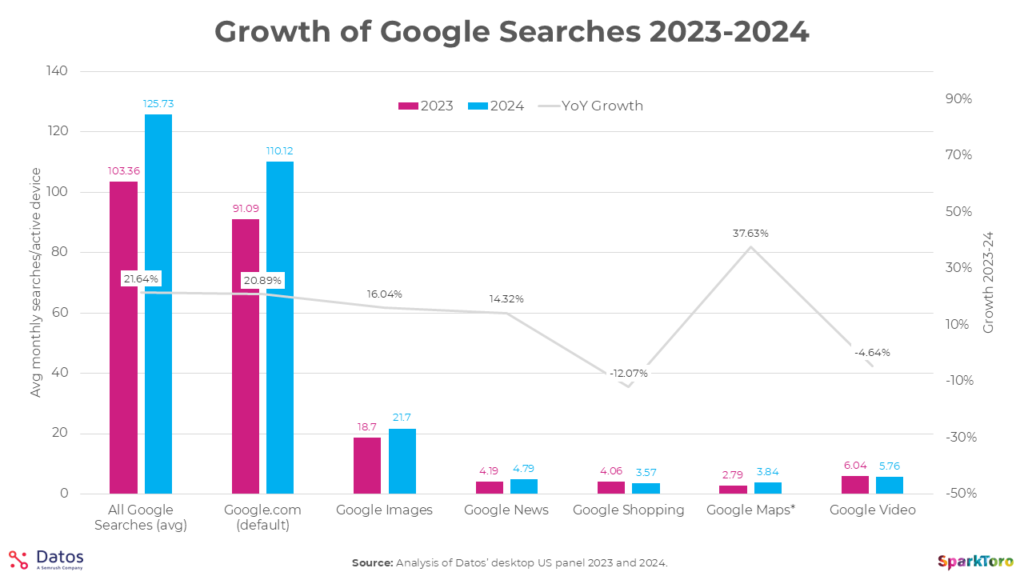
Credit: sparktoro.com
Generative Ai Vs Google Search
Generative AI and Google Search serve different roles in finding information online. Generative AI creates answers by predicting text based on patterns it learned. Google Search finds and lists web pages that match your query. Both tools help users, but they do so in unique ways.
This section compares Generative AI and Google Search. It highlights where Generative AI can fall short compared to Google’s search engine.
How Generative Ai Creates Responses
Generative AI uses large language models to produce text. It predicts the next word in a sentence based on training data. It does not verify facts or check sources. This can cause mistakes or made-up information.
How Google Search Finds Information
Google Search scans billions of web pages to find relevant results. It ranks pages by reliability and popularity. Users can see multiple sources and choose the best one. This helps confirm facts from trusted sites.
Accuracy And Trust Issues
Generative AI may give confident but incorrect answers. It cannot show sources or proof for its claims. Google Search points to original websites for users to verify. This makes Google more trustworthy for precise information.
Handling Complex Or Updated Queries
Generative AI struggles with very new or detailed questions. Its training data may be outdated or incomplete. Google Search can find the latest news and updates instantly. This keeps users informed with current facts.
User Control And Transparency
Google Search lets users pick from many results and check links. Generative AI offers one generated answer without options. Users have less control and less insight into how answers form.
Accuracy Challenges In Ai
Generative AI faces notable accuracy challenges compared to Google search. This technology creates answers based on patterns in data, not verified facts. Mistakes can happen easily. These errors affect trust and usefulness.
Google search uses links and trusted sources to show results. It points users to original content. Generative AI tries to produce direct answers but may guess or fill gaps incorrectly. This causes confusion and spreads misinformation.
Html Syntax: Less Reliable Data Sources
Generative AI trains on vast internet data. Some of this data is outdated or wrong. AI cannot always tell true from false information. It mixes facts with errors. Google search ranks pages by reliability, reducing false content.
Html Syntax: No Real-time Fact Checking
Generative AI does not check facts live. It answers using learned knowledge up to a certain date. Google constantly updates its index and shows current information. AI’s static knowledge leads to outdated or wrong answers.
Html Syntax: Difficulty Understanding Context
AI struggles to grasp full context in questions. It may miss nuances or intent behind queries. Google’s algorithms better understand user intent and show relevant results. AI’s mistakes in context reduce answer accuracy.
Html Syntax: Risk Of Fabricated Information
Generative AI can create plausible but false content. It fills gaps by guessing words or facts. Google search shows actual web pages, allowing users to verify information. AI’s fabrications reduce credibility and trust.
Bias And Misinformation Risks
Bias and misinformation are serious challenges in generative AI. Unlike traditional search engines like Google, generative AI creates answers from patterns in data. This method can introduce or amplify errors and biases present in the training data. Users may receive information that seems confident but is flawed or misleading.
Google search shows links to multiple sources. This allows users to verify facts themselves. Generative AI usually provides a single, direct response. This can make it harder to spot mistakes or biases in the content.
How Bias Enters Generative Ai Responses
Generative AI learns from large datasets collected from the internet. These datasets contain human biases and stereotypes. The AI can repeat these biases without understanding them. This affects fairness and accuracy in the generated answers.
For example, AI might favor certain viewpoints or demographics. It may also underrepresent minority groups or controversial topics. The training process does not include fact-checking or ethical judgment.
Risks Of Misinformation In Ai-generated Content
Generative AI can produce false or misleading information confidently. It does not distinguish between true and false data. Sometimes, it “hallucinates” details that do not exist. This risks spreading rumors or fake news.
Google search, in contrast, directs users to original sources. Users can check the credibility of each source before trusting the content. AI’s single-answer format removes this layer of user verification.
Impact On Users And Decision Making
Users may trust AI-generated answers without questioning them. This can lead to poor decisions based on inaccurate facts. In sensitive areas like health or finance, misinformation can cause harm.
Google search encourages exploration of multiple viewpoints. This helps users form balanced opinions and spot errors. Generative AI’s ease and speed may tempt users to skip further research.
Lack Of Authentic Understanding
Generative AI often gives answers that seem smart but lack true understanding. It creates text based on patterns in data, not real knowledge. This can lead to mistakes or confusing information. Unlike Google search, which points to original sources, generative AI does not verify facts.
This lack of authentic understanding makes generative AI less reliable for important or detailed queries. It can mix facts with errors, causing users to trust incorrect answers. The technology mimics language well but cannot reason or think deeply.
Lack Of Context Awareness
Generative AI struggles to grasp the full meaning behind questions. It looks at words but misses subtle clues. Google search, on the other hand, uses many signals like location and recent trends to show relevant results. AI may provide generic answers that do not fit the user’s real need.
Inability To Verify Information
Generative AI cannot check if the information is true or outdated. It generates content by guessing what comes next based on training data. Google search links to trusted websites where users can see original sources and dates. This transparency helps users judge accuracy better.
Risk Of Spreading Misinformation
Since generative AI lacks real understanding, it can create false or misleading content confidently. Google’s search results often include fact-checked or authoritative pages. AI’s smooth language may hide errors, making it easier for incorrect facts to spread unnoticed.
Energy Consumption Concerns
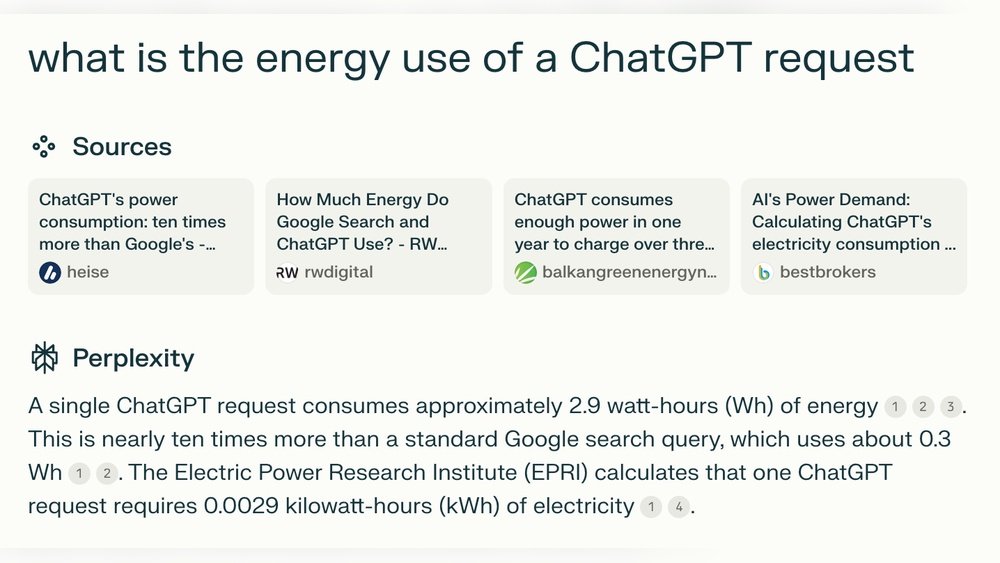
Generative AI uses much more energy than Google search because it runs large models continuously. This high energy use raises concerns about its environmental impact and sustainability. Such consumption can strain resources compared to simpler, faster web searches.
Generative AI demands huge amounts of energy to operate. This raises worries about its environmental impact. Unlike Google search, which mainly indexes and retrieves data, generative AI processes complex models. These models need vast computing power and constant updates.
Training large AI models consumes as much electricity as several households. Each time the AI generates a response, it uses significant processing resources. This leads to a larger carbon footprint compared to simple search queries.
High Computational Power
Generative AI relies on powerful GPUs and data centers. These machines run continuously to keep the AI ready for requests. Running these data centers requires a lot of electricity. In contrast, Google search uses optimized servers designed for efficiency.
Processing natural language and creating new content takes more energy than fetching existing web pages. This difference makes generative AI less eco-friendly.
Environmental Impact
The increased energy use of generative AI contributes to higher greenhouse gas emissions. Data centers often depend on non-renewable energy sources. This adds to global warming concerns.
Google has invested in renewable energy and efficiency improvements. Generative AI technologies still lag behind in these efforts. The environmental cost of AI growth remains a critical issue.
Scalability Challenges
As more users access generative AI, energy demands will rise sharply. Scaling these systems requires more powerful hardware and more electricity. This scaling problem is less severe for traditional search engines.
Energy consumption limits the sustainable growth of generative AI. Developers must find ways to reduce power needs without losing performance.

Credit: www.businessinsider.com
Environmental Impact Comparison
Generative AI uses more energy because it creates new content from large data models. Google search mainly finds existing information, using less power. This makes generative AI have a bigger environmental footprint than simple searching.
Energy Consumption Of Generative Ai Vs Google Search
Generative AI uses large neural networks to create answers. These models need vast amounts of computing power. Training and running them consumes a lot of electricity. Google Search, by contrast, mainly retrieves indexed information. Its processes require much less energy per query.
Each AI-generated response often demands more server time than a Google search. The servers behind generative AI run complex calculations repeatedly. This leads to higher energy use overall. Google’s search system is optimized for quick, efficient lookups.
Carbon Footprint Differences
The electricity powering generative AI often comes from fossil fuels. This increases its carbon footprint significantly. Google Search, benefiting from Google’s renewable energy investments, has a smaller carbon impact. Though Google’s data centers still consume power, they are more energy-efficient.
Generative AI models must be retrained regularly, consuming more resources. This retraining adds to their environmental cost. Google’s search index updates are less energy-intensive. The total emissions linked to generative AI are, therefore, higher.
Impact On Data Center Resources
Generative AI requires more advanced and powerful hardware. GPUs and TPUs used for AI are energy-hungry and expensive to run. Google Search uses a mix of hardware optimized for speed and efficiency. It places less strain on data center resources.
The demand for AI computing hardware increases the need for more data centers. These data centers require cooling and maintenance that consume additional energy. Google’s infrastructure is already vast but designed to minimize environmental strain.
Quality Of Generated Content
Quality of generated content is a major factor in comparing generative AI and Google search. Content created by AI often seems fluent and confident. Yet, it may lack depth and accuracy. This difference affects how useful and reliable the information is for users.
Google search delivers results by pointing to trusted sources. It lets users check the original context and verify facts. Generative AI, on the other hand, creates new text by predicting likely word sequences. This process can introduce errors or outdated information.
Inconsistency In Accuracy
Generative AI sometimes gives wrong or misleading answers. It does not always verify facts before presenting them. Google search ranks pages based on credibility and relevance. This system reduces the chance of false information reaching users.
Lack Of Source Transparency
AI-generated content rarely shows where information comes from. Users cannot trace or confirm the original data. Google search clearly displays links and sources for each result. This transparency helps users judge the trustworthiness of content.
Limited Depth And Detail
AI responses often summarize topics in a simple way. They may miss important details or nuances. Google search offers access to full articles, studies, and expert opinions. Users can explore topics more deeply through these sources.
Risk Of Repetition And Bias
Generative AI relies on patterns in existing texts. It can repeat common biases or outdated views. Google search reflects a wide range of perspectives from many websites. This diversity helps users get a balanced understanding.
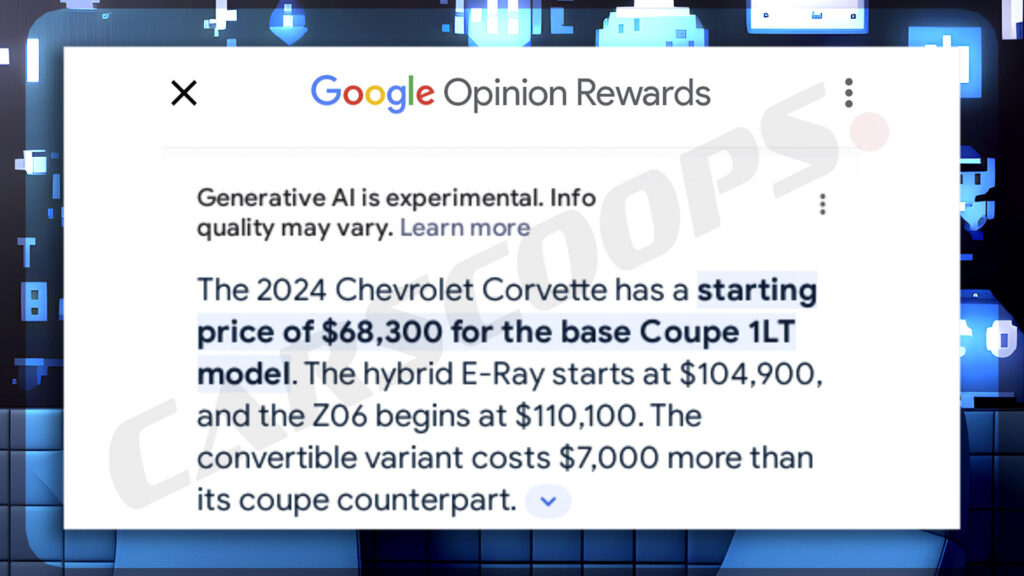
Credit: www.carscoops.com
Search Experience Differences
Generative AI and Google Search deliver information in very different ways. These differences shape how users find and trust answers.
Google Search shows a list of web pages related to your query. You choose which links to click and explore multiple sources.
Generative AI creates direct answers by using patterns in data it has learned. It gives one main response instead of many options.
Interaction Style
Google Search works through links and snippets. You scan titles and descriptions before clicking.
Generative AI provides a conversational reply. It feels like talking to a person who answers directly.
Answer Verification
Google Search lets you check multiple sources. You can compare facts and find trusted websites.
Generative AI does not show sources clearly. Users must trust the AI’s answer without easy verification.
Result Variety
Google Search offers diverse results. You get videos, news, images, and articles from many viewpoints.
Generative AI tends to give one summarized answer. It may miss alternative views or detailed explanations.
Handling Complex Queries
Google Search directs you to specialized pages for deep research. It helps when you need detailed information.
Generative AI simplifies complex topics. Sometimes, this leads to incomplete or inaccurate answers.
User Control
Google Search lets users pick where to go next. You explore at your own pace and depth.
Generative AI controls the flow of information. You rely on its responses without many follow-up options.
Susceptibility To Fake News
Generative AI can create content that seems real but is often incorrect. This makes it vulnerable to spreading fake news. Unlike Google, which links to trusted sources, generative AI generates text based on patterns. It does not verify facts or check the truth behind the information.
Users may believe the AI-generated content without questioning it. This can lead to misinformation spreading quickly. Fake news harms people’s understanding and decision-making.
How Generative Ai Creates Convincing False Information
Generative AI uses large language models trained on vast data. It predicts what words fit best next, not if the facts are true. This allows it to produce believable but false stories. The AI cannot tell real news from fake news.
Google’s Role In Fighting Fake News
Google ranks web pages based on trust and authority. It shows users many sources to cross-check information. Google also updates its algorithms to reduce fake news visibility. This helps users find accurate and reliable content.
Why Ai Lacks Fact-checking Abilities
Generative AI does not access real-time information or verify sources. It cannot check if a statement is true or false. Instead, it learns from existing texts, which may contain errors. This makes AI prone to repeating false information.
The Risk Of Relying Solely On Generative Ai
Relying only on generative AI for information increases the chance of encountering fake news. Users might take AI answers as facts without checking. This can spread wrong ideas and confusion. Google search provides a safer way by linking to real sources.
Future Of Ai And Search Engines
The future of AI and search engines holds many changes for how we find information. Search engines like Google have served us for decades. They index the web and return links based on keywords. Generative AI offers a different approach. It creates answers using large language models. This creates both opportunities and challenges for searching.
Understanding these differences helps us see where AI may fall short. It also shows how search engines will evolve. The goal is to combine strengths and improve results for users everywhere.
How Ai Might Change Search Experience
AI can provide direct answers instead of links. It tries to understand user intent better. This can save time for simple questions. But AI often lacks the depth and context Google provides. Answers may seem confident but contain errors. Users must learn to verify AI responses carefully.
Limits Of Generative Ai In Search
Generative AI creates new content based on patterns. It does not check facts like Google does. This can lead to misinformation and bias. AI does not always cite sources, reducing trust. Search engines use massive data indexing to stay accurate. Generative AI needs improvements in reliability and transparency.
Integrating Ai With Traditional Search
Future search tools will likely blend AI with classic search. AI can enhance search results with summaries or suggestions. Google already uses AI to rank pages better. Combining AI creativity and Google’s data accuracy can improve searches. This hybrid approach aims to deliver fast, precise, and trustworthy answers.
User Role In Ai-driven Search
Users must remain critical of AI-generated content. Checking multiple sources is important. Understanding AI’s limits helps avoid errors. Search engines will provide tools to spot misinformation. Education about AI’s strengths and weaknesses will grow. Users will guide the future of AI and search.
Frequently Asked Questions
How Is Generative Ai Different From Google Search?
Generative AI creates original content using language models, while Google Search finds existing web pages. AI generates answers; Google retrieves links.
What’s The Disadvantage Of Generative Ai?
Generative AI can produce biased or inaccurate content due to flawed training data. It may also create misinformation or deepfakes, reducing trust and authenticity.
How Is Ai Better Than Google Search?
AI understands context and intent better than Google, offering personalized, conversational, and concise answers quickly.
Is Ai Just A Glorified Google Search?
AI is not just a glorified Google search. It generates original content, understands context, and offers personalized responses beyond simple lookups.
What Makes Generative Ai Less Reliable Than Google Search?
Generative AI may produce inaccurate or biased answers due to its training data limits.
How Does Generative Ai Handle Outdated Information?
It can repeat old or wrong facts since it does not access real-time data like Google.
Why Is Google Search Better For Fact-checking?
Google shows multiple sources, letting users verify facts more easily than AI-generated answers.
Can Generative Ai Create False Information?
Yes, it can generate plausible but incorrect or misleading content unintentionally.
How Does Google Search Provide More Transparency Than Generative Ai?
Google lists sources and links, while AI often gives answers without citing references.
Does Generative Ai Understand User Intent As Well As Google?
AI sometimes misunderstands context, whereas Google’s algorithms better grasp user search intent.
Conclusion
Generative AI often gives answers without clear sources or proof. It can create wrong or biased information easily. Google search shows many options and links to check facts. People trust Google more because it points to real websites. Generative AI may feel faster but sometimes lacks depth and accuracy.
Use both tools wisely for better results. Remember, no tool is perfect for every question. Choose what fits your needs best.