Are you wondering if Turnitin can really spot AI-generated writing? Whether you’re a student trying to understand how safe your work is or an educator concerned about maintaining academic honesty, this question matters to you.
Turnitin’s AI detection tools have stirred quite a debate—can they truly tell if a paper was written by a human or a machine? You’ll discover how Turnitin detects AI writing, the limits of its technology, and what you need to know to stay ahead.
Keep reading to clear up the confusion and learn what this means for your writing or teaching.
Turnitin’s Ai Detection Features
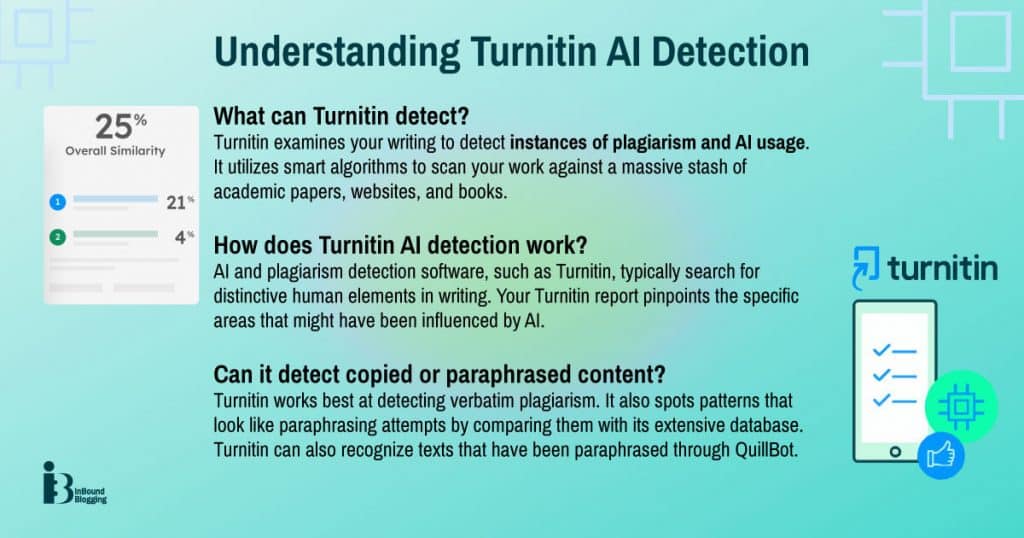
Turnitin’s AI detection features aim to identify content generated or altered by artificial intelligence. These tools analyze writing style and patterns to flag AI-written text. The system helps educators review assignments carefully for originality.
Though helpful, the AI detection is not perfect. It works best when combined with human judgment. Here is a closer look at how Turnitin detects AI writing and its limitations.
How Turnitin Detects Ai Writing
- Analyzes prose: The system examines sentences in essays and articles for AI-like structures.
- Identifies patterns: It looks for common AI writing traits, including paraphrased or edited AI content.
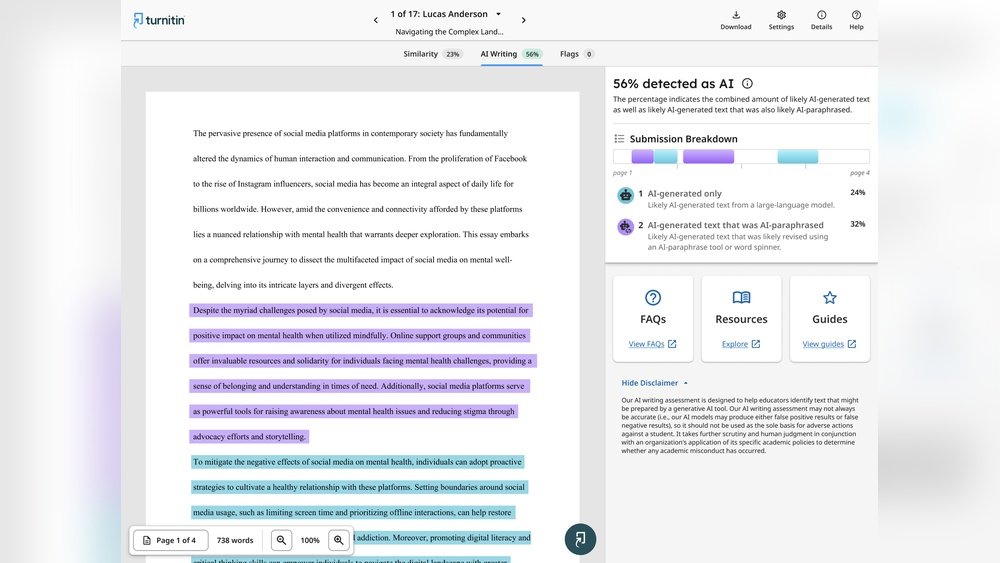
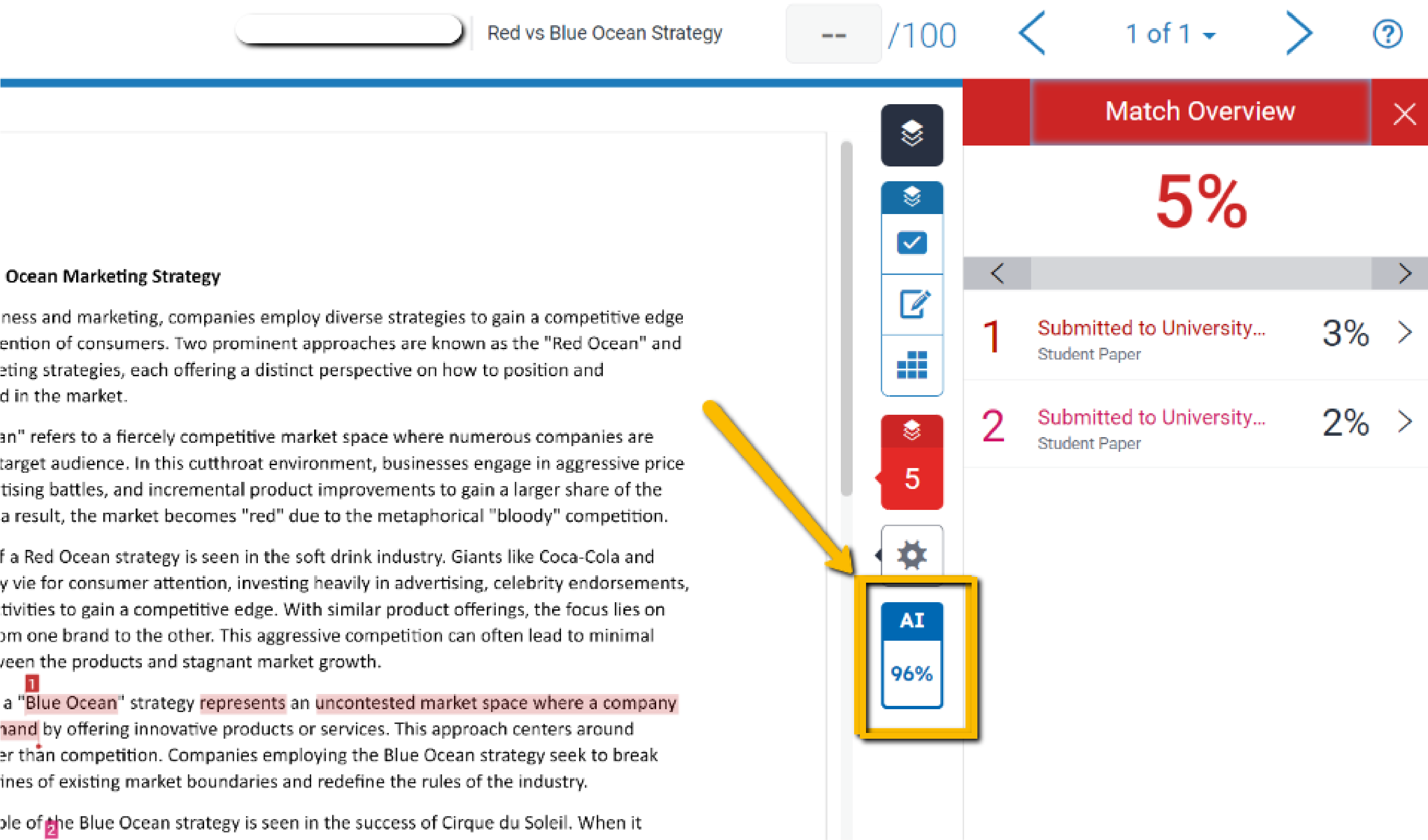
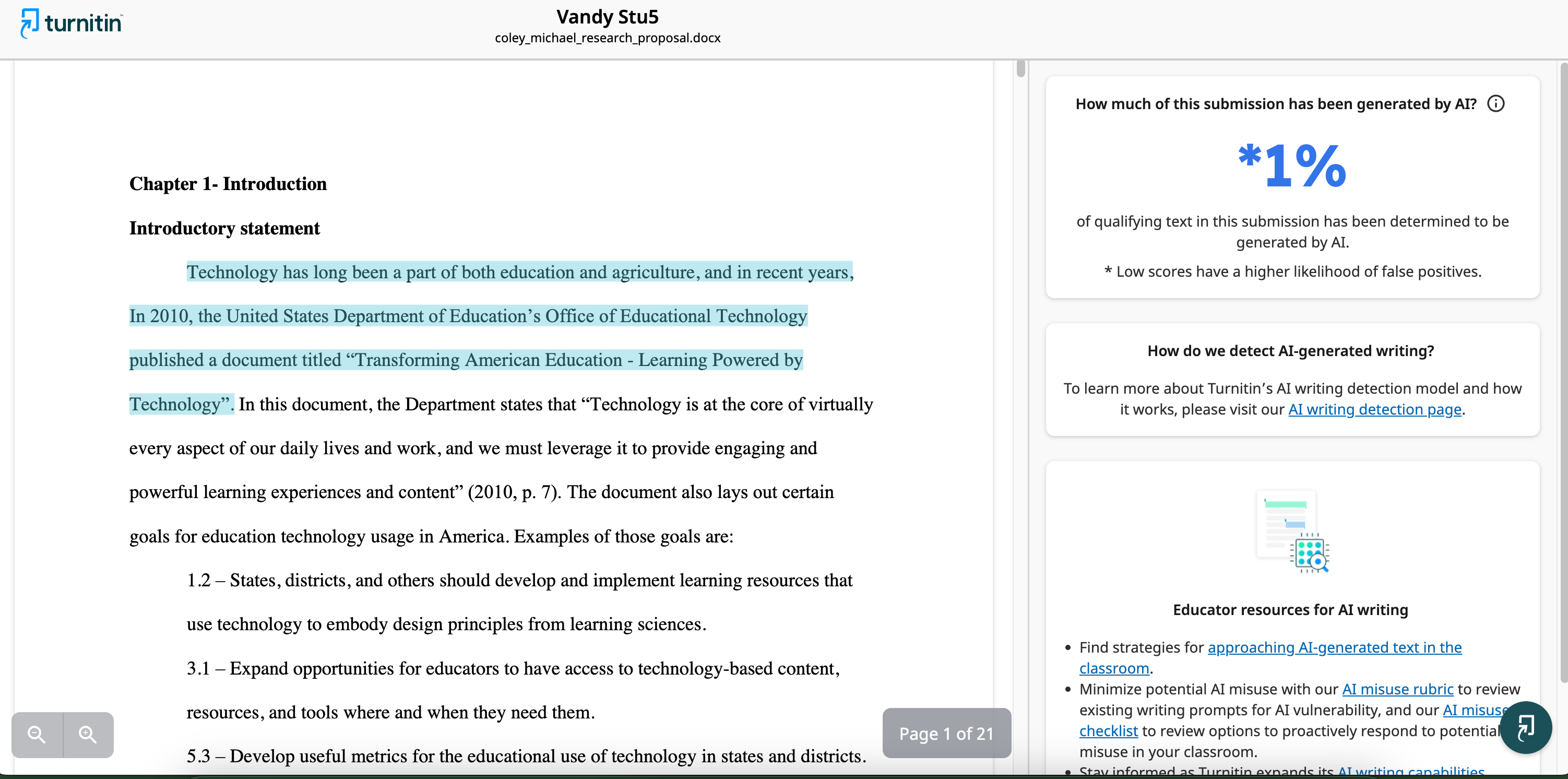
- AI writing indicator score: This score shows the likelihood that a text is AI-generated.
Limitations And Considerations
- False positives: Human-written text can sometimes be flagged incorrectly.
- Misses some AI text: It struggles with formats like code, lists, or scripts.
- Probabilistic detection: The tool estimates AI use, unlike clear plagiarism sources.
- Requires educator judgment: The AI score is a guide, not a final verdict.
How Ai Writing Is Identified
Detecting AI writing involves analyzing text features that differ from human writing.
AI-generated content often shows unique patterns and structures.
Tools like Turnitin use special methods to spot these differences.
Analyzing Writing Style And Patterns
AI writing tends to have consistent sentence lengths and formal tone.
Turnitin examines these patterns to find unnatural writing flows.
It compares sentence structures to typical human writing styles.
Checking For Repetitive Phrases
AI often repeats certain phrases or words more than humans do.
Turnitin flags unusual repetition as a possible AI sign.
This helps identify text that lacks natural variety.
Evaluating Vocabulary Usage
AI uses words that may seem out of place or too formal.
Turnitin looks for vocabulary that does not match the writer’s usual tone.
Inconsistent word choice can indicate AI involvement.
Detecting Lack Of Personal Insight
AI writing often misses personal opinions or unique reflections.
Turnitin checks if the text shows depth or personal experience.
Absence of these elements may suggest AI authorship.
Patterns Common In Ai-generated Text
AI-generated text often shows unique patterns that differ from human writing. These patterns help tools like Turnitin spot AI content. Understanding these traits makes it easier to detect AI writing.
AI tends to use repetitive phrases and similar sentence structures. The flow can feel unnatural or too perfect. It may lack personal opinions or deep emotions. These signs stand out in essays and articles.
Repetitive Language And Phrases
AI often repeats certain words or phrases. This repetition happens because AI models follow learned patterns. The same ideas or terms appear multiple times in a short space. Human writers usually vary their word choice more.
Unnatural Sentence Flow
Sentences from AI may sound too formal or robotic. The flow can be smooth but lacks the natural pauses humans use. AI writing often avoids contractions and slang. This creates a mechanical tone that feels less personal.
Lack Of Personal Insight
AI content rarely includes personal stories or opinions. It focuses on facts and general information. The writing may miss emotional depth or unique viewpoints. Human writers often share experiences or feelings to connect with readers.
Consistent Grammar And Structure
AI-generated text usually has perfect grammar and punctuation. Sentences follow a clear and simple structure. There are fewer errors or slang words. This consistency can seem unnatural compared to human writing.
Overuse Of Formal Language
AI prefers formal and academic language. It avoids casual phrases or slang. The tone stays polite and neutral throughout the text. This style can make the writing feel stiff and less engaging.
Limitations Of Ai Detection Tools
AI detection tools like Turnitin have limits that affect their reliability. These tools scan text to find signs of AI writing. They use patterns and language features common in AI-generated content. Despite advances, these tools cannot guarantee 100% accuracy. Understanding these limits helps users interpret results carefully.
False Positives And False Negatives
Detection tools may wrongly flag human writing as AI-generated. This is called a false positive. At the same time, AI-written text can sometimes go undetected. These errors happen because AI and human writing styles can overlap. Detection is based on probabilities, not certainties.
Difficulty With Paraphrased Ai Text
Some AI tools rewrite or “humanize” AI text to avoid detection. Turnitin may not catch cleverly paraphrased AI content. These changes can confuse the detection system. The tool struggles to distinguish between original human writing and edited AI text.
Limited Scope Of Text Types
AI detection tools focus mostly on prose, like essays or articles. They perform poorly on other content types like code, lists, or scripts. AI-generated material in these formats might bypass detection. This reduces the tool’s effectiveness in diverse writing tasks.
Probabilistic Nature Of Ai Detection
AI detection works by assigning a probability score, not a definite label. This score shows how likely the text is AI-generated. Scores can vary between different tools and updates. Educators should use these scores as one of many factors in evaluation.
False Positives And Their Causes
False positives occur when Turnitin flags human-written text as AI-generated. This can confuse students and teachers. Understanding the common causes helps avoid misunderstandings and unfair judgments.
Turnitin’s AI detection uses patterns and writing style. Sometimes, normal writing matches these AI-like patterns. This leads to false alarms, even if the work is original.
Unusual Writing Styles
Some students write in a clear, consistent style. This can look like AI-generated text to Turnitin. Simple sentences and formal tone increase the chance of a false positive.
Common Phrases And Expressions
Frequent use of typical phrases may seem computer-generated. AI often uses set patterns and expressions. Human writing with repeated phrases might trigger the AI score.
Paraphrased Content
Turnitin checks paraphrased text closely. If a student rewrites content too closely to the original, it may appear AI-made. Overuse of synonyms and structure changes can cause flags.
Short And Simple Sentences
AI often writes short, direct sentences. Students who write simply may look similar. Turnitin might confuse clear writing for AI output, causing false positives.
Formatting And Structure
Unusual formatting or lack of personal input may raise suspicion. AI writing tends to be uniform and lacks personal voice. This can lead to mistaken AI detection in human work.
Credit: www.lebow.drexel.edu
Types Of Ai Text Turnitin May Miss
Turnitin uses advanced methods to spot AI-written text. Still, some AI-generated content can slip through unnoticed. Understanding which types of AI text Turnitin may miss helps students and educators stay informed. This knowledge reveals the limits of current AI detection technology.
AI text that looks less like traditional writing or is altered heavily can be harder to detect. Some AI tools create content in unusual formats or styles. Others use sophisticated rewriting techniques. Turnitin’s focus on prose sentences means it may overlook certain AI-generated texts.
Turnitin mainly checks prose, like essays or articles. It struggles with AI text in non-prose forms. Examples include lists, bullet points, or code snippets. These formats lack the sentence structure Turnitin analyzes. AI-generated content in these styles often escapes detection.
Some AI tools rewrite text to avoid detection. They change sentence structures and word choices deeply. Turnitin may miss these if the text seems original. The AI writing indicator uses pattern recognition, but heavy paraphrasing hides these patterns well.
Very short AI texts are harder to identify. Few sentences give less data for Turnitin to analyze. Small paragraphs or single sentences may not trigger the AI writing indicator. This makes brief AI-generated answers less likely to be caught.
Text that combines AI and human writing is tricky for Turnitin. If a person edits or adds to AI content, detection becomes less certain. The mixed style can confuse the system. Turnitin may not flag the entire piece as AI-generated.
Role Of Educator Judgment
Educator judgment plays a critical role in interpreting Turnitin’s AI detection results. The tool offers useful data but cannot provide a final verdict. Teachers must carefully analyze the context behind the flagged content. This ensures fair and accurate assessment of student work.
Turnitin’s AI writing indicator highlights text likely generated by AI. Yet, false positives can occur, marking genuine student writing. Educators need to review these flags carefully and consider each student’s writing style and history. This human insight prevents unfair penalties.
Relying solely on Turnitin’s AI score may lead to incorrect conclusions. Teachers should combine the tool’s data with their knowledge of the student. This includes understanding the assignment and any prior submissions. Such judgment improves the reliability of detection.
Understanding Ai Indicator Scores
Educators must grasp what the AI indicator score represents. It shows the probability that AI influenced the text. It does not confirm AI use. This score helps guide further review rather than decide guilt.
Considering Writing Style And Consistency
Teachers should compare the flagged work with previous papers. Consistent writing style reduces suspicion. Sudden changes in tone or vocabulary may need explanation. This check supports fair evaluation.
Balancing Technology And Human Insight
Turnitin provides data but cannot replace human judgment. Educators blend technology with experience to ensure justice. This balance respects students and maintains academic integrity.
Credit: www.vanderbilt.edu
Methods To Avoid Ai Detection
Methods to avoid AI detection focus on making AI-generated text appear more natural and human-like. These approaches help reduce the chances of triggering AI detection tools like Turnitin’s AI writing indicator. The goal is to create content that flows smoothly, reflects personal style, and avoids typical AI patterns.
Simple changes in sentence structure and word choice can make a big difference. Adding personal insights and varying the tone also improve authenticity. These steps lower the risk of your writing being flagged as AI-generated.
Rewrite Ai-generated Text In Your Own Words
Take AI-generated content and rewrite it completely. Use your own vocabulary and sentence style. Avoid copying phrases directly. This makes the text unique and less robotic.
Avoid Overuse Of Formal And Robotic Language
AI often writes in a very formal tone. Replace stiff words with casual, everyday language. Use contractions and simple expressions to sound more natural.
Incorporate Personal Insights And Reflections
Add your own thoughts and opinions. Share experiences or examples from your life. This personal touch makes the content more genuine.
Break Up Long Sentences And Paragraphs
Shorten lengthy sentences into smaller, clearer ones. Use brief paragraphs to improve readability. This style matches typical human writing better.
Use Active Voice Instead Of Passive Voice
Choose active voice for most sentences. It makes writing more direct and lively. Passive voice can seem dull and artificial.
Impact On Academic Integrity
Academic integrity faces new challenges with the rise of AI-generated content. Students can use AI tools to create essays that look polished and original. This trend puts pressure on educators to maintain fairness and honesty in assessments.
Turnitin’s AI detection tools aim to help teachers identify AI-written text. These tools analyze writing style and patterns that differ from typical human work. Yet, the presence of AI content raises concerns about trust and the value of genuine learning.
How Ai Detection Supports Academic Honesty
AI detection tools provide an extra layer of scrutiny. They highlight suspicious text that may have been created by AI. This helps educators focus their review on parts needing further verification. The technology encourages students to produce authentic work.
Challenges In Ensuring Fair Evaluation
AI detection is not perfect. Sometimes, original student writing can be flagged incorrectly. False positives can cause unfair suspicion and stress. Teachers must use their judgment alongside detection results to avoid mistakes.
Impact On Student Learning And Responsibility
Relying on AI may reduce students’ critical thinking skills. It can lead to less effort in understanding topics deeply. Detection tools remind students about the importance of doing their own work. This supports better learning habits and academic growth.
Future Of Ai Detection In Education
The future of AI detection in education holds many challenges and opportunities. Schools and universities aim to keep learning honest and fair. AI tools are becoming more advanced and common in writing tasks. Detecting AI-generated content will need smarter technology and careful human judgment.
As AI writing gets better, detection systems must evolve quickly. They will use new algorithms to spot subtle AI patterns. These tools will analyze how ideas flow and how sentences form. Combining AI detection with teacher insights will improve accuracy.
Advancements In Ai Detection Technology
New detection methods will focus on deep language analysis. Machines will learn to recognize AI writing styles more accurately. They will compare writing rhythm, word choice, and sentence structure. These improvements will reduce false flags and missed cases.
Role Of Educators In Ai Detection
Teachers will remain key in judging AI use. Technology can only offer clues, not final answers. Educators will assess context, originality, and student progress. Their experience helps balance AI tool results and fair grading.
Ethical Considerations In Ai Use And Detection
Detecting AI writing raises questions about privacy and trust. Schools must set clear rules on AI tool use. Transparency in detection methods builds student confidence. Fair policies will guide proper AI use without unfair punishment.
Integration Of Ai Detection In Learning Platforms
Learning systems will include AI detection as a standard feature. This will help students learn about responsible AI use. Instant feedback on AI-generated content encourages honest writing. It supports skill development alongside technology awareness.
Credit: inboundblogging.com
Frequently Asked Questions
How Can I Avoid Ai Detection By Turnitin?
Avoid AI detection by Turnitin by rewriting content in your own words, adding personal insights, and using natural, varied sentence structures. Write actively and keep language casual to sound human. Do not rely solely on AI tools; ensure originality and clear understanding of the topic.
Can Turnitin Detect Ai-written Content Accurately?
Turnitin can identify AI writing patterns but is not 100% accurate and may produce false flags.
How Does Turnitin Identify Ai-generated Text?
It analyzes writing style and patterns typical of AI prose within essays and articles.
Can Turnitin Detect Ai Content That Is Paraphrased?
Yes, Turnitin flags text even if AI-generated content is paraphrased or altered.
Are False Positives Common In Turnitin’s Ai Detection?
False positives can occur, sometimes marking human writing as AI-generated mistakenly.
Does Turnitin Detect Ai Writing In All Document Types?
Turnitin mainly detects AI in prose; it may miss AI content in code or lists.
What Does Turnitin’s Ai Writing Indicator Score Mean?
The score shows the likelihood that the text was written by AI, not certainty.
Can Students Avoid Ai Detection By Rewriting Ai Text?
Rewriting may reduce detection, but Turnitin can still detect patterns of AI writing.
Is Turnitin’s Ai Detection Reliable For Plagiarism Decisions?
It is a helpful tool but should be combined with teacher judgment for accuracy.
Does Turnitin Show The Original Source Of Ai-generated Text?
No, AI detection is based on probability and does not link to specific sources.
Conclusion
Turnitin can detect some AI-generated writing but not all. It looks for writing patterns common in AI text. Sometimes, it may wrongly flag human writing as AI. Results are based on probability, so they are not always clear. Teachers should use the AI score as one tool, not the only proof.
Understanding these limits helps avoid unfair judgments. Writing with your own ideas and voice is always best. This keeps your work honest and original.