
Are you tired of feeling overwhelmed by your endless to-do list? Imagine a simple way to clear your mind, focus on what truly matters, and actually finish your tasks without stress.
That’s exactly what “Get Things Done” is all about. Whether you’re juggling work, home, or personal goals, mastering this approach can transform chaos into calm and boost your productivity like never before. Ready to discover the secret to finally crossing off everything on your list?
Keep reading to learn how you can take control and get things done—starting today.
Gtd Basics
Getting Things Done (GTD) is a simple way to manage tasks and reduce stress. It helps clear your mind by organizing all your work and ideas. The method breaks down your tasks into five clear steps. Each step makes your work easier and more focused.
Using GTD, you capture everything on your mind. Then, you turn those thoughts into clear actions. After that, you organize these actions so you know what to do next. You also review your list regularly. This keeps you on track and ready to act.
Capture
Capture means to collect all your tasks and ideas in one place. Write down everything that needs your attention. It can be notes, emails, or reminders. This step frees your mind from holding too much information. Use a notebook or an app to gather these items quickly.
Clarify
Clarify each captured item by deciding what it means. Ask yourself if it is actionable or just information. If it is a task, determine the next step to take. Break big tasks into smaller, manageable actions. Clear steps help you avoid confusion later.
Organize
Organize your tasks into categories and lists. Group similar tasks together, like calls or errands. Use folders, apps, or planners to keep everything tidy. Assign deadlines or priorities if needed. A good system makes finding tasks easy.
Review
Review your lists regularly to stay updated. Check what tasks are done and what still needs work. Weekly reviews help you adjust priorities and plan ahead. This step ensures you don’t forget important items. It keeps your system fresh and useful.
Engage
Engage means to do the tasks on your list. Choose what to work on based on priority and context. Focus on one task at a time to finish it well. This step is about taking action and making progress. GTD helps you work smart, not just hard.
Capture Strategies
Capture strategies form the first step in the Getting Things Done system. This step helps clear your mind by collecting all tasks, ideas, and reminders in one place. Capturing everything stops important things from slipping through the cracks. It also reduces stress by freeing mental space.
Using effective capture methods makes it easy to track what needs attention. This allows you to focus better on completing tasks. The goal is to gather all inputs quickly and simply, avoiding clutter or confusion.
Use A Trusted Capture Tool
Choose one tool you trust to collect your ideas and tasks. It can be a notebook, app, or voice recorder. Consistency is key. Having a single capture tool prevents losing or forgetting important items.
Capture Immediately
Write or record your thoughts as soon as they come up. Do not wait or rely on memory. Immediate capture stops distractions and helps maintain flow. It is easier to act on tasks when they are fresh.
Keep Capture Simple And Quick
Do not worry about details at this stage. Focus on getting the information down fast. Use short notes or keywords. Simple capture prevents procrastination and keeps momentum going.
Capture Everything That Matters
Include tasks, ideas, appointments, and reminders. Anything that requires attention or follow-up belongs here. Avoid filtering or deciding importance too early. Capturing all inputs ensures nothing is missed.
Clarify Actions
Clarifying actions is a key step in the Getting Things Done (GTD) method. It helps turn unclear ideas into clear, manageable tasks. Without clear actions, tasks can feel overwhelming and lead to procrastination.
Breaking down your captured thoughts into specific steps makes your workload easier to handle. This step reduces stress by defining exactly what needs to be done next. It creates a practical plan to move forward.
Identify The Next Physical Action
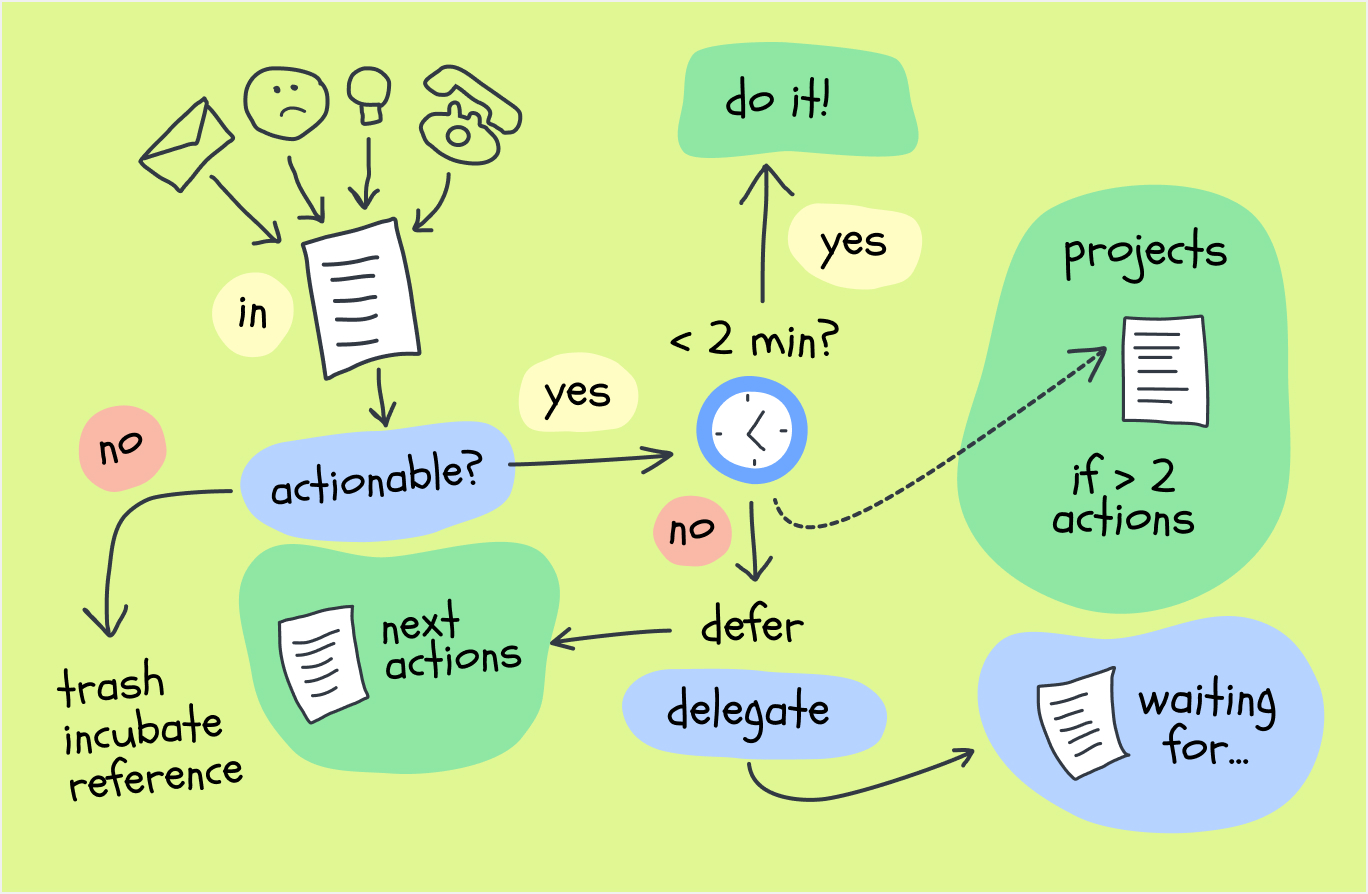
Ask yourself, “What is the very next physical step I can take?” This could be making a phone call, sending an email, or buying supplies. Focus on actions that require physical effort and can be completed soon.
Defining the next action avoids vague tasks like “work on project.” Be as specific as possible to keep momentum.
Decide If It’s Actionable
Not every item you capture requires action. Some may be reference materials or ideas for later. Sort your list by deciding which items need immediate attention.
If something is not actionable, file it for future use or discard it. This prevents clutter and keeps your task list focused.
Break Large Tasks Into Smaller Steps
Big projects can feel intimidating. Split them into smaller, clear actions. For example, instead of “write report,” use “outline report sections” or “gather data.”
Smaller tasks are easier to start and complete. This method keeps you moving forward without feeling stuck.
Credit: planyway.com
Organize Tasks
Organizing tasks is a key step in managing your workload effectively. It helps clear your mind and focus on what matters most. When tasks are well-organized, you can work with less stress and more clarity.
Good task organization prevents forgetting important duties. It also saves time by making your to-do list easy to follow. Let’s explore simple ways to organize your tasks for better productivity.
Use Clear Categories
Group tasks by type or project to keep your list neat. Categories like work, home, and personal help separate different responsibilities. This makes it easier to find what needs attention next.
Create Priority Levels
Assign each task a priority level such as high, medium, or low. Focus first on high-priority tasks that have deadlines or big impacts. This ensures important jobs get done on time.
Break Tasks Into Smaller Steps
Divide big tasks into smaller, manageable actions. This reduces overwhelm and helps track progress. Smaller steps feel easier to complete, which keeps motivation high.
Use Tools And Apps
Digital tools like task managers or simple apps help keep tasks organized. They send reminders and allow easy updates. Choose tools that fit your style for best results.
Review And Adjust Regularly
Check your task list daily or weekly to update priorities and deadlines. Remove completed tasks and add new ones. Regular reviews keep your list current and useful.
Review Techniques
Review techniques play a key role in the Get Things Done (GTD) system. They help keep your tasks and projects clear and manageable. Regular reviews make sure nothing important slips through the cracks. These techniques improve focus and boost productivity.
By reviewing frequently, you stay aware of your priorities. You can adjust plans based on new information. This habit reduces stress and keeps your mind free for action.
Weekly Review
The weekly review is a cornerstone of GTD. Set aside time every week to go through your lists. Check your inbox, calendar, and project lists. Clear out completed tasks and add new ones. This process refreshes your mind and updates your system.
Daily Review
Daily reviews keep you on track each day. Look over your tasks and appointments each morning or evening. Decide what to focus on and what to defer. This helps prevent overwhelm and keeps your day organized.
Project Review
Project reviews focus on your active projects. Check progress and next steps regularly. This prevents projects from stalling. Break down big tasks into smaller, clear actions. Keep projects moving forward smoothly.
Context Review
Context reviews sort tasks by where or how you do them. Group tasks by tools, location, or energy level. Review these groups to plan efficient work sessions. This technique saves time and effort.
Engage Effectively
Engage effectively is the final and crucial step in the Getting Things Done (GTD) method. It means focusing on the right tasks at the right time. This helps you work with clarity and confidence. Engaging well ensures progress and reduces stress.
By engaging effectively, you use your energy wisely. You avoid distractions and stay on track. This way, you complete tasks faster and with better quality.
Choose The Right Task
Start by reviewing your task list carefully. Pick tasks that match your current energy and time. Small tasks fit short breaks, while bigger ones need longer focus. Choosing wisely keeps your work steady and manageable.
Use Context To Guide Actions
Work depends on where you are and what tools you have. Group tasks by context, like office, phone, or computer. This helps you act quickly without switching tools or places. Context guides you to do tasks that fit the moment.
Focus On One Thing At A Time
Multitasking lowers quality and slows you down. Concentrate on a single task until it finishes or reaches a good stopping point. This keeps your mind clear and your work sharp. One task at a time leads to better results.
Review And Adjust Regularly
Check your task list daily to stay updated. Remove done tasks and add new ones. Adjust priorities based on deadlines and importance. Regular review keeps your plan fresh and your focus strong.
Avoiding Mental Clutter
Mental clutter blocks your focus and slows progress. Clearing your mind helps you act faster and think better.
Avoiding mental clutter means capturing thoughts and tasks outside your head. This frees space for real work.
Capture Everything
Write down all tasks, ideas, and reminders immediately. Use a notebook or app to keep them safe.
Don’t rely on memory. It is easy to forget or get distracted.
Clarify Your Tasks
Turn vague thoughts into clear actions. Ask yourself what the next step is for each item.
For example, instead of “plan trip,” write “book flight tickets.”
Organize With Lists
Group tasks by type or priority. This makes it easier to focus on similar work together.
Create separate lists for work, home, and errands to avoid confusion.
Review Regularly
Check your lists daily to stay updated. Remove completed tasks and add new ones.
This keeps your system clean and your mind calm.
Tool Recommendations
Choosing the right tools is key to applying the Getting Things Done (GTD) method effectively. Tools help capture ideas, clarify tasks, organize projects, and keep track of progress. The right app or system makes it easier to follow the GTD steps daily. Below are some popular tool options that fit different styles and needs.
Task Management Apps
Task management apps allow you to capture and organize tasks fast. Apps like Todoist and Microsoft To Do let you create lists, set reminders, and prioritize actions. They sync across devices, so you access your tasks anywhere. These apps support GTD by helping you keep all actions visible and manageable.
Note-taking Tools
Note-taking tools help capture ideas and important details on the go. Evernote and OneNote are great for collecting notes, photos, and voice memos. These tools let you tag and search notes quickly. They work well for the “capture” step of GTD, keeping your thoughts safe and easy to find.
Calendar And Scheduling Software
Calendars help organize time and plan reviews. Google Calendar and Outlook let you schedule events and reminders. Using a calendar supports the GTD review process by blocking time for planning. It also ensures deadlines and appointments don’t get missed.
Physical Tools
Some prefer paper planners or bullet journals. A simple notebook can serve as a capture tool for quick task jotting. Physical tools offer a tactile experience that some find helpful for focus. Using a whiteboard or sticky notes can also help visualize tasks and priorities clearly.
Time Management Tips
Effective time management is crucial for getting things done. It helps reduce stress and improves focus. By managing time well, you complete tasks faster and with better quality.
Simple, practical strategies can change how you work each day. These tips help you plan, prioritize, and stay on track. They make your daily routine smoother and more productive.
Set Clear Priorities
Identify tasks that matter most. Focus on high-impact activities first. Avoid spending time on low-value tasks. Clear priorities guide your daily actions and decisions.
Use Time Blocks
Divide your day into blocks for specific tasks. Work on one task during each block without interruptions. This method improves concentration and efficiency.
Limit Distractions
Turn off notifications and silence your phone. Create a quiet workspace free from interruptions. Distractions waste time and break your focus.
Take Regular Breaks
Short breaks refresh your mind and body. Use breaks to stretch or walk briefly. Regular pauses help maintain long-term productivity.
Plan Ahead
Prepare your task list the night before. Review your schedule and deadlines daily. Planning ahead reduces last-minute stress and confusion.

Credit: facilethings.com
Sustaining Productivity
Sustaining productivity is key to long-term success with the Getting Things Done method. It helps keep your focus steady and your tasks moving forward. Staying productive over time requires habits that support clarity and energy.
Consistent effort keeps your task list manageable and your mind clear. Without it, even the best plans can fall apart. The following practices help maintain steady progress daily.
Regular Reviews
Review your tasks and projects often. This prevents tasks from piling up unseen. Weekly reviews help catch anything forgotten and keep your system updated. It also lets you adjust priorities as needed.
Clear Your Mind
Empty your thoughts into a trusted system frequently. This reduces mental clutter and stress. Writing down tasks or ideas frees your brain to focus on what matters now. It prevents overwhelm and boosts productivity.
Prioritize Effectively
Decide which tasks are most important each day. Focus on high-impact work first. This ensures progress on big goals instead of just busy work. Use simple tools like lists or apps to order your tasks clearly.
Set Boundaries
Limit distractions during work time. Turn off notifications and close unused tabs. Create a dedicated workspace if possible. These steps protect your focus and help maintain steady productivity.
Take Breaks
Short breaks refresh your mind and prevent burnout. Step away from work regularly to recharge. This keeps your energy levels stable throughout the day. Even a few minutes can improve focus.

Credit: www.todoist.com
Frequently Asked Questions
What Are The 5 Steps Of Gtd?
The 5 steps of GTD are: Capture all tasks and ideas, Clarify actionable items, Organize by priority, Review regularly, and Engage with tasks efficiently.
What Does Get Things Done Mean?
“Get things done” means completing tasks efficiently. The GTD method by David Allen organizes tasks to boost focus and reduce stress. It involves capturing, clarifying, organizing, reviewing, and engaging with tasks to improve productivity and mental clarity.
Is Gtd Outdated?
GTD remains relevant as a proven productivity system. It helps manage tasks by clearing mental clutter and boosting focus. Many adapt GTD principles to modern tools, keeping it effective today.
What Is The Meaning Of Gtd?
GTD stands for Getting Things Done, a productivity method by David Allen. It helps capture, clarify, organize, review, and complete tasks efficiently. This system reduces mental clutter and boosts focus by managing tasks outside your mind for stress-free productivity.
What Does “get Things Done” Mean In Productivity?
It means completing tasks efficiently to achieve goals on time without stress.
How Does The Gtd Method Improve Task Management?
GTD organizes tasks clearly, helping you focus on what to do next.
What Are The Five Steps In The Gtd System?
Capture, Clarify, Organize, Review, and Engage are the key GTD steps.
Why Is Capturing Tasks Important In Gtd?
Capturing frees your mind by writing down all tasks and ideas.
How Can Organizing Tasks Reduce Stress?
Organizing makes priorities clear, so you know what needs attention first.
What Does Clarifying Tasks Involve In Gtd?
Clarifying turns vague ideas into clear, actionable steps to complete.
Conclusion
Getting things done starts with clear steps you can follow daily. Capture your ideas and tasks as they come to mind. Clarify each task to know exactly what to do next. Organize tasks into a system you trust and review it often.
Engage with your work by focusing on one thing at a time. Simple habits lead to steady progress and less stress. Keep practicing these steps to build better productivity. Your mind will feel lighter, and your goals will move closer.
Small actions create big results over time.