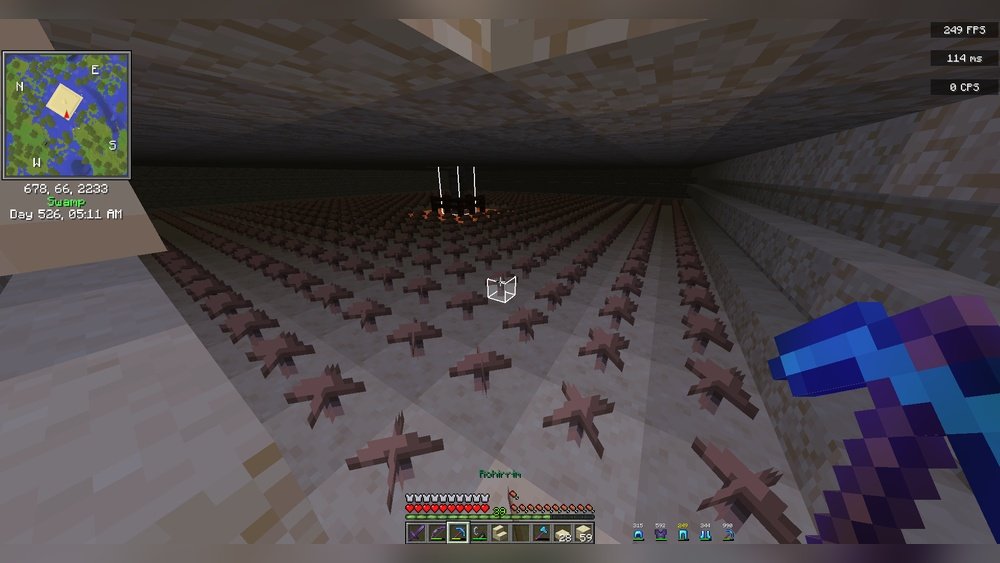
If you’ve spent hours building a slime spawner in Minecraft but nothing happens, you’re not alone. For many players, slime farming is both a challenge and a mystery. Slimes are essential for sticky pistons, slime blocks, and various redstone builds—so a non-working spawner can be frustrating. But don’t worry: understanding slime mechanics, common mistakes, and fixing issues can get your spawner running smoothly. This guide breaks down everything you need to know, from world generation to advanced troubleshooting. Even if you’re new to Minecraft, you’ll find clear steps and helpful insights to get your slime spawner working.
How Slime Spawning Works In Minecraft
Before you can fix your slime spawner, you need to know how slime spawning actually works. Slimes have unique rules that are different from other hostile mobs.
Where Slimes Spawn
Slimes only spawn in two main places:
- Swamp biomes: At night, on the surface, under specific moon phases.
- Slime chunks: Underground, in certain randomly-chosen chunks, at Y level 40 or below.
Key Slime Spawning Rules
- Slimes spawn in light level 7 or less (lower light).
- They need a 3×2.1×3 block space (length x height x width) to spawn.
- In swamps, they only spawn between Y=51 and Y=69, and only during certain moon phases.
- In slime chunks, they spawn below Y=40, regardless of biome, but only if the chunk is a true slime chunk.
Example: Why Location Matters
Let’s say you built your spawner at Y=50 in a plains biome. No slimes will spawn, because you’re not in a slime chunk or a swamp biome. Even if you follow every other rule, slimes won’t appear.
How Slime Chunks Are Determined
Each chunk (16×16 block area) has a 1 in 10 chance of being a slime chunk. This is set when the world is created and never changes. Using online tools, you can find slime chunks in your world seed.
Common Reasons Your Slime Spawner Isn’t Working
When a slime spawner fails, the cause is usually simple but easy to miss. Let’s look at the most frequent issues and how they impact spawning.
1. Wrong Location Or Not A Slime Chunk
Many players build spawners underground, only to find out later that the area isn’t a slime chunk. Since only 10% of chunks are valid, this is the most common mistake.
2. Wrong Y-level
Slimes in slime chunks only spawn below Y=40. If your spawner is at Y=41 or higher, you won’t see any slimes. In swamps, the Y-level is different (Y=51 to Y=69).
3. Bad Lighting
If your spawner is too bright (light level 8 or more), slimes cannot spawn. This includes light from torches, glowstone, or even sunlight.
4. Not Enough Space
Slimes need a 3 block wide, 2 block tall area. If your room is too small or has blocks in the way, slimes won’t spawn.
5. Mob Cap Is Full
Minecraft limits the number of hostile mobs near each player (usually 70-80 mobs in total). If caves or areas nearby are filled with zombies, skeletons, or spiders, no new slimes will spawn until those mobs despawn or are killed.
6. Too Many Players Nearby
If multiple players are in the area, the spawning rules change. Each player has their own mob cap, but mobs may spawn around any player within range.
7. Wrong Moon Phase (for Swamp Spawners)
In swamps, slimes only spawn on certain moon phases and not during a new moon. If you’re unlucky with the timing, you might wait all night and see nothing.
8. Not Enough Flat Surface
Slimes spawn on solid blocks. If your spawner has holes, water, or non-solid blocks (like carpets), slimes can’t spawn.
9. Incorrect Spawn Conditions (java Vs Bedrock)
Java and Bedrock editions have different spawning rules. For example, Bedrock Edition allows slimes to spawn at any light level, but Java doesn’t.
10. Spawn-proofing Not Done
If caves and tunnels near your spawner are not lit up or blocked, hostile mobs spawn there instead. This reduces the chances for slimes in your spawner.
Credit: www.reddit.com
How To Check If Your Spawner Is In A Slime Chunk
Knowing your chunk is a slime chunk is the foundation. Here’s how to confirm it:
- Use chunk base tools: Go to Chunk Base Slime Finder and enter your world seed and coordinates.
- Manual testing: Dig a room below Y=40, make it dark, and wait for slimes. If none spawn after a long time, you’re probably not in a slime chunk.
- Check F3 screen (Java only): Press F3 and look at the “Chunk” section to see your current chunk coordinates.
If you’re not in a slime chunk, you’ll need to move your farm or start over in a valid chunk.
Key Requirements For A Working Slime Spawner
A successful slime spawner needs careful planning. Here are the basics, plus some expert tips.
Size And Shape
- Minimum area: 16×16 blocks (one chunk), but bigger is better.
- Height: At least 3 blocks per spawning layer.
- Multiple layers increase spawn rates.
Lighting
- Light level: 7 or less for Java Edition. Use F3 to check block light.
- Lighting nearby caves is important, but keep the spawner itself dark.
Spawn-proofing The Area
- Place torches or slabs in all nearby caves, tunnels, and ravines.
- Use maps or spectator mode to find hidden caves.
- Cover water or lava pools with blocks to prevent other mobs from spawning.
Killing System
Slimes won’t despawn if you stay close. Build a killing system to remove them:
- Use water streams to move slimes to a killing area.
- Iron golems or magma blocks can kill slimes automatically.
- Hoppers below the killing area collect slimeballs.
Afk Area
- Stand 24-32 blocks away from the center of your spawner. Too close, and slimes won’t spawn. Too far, and they despawn.
- Build an AFK room or platform at the right distance.
Troubleshooting Your Slime Spawner: Step-by-step
If your spawner isn’t producing slimes, don’t give up. Follow these steps to diagnose and fix the problem.
Step 1: Confirm Chunk Location
- Double-check with slime chunk tools.
- Move your spawner if needed.
Step 2: Check Y-level
- For slime chunks: Make sure all spawning platforms are at Y=40 or below.
- For swamps: Only build between Y=51 and Y=69.
Step 3: Measure Light Levels
- Remove torches or glowstone from the spawner area.
- Leave lighting in access tunnels only.
Step 4: Check Spawn Room Size
- Make sure each platform is at least 3 blocks tall.
- Remove blocks sticking out from walls or ceiling.
Step 5: Clear Mob Cap
- Light up or block off all caves within 128 blocks.
- Use peaceful mode temporarily to clear mobs, then switch back.
Step 6: Test With Multiple Layers
- Add more platforms to increase spawn chances.
- Watch for slimes after 10-20 minutes of waiting.
Step 7: Check For Non-solid Blocks
- Fill in any holes, replace carpets or transparent blocks with stone or dirt.
Step 8: Watch Mob Spawns
- Use F3 to see local mob count (Java only).
- If there are too many mobs, spawn-proof nearby areas further.
Step 9: Wait And Observe
- Sometimes, patience is key. Slime spawning is random, so wait for 20-30 minutes in the AFK spot.
Comparing Java And Bedrock Slime Spawning
Minecraft Java and Bedrock editions handle slimes differently. Here’s a quick side-by-side look:
| Feature | Java Edition | Bedrock Edition |
|---|---|---|
| Light Level | 7 or less | Any light level |
| Slime Chunk Y-Level | Y=40 or below | Y=39 or below |
| Swamp Spawning | Only at night, moon-dependent | Nighttime, any moon phase |
| Slime Chunk Chance | 1 in 10 | 1 in 10 |
Advanced Tips For Maximizing Slime Spawner Output
Once your spawner is working, you might want more slimeballs. Here are expert ways to boost your farm’s output.
Build Multiple Layers
Stacking platforms increases spawn chances. Each layer gives slimes more places to appear.
Afk In The Right Spot
Standing too close stops spawning; too far, and slimes despawn. The sweet spot is 24-32 blocks from the center of your farm.
Use Chunk Borders Wisely
If two slime chunks are next to each other, build a double-chunk farm for double output.
Efficient Killing Mechanisms
- Iron golems attract and kill slimes.
- Water streams move slimes to kill chambers.
- Magma blocks damage slimes passively.
Hopper Collection
Place hoppers under the killing area to collect all slimeballs automatically.
Mob Cap Management
Regularly check and spawn-proof caves nearby. Even small caves can steal your mob cap.
Real Example: Fixing A Non-working Slime Spawner
Let’s look at a typical troubleshooting process:
- Player builds a 16×16 room at Y=20, but no slimes spawn.
- After checking with Chunk Base, they find the chunk isn’t a slime chunk.
- They move their spawner to the correct chunk.
- Still, no slimes. They realize their platforms are only 2 blocks tall. Slimes need 3 blocks.
- After fixing the height, slimes spawn, but slowly.
- Lighting up nearby caves doubles the slime spawn rate.
- Adding a second layer in the same chunk nearly triples output.
Insight: Many beginners miss the importance of spawn-proofing and chunk accuracy. Even one mistake can break the whole farm.

Credit: www.youtube.com
The Importance Of Spawn-proofing: Data Comparison
To show why spawn-proofing matters, here’s a comparison of slime spawn rates with and without nearby caves lit up (estimates based on community testing):
| Condition | Slimes per Hour |
|---|---|
| No spawn-proofing | ~10-20 |
| All caves lit up | ~60-90 |
| Multiple layers + spawn-proofing | ~120-200 |
Tip: Lighting up caves is just as important as building the farm itself.
Common Myths About Slime Spawners
Let’s clear up some misunderstandings:
- “Slimes spawn anywhere underground.”
False. They only spawn in slime chunks (or swamps, under special conditions).
- “Lighting doesn’t matter.”
Not true for Java Edition. Light level must be 7 or less.
- “You can increase spawn rates by adding more torches.”
This actually reduces slime spawning.
- “Mobs can spawn on any block.”
Only solid blocks work for slimes.

Credit: www.youtube.com
Mistakes Beginners Make (and How To Avoid Them)
- Building in the wrong chunk: Always check with an online tool before starting.
- Ignoring Y-level: Measure from bedrock up; don’t guess.
- Not lighting caves: Use plenty of torches or slabs in all nearby caves.
- Platforms too small: Give at least 3 blocks of height per layer.
- Standing in the wrong spot: AFK at the correct distance.
- Not waiting long enough: Sometimes it takes 10-20 minutes for slimes to spawn.
- Not checking game version: Rules differ between Java and Bedrock.
When To Rebuild Your Slime Spawner
If you’ve tried everything and still see no slimes, it may be time to move your farm. The main reasons to rebuild:
- Chunk is not a slime chunk (confirmed with a tool).
- Spawner is at the wrong Y-level and can’t be moved.
- Nearby caves are impossible to light up (for example, huge ravines).
Don’t waste time fixing an unfixable spot. Sometimes, rebuilding saves hours in the long run.
Non-obvious Insights For Advanced Players
1. Partial Slime Chunks Still Work
If your farm overlaps the edge of a slime chunk, only the part inside the chunk will spawn slimes. You can expand into multiple chunks for higher rates.
2. Mob Cap Counts All Hostile Mobs
Even mobs in caves 100 blocks away can fill your local mob cap. Use peaceful mode to clear them, or hunt them down with a sword.
3. Use Cats to Keep Creepers Away
Cats scare off creepers. Placing cats in your farm keeps it safe from explosions.
4. Optimize Platform Spacing
Slimes jump higher than most mobs. Leave 4 blocks between layers if you want to avoid slimes getting stuck.
5. Use Spectator Mode
In Java Edition, use spectator mode to fly through blocks and check for missed caves.
How To Use Slimeballs Efficiently
Once your spawner is working, you’ll have plenty of slimeballs. Here’s how to use them:
- Craft sticky pistons for redstone contraptions.
- Make slime blocks for flying machines and elevators.
- Trade with villagers for emeralds.
- Use in lead recipes for animals.
External Resource For Further Reading
For a full technical explanation, visit the Minecraft Wiki: Slime.
Frequently Asked Questions
What Is A Slime Chunk In Minecraft?
A slime chunk is a randomly chosen 16×16 area of the world where slimes can spawn below Y=40 (Java) or Y=39 (Bedrock), regardless of biome. Only about 10% of all chunks are slime chunks.
Why Are No Slimes Spawning In My Slime Farm?
Common reasons include not being in a slime chunk, building above the correct Y-level, having too much light, or not lighting up nearby caves. Double-check all these factors and use online tools to confirm your chunk.
Can Slimes Spawn In Any Light Level In Bedrock Edition?
Yes, in Bedrock Edition, slimes can spawn at any light level in slime chunks. In Java, they need a light level of 7 or less.
How Can I Find Slime Chunks Without A Tool?
You can dig a large underground room below Y=40 and wait to see if slimes spawn. However, using an online slime chunk finder is much faster and more reliable.
Do Slimes Spawn In Peaceful Mode?
No, slimes and all hostile mobs do not spawn in peaceful mode. Switch to easy, normal, or hard difficulty for slimes to appear.
Getting your slime spawner working can be tricky, but with careful checks and a little patience, you’ll soon have more slimeballs than you know what to do with. If you’re stuck, review each step and don’t be afraid to rebuild in a new chunk. Happy sliming!