Are you unsure how to give credit when using AI tools in your work? Citing AI correctly is essential to maintain your credibility and avoid plagiarism.
Whether you’re writing a research paper, article, or blog, knowing the right way to reference AI-generated content can be confusing. In this guide, you’ll discover simple, clear steps to cite AI sources properly using popular styles like APA, MLA, and Chicago.
By the end, you’ll feel confident including AI in your citations—and impress your readers with your attention to detail. Keep reading to learn exactly what information you need and how to format your references with ease.
Basics Of Ai Citation
Citing artificial intelligence (AI) correctly is important for clear communication.
Basics of AI citation include naming the tool, version, publisher, and date.
Different citation styles require specific formats for AI sources.
What To Include In An Ai Citation
Always mention the AI tool’s name and its version if available.
Add the publisher or creator of the AI tool.
Include the date when the AI generated the content.
Provide the URL of the AI tool or the specific output.
Common Citation Styles For Ai
APA style uses author, year, tool name, version, and URL.
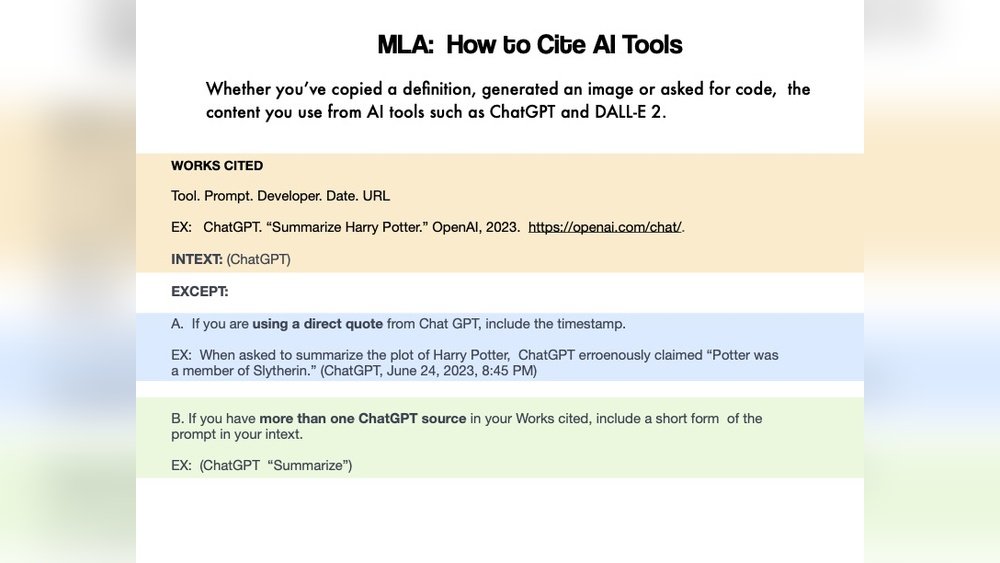
MLA style includes the prompt, AI name, version, publisher, date, and URL.
Chicago style may require a footnote with detailed AI information.
When To Cite Ai In Your Work
Cite AI when it generates unique content or ideas.
Use citations if you quote or paraphrase AI responses.
Include citations even if AI helps with research or writing.

Credit: www.youtube.com
Key Elements To Include
Citing AI sources requires specific details to ensure clarity and credit. These details help readers find the original AI content easily. Proper citation also shows respect for the creators of the AI tool.
Different citation styles ask for slightly different elements. Still, some key parts stay the same across formats. Focus on including these essential components for accurate citation.
Ai Tool Name
Always include the exact name of the AI tool used. This identifies the source clearly for your readers. For example, use “ChatGPT” or “DALL·E” as the tool name.
Version Or Model
Include the version or model of the AI when known. Versions show which specific AI system generated the content. For example, “GPT-4” or “Version 3.5” helps specify the source.
Publisher Or Developer
Name the company or organization behind the AI tool. This gives credit to the creators and adds authority. Common publishers include OpenAI, Google, or Microsoft.
Date Of Generation
Record the exact date when the AI generated the content. AI outputs can change over time, so this date is important. Use the format year, month, and day if possible.
Url Or Access Link
Provide a direct URL to the AI tool or the specific content. This allows readers to verify or explore the source themselves. Always use the most precise link available.
Prompt Or Input Text
Include the prompt or question given to the AI if relevant. This shows what you asked the AI to generate the content. It helps explain the AI’s response in context.
Citing Ai In Apa Style
Citing AI in APA style requires clear details about the tool and its output. APA guidelines help readers trace the source of AI-generated content. This ensures transparency and academic integrity.
Include the AI’s name, version if available, publisher, and date of generation. Also, provide the URL of the AI tool or specific output. This information helps identify the exact source.
Reference List Format For Ai In Apa
Start with the author, usually the organization behind the AI tool. Then, add the year of content generation in parentheses.
Next, write the name of the AI tool and its version in italics, followed by the description “[Large language model]” in square brackets. End with the URL.
Example:
OpenAI. (2023). ChatGPT (Version GPT-4) [Large language model]. https://openai.com/chatgpt
In-text Citation For Ai In Apa
Use the author and year in parentheses to cite AI content within the text. For example, (OpenAI, 2023).
Alternatively, integrate it naturally: OpenAI (2023) explains that…
This method helps readers find the full citation in the reference list easily.
Including The Ai Prompt In Citations
When citing specific AI responses, include the prompt text for clarity. This adds context to the AI-generated content.
Place the prompt in quotation marks before the citation. For example:
“Explain climate change effects” (OpenAI, 2023).
This practice supports transparency in academic writing.
Citing Ai In Mla Style
Citing AI sources in MLA style requires clear and specific information. MLA focuses on the prompt, AI tool, version, publisher, and date.
This helps readers find the exact AI-generated content you used. MLA style treats AI like a digital source or software.
Works-cited Entry For Ai
Start with the exact prompt or question you gave the AI in quotation marks. Then, list the AI tool’s name and version.
Next, add the publisher or creator of the AI, followed by the date you received the response. Finally, include the URL where the AI can be accessed.
Example: “Explain climate change in simple terms.” ChatGPT, version GPT-4, OpenAI, 15 Mar. 2024, https://chat.openai.com.
In-text Citations For Ai
Use a brief parenthetical citation after the AI-generated information. This usually includes the AI tool’s name or the authoring organization.
Example: (OpenAI) or (ChatGPT). You may also add a footnote for more details about the AI prompt or version.
Tips For Mla Ai Citations
Always keep a record of your AI prompts and responses. This ensures accurate citation and easy reference.
Check if your instructor or publisher has specific rules about citing AI. MLA guidelines are still evolving for AI sources.
Be clear about what the AI contributed to your work. This helps avoid confusion and supports academic honesty.
Citing Ai In Chicago Style
Citing AI in Chicago Style requires clear details about the source. You must include the AI tool’s name, version if available, the publisher, and the date when the AI generated the content. The citation also needs the URL of the AI platform or specific output.
Chicago Style uses two main formats: notes and bibliography or author-date. AI citations fit well in the notes and bibliography style. This style allows you to add extra information in footnotes or endnotes, which is useful for AI-generated text.
Format For Notes And Bibliography
Start with the AI tool’s name, followed by the version in parentheses. Next, mention the publisher or company behind the AI. Include the date when the AI generated the content. Finish with the URL where the AI or its output can be found.
Example:
OpenAI, ChatGPT (version 4), OpenAI, March 15, 2024, https://chat.openai.com/.
In-text Citation
Chicago Style uses superscript numbers for footnotes. Place the number at the end of the sentence referencing AI content. The footnote will give the full citation details. For example, after a sentence, add1.
Bibliography Entry
The bibliography entry repeats the full citation with a slight format change. Start with the AI tool name, version in parentheses, publisher, date, and URL. End with a period.
Example:
OpenAI. ChatGPT (version 4). OpenAI. March 15, 2024. https://chat.openai.com/.
Including The Prompt
Sometimes, include the exact prompt used with the AI. Place it in quotation marks before the citation. This adds clarity about the AI’s output source.
Including Prompts In Citations
Including prompts in citations is crucial when referencing AI-generated content. Prompts show the exact input given to the AI. This detail helps readers understand the origin of the AI response. It also adds transparency and accuracy to your citation. Without the prompt, the AI output may seem vague or unclear.
Citing prompts ensures others can reproduce or verify the AI’s answer. It supports academic honesty and proper attribution. Including prompts is especially important for complex or unique AI outputs. It distinguishes your work from generic AI-generated text. Proper citation of prompts builds trust in your writing.
How To Format Prompts In Citations
Place the prompt in quotation marks to separate it from other citation details. Use simple language to describe the prompt if needed. Include the date when the AI generated the response. Add the AI tool’s name and version, if available. This helps readers identify the exact AI model used.
Examples Of Including Prompts In Different Styles
In APA style, add the prompt before the AI tool’s name. For MLA, place the prompt as the first element in the works-cited entry. Chicago style may require the prompt in a note or bibliography. Always follow the specific guidelines of the citation style you use.
Why Including Prompts Enhances Citation Quality
Prompts clarify the context behind the AI-generated content. They show how the AI was directed to produce the output. This transparency improves the credibility of your source. It also helps others understand the AI’s role in your research. Including prompts avoids confusion about the information’s origin.
Handling Ai-generated Images
Handling AI-generated images requires clear and proper citation. These images come from tools that create visuals using artificial intelligence. Citing them gives credit to the source and respects copyright rules.
Many AI tools generate unique images based on prompts. These images can be used in blogs, presentations, or research. Proper citation helps readers understand where the image originated.
How To Identify Ai-generated Images
First, check if the image was created by an AI tool. Look for watermarks, metadata, or source information. If unsure, ask the creator or check the platform where you found it.
Elements To Include In The Citation
Include the AI tool’s name and version. Add the date the image was generated. Mention the URL of the AI platform or image source. If possible, include the prompt used to create the image.
Examples Of Ai Image Citations
For APA style: OpenAI. (2024). DALL·E 3 (Version 3) [AI-generated image]. https://openai.com/dall-e
For MLA style: “A futuristic cityscape at sunset.” DALL·E 3, OpenAI, 2024, https://openai.com/dall-e.
Placing Citations In Your Work
Place the citation near the image or in a caption. You can also list it in the references section. Make sure the citation is easy to find and read.

Credit: uwcchina.libguides.com
Common Mistakes To Avoid
Citing AI sources requires care to ensure accuracy and credibility. Many writers make errors that weaken their work. Avoiding common mistakes improves the quality of your citations. Follow clear guidelines for citing AI tools in your papers.
Incorrect Or Missing Ai Tool Information
Always include the AI tool’s name and version. Omitting these details makes the citation incomplete. If you do not know the version, state “version unknown.” Provide the publisher or organization behind the tool. Without this, readers cannot verify the source.
Ignoring The Date Of Content Generation
The date when AI produced the content matters. Citing without this date confuses readers about the information’s currency. Always include the exact or approximate date of generation. This shows when the AI response was created.
Forgetting To Cite The Prompt Or Input
The prompt used in AI is part of the source. Leaving out the prompt hides how the AI was directed. Include a clear description or exact text of the prompt. This adds transparency to your citation.
Using Inconsistent Citation Styles
Stick to one citation style throughout your document. Mixing APA, MLA, and Chicago styles looks unprofessional. Follow the specific rules for AI citations in your chosen style. Consistency helps readers understand and trust your references.
Failing To Provide A Url Or Access Information
Include the URL of the AI tool or the specific content used. Without this, others cannot access the source easily. Make sure the link is accurate and leads directly to the AI platform or generated output.
Institutional Citation Policies
Institutional citation policies guide how students and researchers reference AI tools. These policies vary by school, college, or organization. They help maintain academic honesty and proper credit for AI-generated content.
Checking your institution’s citation rules before citing AI ensures compliance. Some institutions have clear instructions for AI citation. Others may still be developing guidelines. Understanding these policies prevents unintentional plagiarism or misrepresentation.
How Institutions Define Ai Citations
Many institutions view AI as a source similar to books or websites. They require mentioning the AI tool’s name, version, and date of use. Some expect the prompt or question used with the AI to be included. This offers transparency about the AI’s role in content creation.
Common Requirements In Citation Policies
Policies often ask for full citations in the reference list. In-text citations must also identify AI contributions. Institutions may require noting AI limitations or disclaimers in the paper. These steps help readers understand where AI influenced the work.
Adapting To Evolving Guidelines
AI citation policies are still evolving. Institutions update rules as AI use grows in academia. Students should stay informed about new guidelines. Consulting instructors or librarians can provide clarity on current standards.

Credit: style.mla.org
Tools For Managing Ai References
Managing references for AI sources can be tricky. Traditional citation tools may not fully support AI-generated content. Specialized tools help organize and format AI references correctly. These tools save time and reduce errors in academic writing. They also ensure proper credit is given to AI tools used in research.
Using these tools improves citation accuracy. They support popular styles like APA, MLA, and Chicago. Many tools also allow easy integration with word processors. This makes adding AI citations smooth and consistent.
Reference Management Software With Ai Support
Popular reference managers now include AI citation features. Programs like Zotero and EndNote help track AI sources. They store details like AI tool name, version, and URL. Users can generate citations automatically in various styles. This reduces manual work and helps maintain accuracy.
Online Citation Generators For Ai
Several websites offer AI-specific citation tools. These generators create citations based on user input about the AI tool. They format references according to required guidelines. Examples include Cite This For Me and Citation Machine. These tools are quick and easy for one-off citations.
Ai-powered Writing Assistants
Writing assistants like Grammarly and Jasper assist with citation suggestions. They identify AI content and recommend how to cite it. These tools also check citation style and consistency. This feature helps writers maintain clear and correct references.
Custom Templates For Ai Citations
Some academic institutions provide templates for AI citations. These templates ensure uniformity in citing AI sources. They guide users on required elements like tool name, version, and date. Templates simplify the citation process for students and researchers.
Frequently Asked Questions
How Do You Cite Ai As A Source?
To cite AI, list the tool’s name, version, publisher, date, and URL. Include the prompt if relevant. Follow APA, MLA, or Chicago style guidelines and check your institution’s rules.
How To Cite Ai For Paraphrasing?
To cite AI for paraphrasing, include the AI tool’s name, version, publisher, date, and URL. Follow your required citation style (APA, MLA, Chicago). Add the prompt if citing specific responses. Always check your institution’s citation guidelines for accuracy.
How Do You Cite Ai In Mla?
To cite AI in MLA, list the prompt, AI tool name, version, publisher, date, and URL in the Works Cited. Use a parenthetical in-text citation with the AI name.
Does Chatgpt 4 Give References?
ChatGPT-4 does not automatically provide references. Users must verify facts and cite sources manually. Always check AI-generated content carefully.
How Do You Cite Ai As A Source In Academic Writing?
Include the AI tool’s name, version, publisher, date, and URL in your citation.
What Citation Styles Support Ai-generated Content?
APA, MLA, and Chicago styles provide formats to cite AI sources properly.
How To Format An Ai Citation In Apa Style?
Use: Author. (Year). AI tool (Version) [Type]. URL.
Can You Quote Ai-generated Text Directly?
Yes, include the AI response as a quote with proper citation.
Should The Ai Prompt Be Included In The Citation?
Including the prompt helps clarify what input generated the AI content.
How To Cite Ai Images In Research Papers?
Mention the AI tool, version, creation date, and source URL.
Conclusion
Citing AI sources correctly helps maintain your work’s credibility. Always include the AI tool’s name, version, and date. Use the citation style your project requires, like APA, MLA, or Chicago. Adding details about the prompt or content improves clarity. Clear citations show respect for the original source.
Following these simple steps makes your writing trustworthy and professional.