Are you curious about how Turnitin detects AI-generated content? Whether you’re a student trying to understand how your papers are checked or an educator aiming to uphold academic integrity, knowing what AI detector Turnitin uses is key.
You might wonder: Can Turnitin really tell if your work was written by AI? What technology powers this detection? You’ll discover the type of AI detector Turnitin employs, how it works, and what it means for your writing. Stick around to get clear answers and practical insights that will help you navigate the evolving world of AI in academics.
Turnitin’s Ai Detection Technology
Turnitin uses advanced AI detection technology to check student papers. This technology helps find text created by artificial intelligence tools. It is designed to support teachers and institutions in maintaining academic integrity.
The system compares submitted papers against many sources. It looks for signs that the content was generated by AI programs or rewritten by AI paraphrasing tools. This helps catch different types of AI-generated text, not just direct copies.
How Turnitin Detects Ai-generated Text
Turnitin analyzes writing style and language patterns. It uses machine learning models trained to spot AI characteristics. These include unusual phrasing, repetition, and inconsistent tone.
The tool also checks for changes made by AI paraphrasing. It can identify when text has been spun or altered to avoid plagiarism detection.
Ai Models Behind Turnitin’s Detection
Turnitin’s technology uses proprietary models developed specifically for education. These models are trained on both human and AI-generated content. This training helps the system learn to tell the difference accurately.
The models evolve regularly to keep up with new AI writing tools. This ensures Turnitin stays effective as AI technology improves.
Limitations Of Turnitin’s Ai Detection
The detection system is not perfect. Sometimes it may flag human-written text by mistake. Other times, AI-generated text might slip through undetected.
Turnitin advises users to review reports carefully. Teachers should use their judgment alongside the AI detection results.
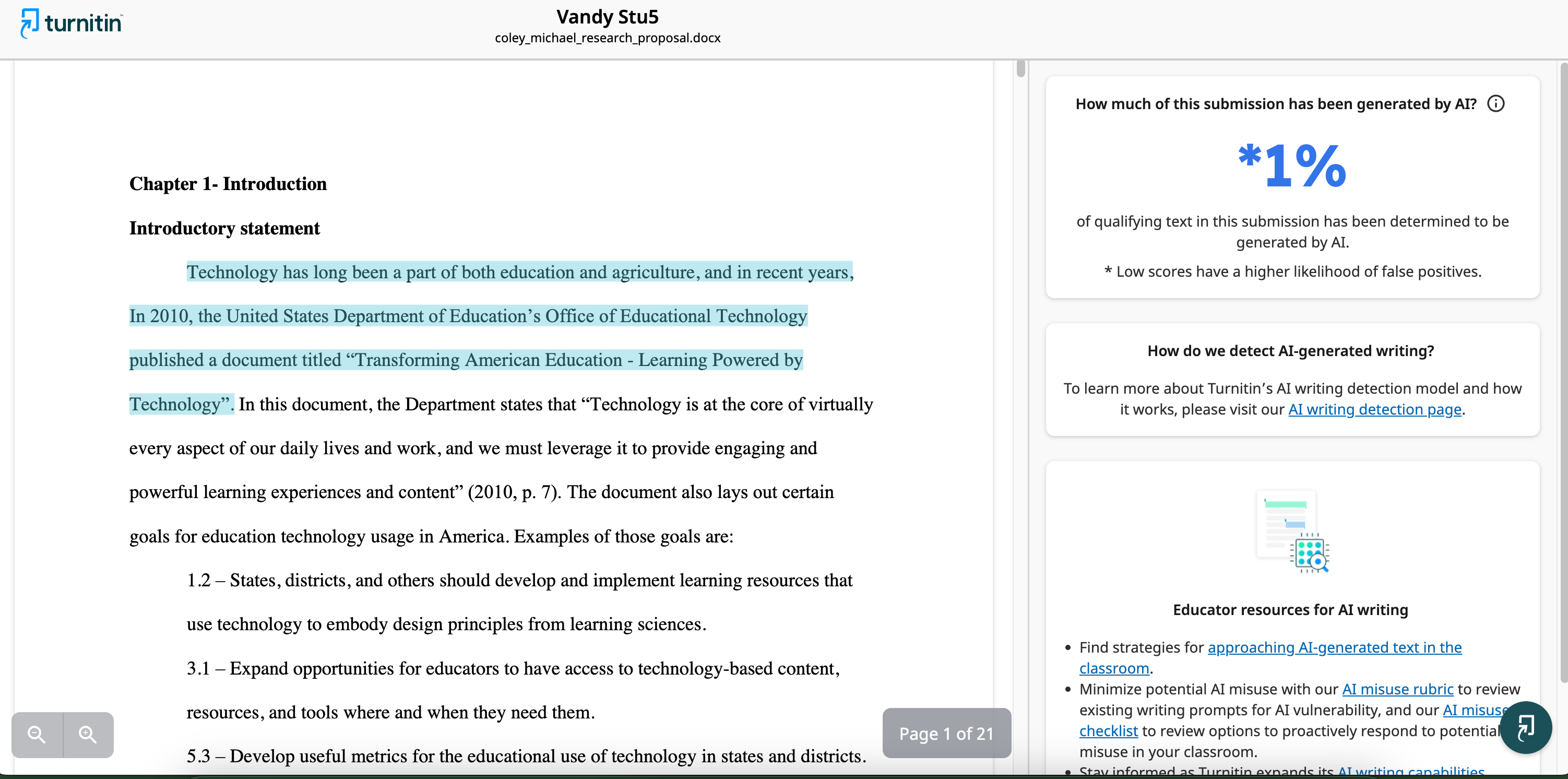
Credit: www.vanderbilt.edu
Proprietary Model Features
Turnitin’s AI detector relies on a proprietary model designed to identify AI-generated text with high accuracy. This model uses advanced algorithms to analyze writing patterns and linguistic features. It can spot subtle markers that suggest a text was created or altered by artificial intelligence.
The model goes beyond simple keyword matching. It studies sentence structure, word choice, and the flow of ideas. These features help the system distinguish AI-written content from human writing. This approach improves detection even when AI text is paraphrased or edited.
Deep Linguistic Analysis
The detector examines the language deeply. It looks at syntax and grammar patterns that AI tends to produce. These patterns differ slightly from human writing styles. The model detects these differences to flag AI content accurately.
Contextual Understanding
The model understands context within the text. It checks if the sentences logically connect or feel mechanical. AI often produces content that lacks natural context or has repetitive ideas. The detector uses this insight to assess authenticity.
Adaptability To New Ai Models
The proprietary system updates regularly to keep pace with new AI tools. It learns from fresh AI writing samples. This helps it recognize emerging AI writing styles quickly. The model stays effective against evolving AI technology.
Integration With Plagiarism Detection
Turnitin’s AI detector works alongside its plagiarism checker. This combination helps identify both copied text and AI-generated content. It provides a thorough review of submissions. Users get clear reports highlighting potential issues.
Training Data And Benchmarks
Turnitin uses advanced AI detection trained on large datasets of human and AI-written text. It compares writing patterns against benchmarks to spot AI-generated content. This helps identify both original and AI-altered submissions with strong accuracy.
Training Data
Turnitin’s AI detector is trained on vast and diverse datasets. It includes student essays, academic papers, and web content. The system learns from both human-written and AI-generated texts. This variety helps the detector spot subtle differences in writing styles.
Training data also covers multiple AI models like GPT and other language generators. This ensures the tool can detect content created by different AI systems. The large dataset improves the detector’s accuracy and reliability.
Benchmarks
Turnitin uses strict benchmarks to measure its AI detector’s performance. These benchmarks test how well the system identifies AI-written text. They compare the detector’s results against known samples to find errors.
Benchmarks focus on precision and recall. Precision means correctly identifying AI content without false alarms. Recall measures how many AI texts the detector finds. Turnitin aims for a balance to reduce mistakes on both sides.
Regular updates to benchmarks keep the detector current. This helps it adapt to new AI writing techniques. Constant benchmarking improves detection speed and accuracy over time.
Detecting Ai-generated Text
Detecting AI-generated text is a growing challenge in education and content creation. Turnitin uses advanced technology to identify content created by artificial intelligence. This helps maintain academic integrity and ensures originality in written work.
The system analyzes writing style, patterns, and language use. It spots subtle differences between human and AI writing. This allows Turnitin to flag text that may have been generated or heavily modified by AI tools.
How Turnitin Identifies Ai Writing
Turnitin uses machine learning models trained on large datasets. These models compare submitted text against known AI writing patterns. The software checks for unnatural phrasing and unusual word choices common in AI text.
It also examines sentence structure and flow. AI-generated text often lacks the variability found in human writing. Turnitin’s detector highlights sections where AI influence is likely.
Limitations Of Turnitin’s Ai Detection
Turnitin’s AI detector is not perfect. It may sometimes misclassify human writing as AI-generated. Text that is heavily edited or paraphrased by AI tools can cause confusion.
The tool works best when combined with human judgment. Teachers and editors should review flagged content carefully. This ensures fair and accurate assessment of originality.
Why Ai Detection Matters
AI detection helps protect the value of original work. It discourages misuse of AI to produce assignments or articles. This keeps academic standards strong and supports honest learning.
For content creators, detection tools encourage authentic writing. They help maintain trust between writers and readers. Detecting AI-generated text is a key step in today’s digital world.
Handling Ai-paraphrased Content
Turnitin’s AI detection system faces a tough challenge with AI-paraphrased content. This type of content is not directly generated by AI but rewritten using AI tools. These tools change words and sentence structures to avoid direct copying.
Turnitin uses advanced algorithms to spot subtle changes in phrasing and style. It compares the text against patterns typical of AI paraphrasing. The system looks beyond exact word matches to detect reworded content.
Detecting Paraphrased Text Patterns
Turnitin identifies unusual word choices and sentence flow. AI paraphrasing often creates sentences that sound unnatural or too consistent. The system scans for these signals to flag possible AI involvement.
It also examines context and meaning to catch disguised copied ideas. This helps find content that has been heavily modified but still based on original sources.
Limitations In Detecting Ai-paraphrased Content
Some AI-paraphrased texts can pass as human writing. Turnitin may sometimes fail to detect clever paraphrasing. False positives can occur if a human writer uses unusual phrasing.
The technology is improving but is not perfect. Educators should use AI detection as one tool among many in assessing work.
How Turnitin Supports Academic Integrity
By detecting AI-paraphrased content, Turnitin helps maintain fairness in education. It encourages students to produce original work rather than rely on AI tools. This supports learning and honest research practices.
Turnitin’s reports guide teachers to review suspicious submissions carefully. The system aids in upholding high standards for academic writing.
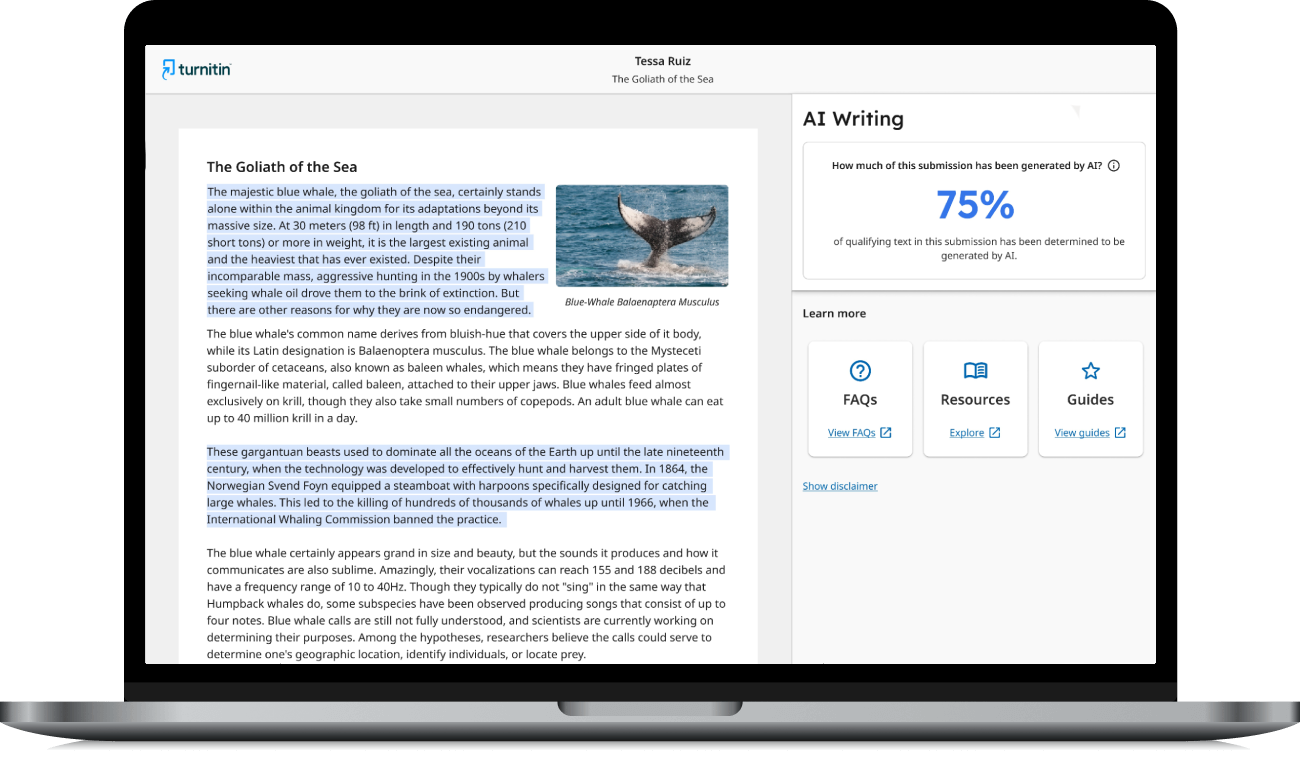
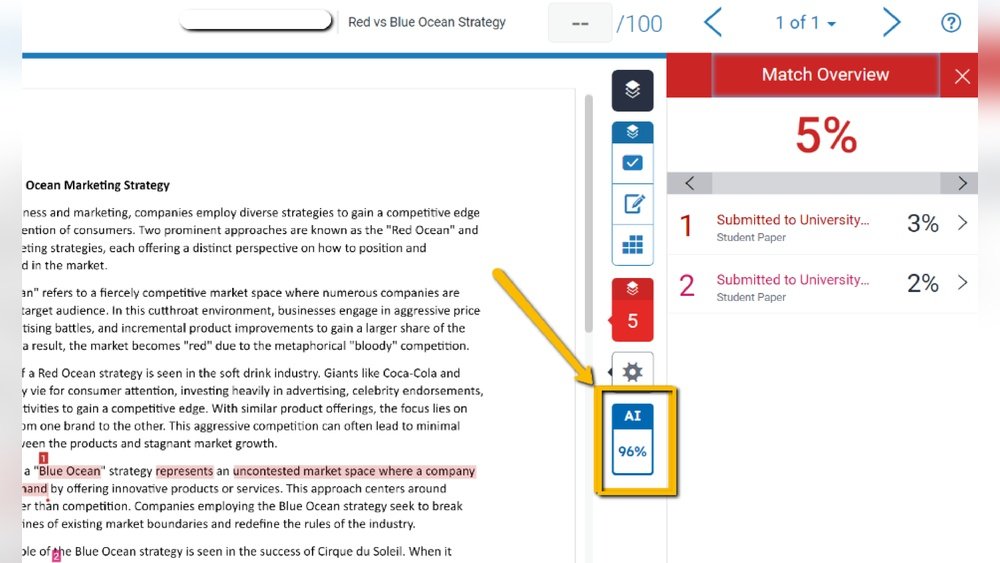
Credit: in.turnitin.com
Accuracy And Limitations
Turnitin uses advanced AI detection technology to identify AI-generated content. Its accuracy helps educators maintain academic honesty. Yet, some limits affect how well it works. Understanding these strengths and weaknesses is key for users.
Accuracy Of Turnitin Ai Detection
Turnitin can detect text created by large language models like GPT. It spots AI-paraphrased content and word-spun text too. The system compares writing patterns to known AI signatures. This process often leads to reliable results. It helps flag suspicious or non-original work quickly.
Tests show Turnitin performs well in many cases. It distinguishes between human and AI writing with good success. The detection score gives a clear indication of AI use. This tool supports teachers in checking essays and assignments.
Limitations Of Turnitin Ai Detection
Turnitin is not perfect and may make mistakes. Sometimes it wrongly flags human writing as AI-generated. Other times, it misses cleverly altered AI text. The system relies on patterns, which can overlap between humans and machines.
Its detection struggles with mixed writing, where humans edit AI content. Short texts or highly creative writing also challenge the tool. False positives and negatives remain possible. Users should consider results as part of a wider review process.
Turnitin’s AI detection is a helpful aid. It guides but cannot fully replace human judgment. Knowing its limits ensures fair and accurate use.
Comparison With Other Ai Detectors
Comparing Turnitin’s AI detector with other tools helps clarify its strengths and limits. Turnitin uses a proprietary AI detection system tailored for academic work. It focuses on spotting AI-written and AI-paraphrased content in student submissions.
Many AI detectors exist, each with unique features. Some serve general content creators, while others specialize in academic settings. Turnitin’s system fits university needs well but is one of several solid options.
Originality.ai Vs Turnitin Ai Detection
Originality.ai ranks high in accuracy across many tests. It identifies AI content from various language models. This detector excels at analyzing long-form content, useful for SEO and writers. Turnitin, on the other hand, integrates deeply with academic workflows, supporting institutions in plagiarism and AI checks.
Gptzero And Copyleaks As Alternatives
GPTZero and Copyleaks offer free or low-cost AI detection tools. They provide decent accuracy and are accessible for users on a budget. These detectors are good for quick checks but may lack Turnitin’s advanced academic focus and integration.
Scribbr And Winston Ai: Close To Turnitin
Scribbr uses Turnitin’s database for plagiarism and AI detection. It is popular with students for essay checks. Winston AI delivers a similar experience to Turnitin. It serves both individuals and institutions, making it a strong alternative for academic environments.
Choosing The Right Ai Detector
Turnitin suits universities needing robust AI and plagiarism detection. Originality.ai fits content creators needing detailed AI analysis for long texts. Budget users can try GPTZero or Copyleaks for basic AI detection. Scribbr and Winston AI offer user-friendly options close to Turnitin’s academic style.

Credit: guides.turnitin.com
Alternatives Similar To Turnitin
Alternatives similar to Turnitin offer various AI detection and plagiarism checking features. These tools help educators and writers ensure originality in academic and professional content. They provide different strengths depending on the user’s needs, such as accuracy, cost, and ease of use.
Some alternatives focus on detecting AI-generated text, while others combine plagiarism checks with AI detection. Choosing the right tool depends on the type of content and the level of detail required.
Originality.ai
Originality.ai is known for its high accuracy in AI detection. It checks content against many large language models. The tool is effective for long-form writing and SEO content. It also offers strong resistance against attempts to fool the system.
Gptzero
GPTZero provides a free and simple way to detect AI text. It is popular among students and educators. The tool focuses on identifying text created by AI with good accuracy. It suits users who want basic AI detection without extra costs.
Copyleaks
Copyleaks combines plagiarism detection with AI content scanning. It offers a free plan and detailed reports. The tool supports multiple languages and formats. It works well for schools and businesses needing reliable originality checks.
Scribbr
Scribbr uses Turnitin’s database to check academic papers. It helps students find plagiarism and AI-generated content. The platform is user-friendly and provides clear feedback. Scribbr suits users wanting a familiar experience like Turnitin.
Winston Ai
Winston AI mimics Turnitin’s detection methods closely. It serves both individuals and institutions. The tool delivers detailed AI detection reports. It is a strong choice for academic submissions requiring strict originality checks.
Choosing The Right Ai Detection Tool
Selecting the best AI detection tool matters a lot. It helps ensure academic honesty and content originality. Different tools suit different needs and budgets. Knowing their features guides a smart choice.
Some tools work well for schools and universities. Others fit better for bloggers or SEO writers. Accuracy, ease of use, and cost are key factors. Let’s explore important points to consider.
Accuracy And Detection Capabilities
Accuracy is crucial in AI detection tools. The tool must identify AI-written text reliably. Turnitin’s AI detection uses advanced models to spot AI content. It checks both direct AI writing and AI-paraphrased text. Choosing a tool with strong detection reduces errors and false flags.
Integration And Usability
Tools like Turnitin and Winston AI integrate smoothly with school systems. This saves time and simplifies checking. Easy-to-use interfaces help users check content quickly. A good tool offers clear results and explanations. This supports better understanding and action.
Cost And Accessibility
Budget matters for many users. Some tools offer free versions with basic checks. Others require subscriptions for full features. Turnitin often comes as part of institutional packages. Free or low-cost tools like GPTZero and Scribbr serve those with limited budgets. Choose based on what fits your needs and resources.
Type Of Content And Use Case
Different tools suit different content types. For academic essays, Turnitin and Winston AI are great choices. For long articles or SEO content, Originality.ai is very effective. Understanding your content type helps pick the right tool. This improves detection success and trust in results.
Impact On Academic Integrity
Turnitin’s AI detection tools play a key role in protecting academic integrity. They help educators spot content that may not be original. This ensures that students submit their own work.
By identifying AI-generated text, Turnitin discourages cheating and plagiarism. This maintains fairness in classrooms and upholds the value of genuine learning. Students are encouraged to develop their own ideas and writing skills.
Detecting Ai-generated Content
Turnitin uses advanced algorithms to find AI-written text. It compares writing patterns to known AI models. This helps reveal essays or assignments created by AI tools. The system also detects text that has been altered by AI paraphrasing.
Detection is not perfect but it reduces the chances of undetected AI use. It alerts teachers to review suspicious submissions carefully. This supports honest assessment of student work.
Encouraging Original Work
The presence of AI detectors pushes students to write authentically. Knowing AI-generated content can be caught lowers temptation to cheat. Students focus more on learning and critical thinking. This leads to stronger academic skills and better knowledge retention.
Challenges In Maintaining Integrity
AI detection tools face challenges in accuracy. Sometimes human-written text is flagged by mistake. AI-paraphrased content can be tricky to identify. Educators must balance trust and verification carefully.
Continuous updates and improvements to detection software help meet these challenges. Combining AI detection with traditional methods strengthens academic honesty.
Frequently Asked Questions
Can Turnitin Really Detect Ai?
Turnitin detects AI-generated text using proprietary technology trained on academic writing. It identifies AI writing patterns but isn’t 100% accurate. It can misclassify some human or AI-altered content. Turnitin helps maintain academic integrity but cannot guarantee perfect AI detection.
Is 40% Too High On Turnitin?
A 40% Turnitin similarity score may be too high, indicating significant matching content. Aim to keep it below 20-30% for originality.
What Is The Most Accurate Ai Detector Like Turnitin?
Originality. ai ranks as the most accurate AI detector similar to Turnitin. It excels in spotting AI-generated content and long-form writing. Winston AI and Turnitin AI Detection also offer strong, reliable options, especially for academic use. GPTZero and Copyleaks provide accurate, budget-friendly alternatives.
What Percentage Of Turnitin Is An Ai Detector?
Turnitin does not disclose an exact AI detection percentage. Its tool combines plagiarism and AI writing detection technologies.
What Ai Detector Does Turnitin Use?
Turnitin uses a proprietary AI detection system developed in-house for identifying AI-generated text.
Can Turnitin Detect Ai-generated Content Accurately?
Turnitin can detect AI content but may sometimes misclassify human or paraphrased text.
How Does Turnitin’s Ai Detection System Work?
It analyzes writing patterns and language to find signs of AI-generated or paraphrased text.
Is Turnitin’s Ai Detector Similar To Other Tools?
Turnitin’s detector is unique but shares features with tools like Winston AI and Originality. ai.
Can Turnitin Detect Ai Paraphrased Content?
Yes, Turnitin can identify text altered by AI paraphrasing tools or word spinners.
Does Turnitin Flag False Positives In Ai Detection?
Sometimes, Turnitin may mistakenly flag human-written or edited text as AI-generated.
Conclusion
Turnitin uses advanced AI detection technology to spot machine-written text. It can tell if content is fully AI-generated or edited by AI tools. The system helps maintain academic honesty but isn’t perfect. Sometimes, it may wrongly label human writing or miss AI changes.
Students should focus on creating original work and understanding the rules. Using AI responsibly is key to avoiding issues with Turnitin. Knowing how Turnitin’s AI detector works gives you an advantage. Stay honest, write clearly, and trust your own voice.