Thinking about starting your own blog but wondering how much it will actually cost? You’re not alone.
Many aspiring bloggers hesitate because they’re unsure about the expenses involved. The truth is, launching a blog can be surprisingly affordable—or it can grow into a bigger investment depending on what you want. You’ll discover the real costs behind starting a blog, from free options to premium setups.
By the end, you’ll know exactly what to expect and how to plan your budget so your blog can thrive without breaking the bank. Ready to find out what starting a blog really costs? Let’s dive in!
Free Blogging Platforms
Starting a blog without spending money is possible through free blogging platforms. These platforms allow beginners to create and publish content easily. They provide tools and templates to help you get online quickly.
Free platforms are perfect for those who want to test blogging before investing money. They offer basic features that cover most needs for a simple blog. Understanding their benefits and limitations helps in making the right choice.
Top Free Options
WordPress.com is a popular choice with a free plan. It gives you a subdomain like yoursite.wordpress.com and may show ads. Blogger, owned by Google, is simple and fully free, ideal for beginners. Medium focuses on writing and audience reach, with no technical setup needed. Substack works well for newsletter-style blogs and is free unless you charge readers. Canva and Adobe Express offer free blog website builders with design templates.
Pros And Cons
Free platforms let you start a blog with zero cost. They include easy-to-use tools and hosting. No need to buy a domain or pay for servers. However, customization options are limited. Your blog address will include the platform’s name. Ads may appear on your site, which you cannot control. Monetization options are often restricted or unavailable.
Limitations To Expect
Expect to use a subdomain rather than a custom domain. Design and branding choices are usually basic. Your blog’s content is hosted on the platform’s servers, not yours. This means you do not fully own your blog. Platform rules can change, risking content removal. Making money from free blogs can be difficult due to platform restrictions.
Domain Name Costs
Choosing the right domain name is a key step when starting a blog. The domain name cost depends on the type and provider. It affects your blog’s branding and credibility. Understanding domain name costs helps you plan your budget well.
Custom Vs Subdomain
A custom domain looks like www.yourblog.com. It gives a professional image and full control. A subdomain adds your blog name to another site, like yourblog.wordpress.com. Subdomains are usually free but less credible. Custom domains cost money but improve trust and branding.
Pricing Factors
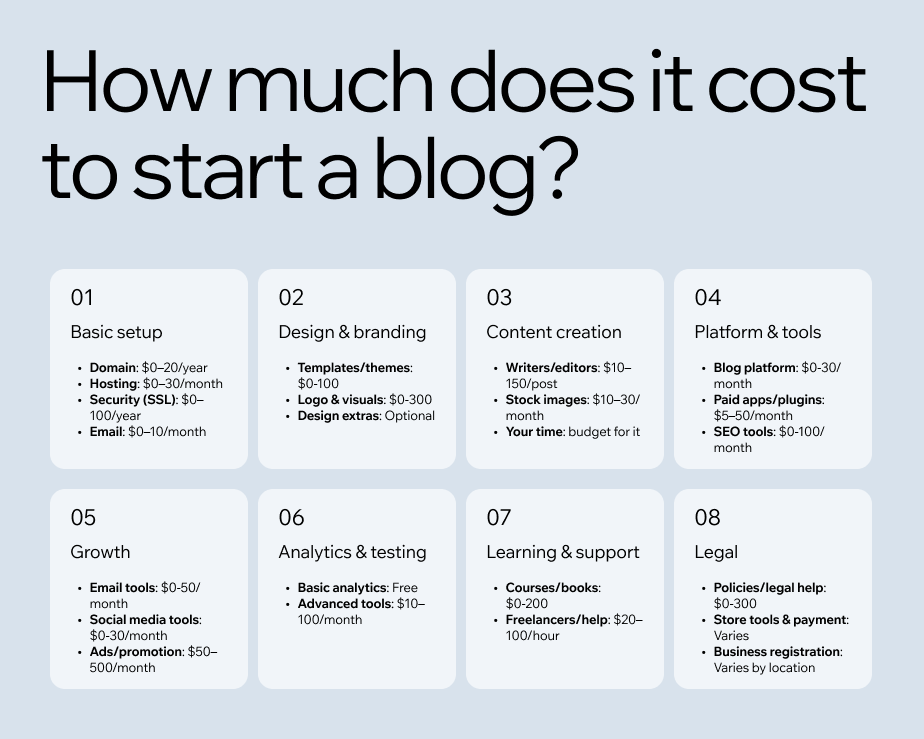
Domain prices vary due to extensions, length, and demand. Common extensions like .com, .net, or .org usually cost $10 to $15 per year. New or special extensions can cost more. Short, memorable names often cost extra. Renewals may have different prices than first-time purchases.
Where To Buy
Buy domains from registrars like GoDaddy, Namecheap, or Google Domains. They offer easy search tools and various extensions. Some web hosting services include a free domain with their plans. Compare prices and features before buying. Look for good customer support and clear renewal policies.
Hosting Expenses
Hosting is a key expense when starting a blog. It affects your blog’s speed, uptime, and security. Choosing the right hosting plan balances cost and performance. Budget options exist, but quality matters to keep visitors happy.
Shared Hosting Basics
Shared hosting is the most affordable option. Multiple websites share one server’s resources. This keeps costs low for beginners. It usually costs between $2 and $10 per month. Ideal for new blogs with low traffic. It may slow down if your blog grows fast.
Managed Hosting Benefits
Managed hosting costs more but offers extra support. The host handles updates, backups, and security. This saves time and reduces technical work. Prices start around $15 per month. It suits bloggers who want hassle-free management. Managed hosting often delivers faster site speeds.
Popular Providers
Many hosts offer plans for bloggers. Bluehost is popular for shared hosting with good support. SiteGround is known for speed and security features. WP Engine focuses on managed WordPress hosting. Each provider offers different pricing and perks. Choose one that fits your budget and needs.
Themes And Design
The look and feel of your blog plays a big role in attracting readers. Themes and design set the tone and style. Choosing the right theme helps your blog stand out. Costs vary widely depending on your choices. Understanding these options helps plan your budget well.
Free Vs Premium Themes
Free themes cost nothing and are easy to find. Many offer good basic design and features. Premium themes come with a price, usually between $30 and $100. They provide more customization and better support. Premium themes often include regular updates and security fixes. Choosing premium can improve your blog’s professional look. Free themes work fine for simple blogs or beginners.
Customization Costs
Customization means changing colors, fonts, and layouts to fit your brand. Some themes allow free customization through settings. Advanced changes may require hiring a designer or developer. Custom work can cost from $50 to several hundred dollars. DIY tools and plugins can help reduce these costs. Keep customization simple to save money. Focus on making your blog easy to read and navigate.
Design Tools
Design tools help create logos, banners, and images for your blog. Popular free tools include Canva and Adobe Express. These tools offer templates and easy drag-and-drop features. Paid tools or subscriptions may cost $10 to $30 per month. Using good visuals improves your blog’s appeal. Clear and attractive design keeps visitors engaged longer. Investing in design tools is a smart way to enhance your blog’s look.
Essential Plugins And Tools
Starting a blog requires more than just writing. Essential plugins and tools help improve your blog’s performance. These tools make managing content easier and keep your site secure. Some plugins are free, while others need an investment. Choosing the right ones affects your blog’s success and costs.
Must-have Free Plugins
Free plugins provide important features without extra cost. A caching plugin speeds up your blog, improving user experience. Image optimization plugins reduce file sizes, making pages load faster. Contact form plugins help visitors reach you easily. Social sharing plugins allow readers to share your posts on social media. These free tools form a strong base for any new blog.
Premium Plugins Worth Investing
Premium plugins offer advanced features and better support. A premium page builder lets you design unique layouts without coding. Security plugins protect your blog from hackers and malware. Backup plugins ensure your content is safe and easy to restore. Email marketing plugins help grow your audience and keep readers engaged. Investing in these tools saves time and avoids future problems.
Seo And Security Tools
SEO tools improve your blog’s visibility in search engines. They help optimize keywords, titles, and content structure. Security tools protect your blog from spam and unauthorized access. Firewalls and malware scanners keep your site safe. Regular updates and monitoring prevent attacks and data loss. Using these tools increases traffic and maintains your blog’s reputation.
Credit: www.wix.com
Content Creation Costs
Creating quality content is essential for a successful blog. Content creation costs vary depending on the choices you make. These costs include writing, images, and editing. Understanding these expenses helps plan your blog budget better.
Diy Vs Hiring Writers
Writing your own blog posts saves money. It takes time and effort but gives full control. Hiring writers costs more but saves time. Freelance writers usually charge per article or word. Prices depend on experience and article length. Choosing between DIY and hiring depends on your budget and skills.
Stock Photos And Media
Images make blogs attractive and engaging. Free stock photos are available but may be limited. Paid stock photo sites offer more variety and quality. Subscription plans often start at $10-$30 per month. Custom graphics or videos cost more but add uniqueness. Budget for media based on your blog style.
Editing And Proofreading
Good editing improves readability and professionalism. You can edit your work or hire editors. Freelance editors charge from $20 to $50 per hour. Online tools offer basic editing for free or low cost. Proofreading ensures no grammar or spelling mistakes. Allocate funds for editing to keep your blog polished.
Marketing And Promotion
Marketing and promotion are key parts of starting a successful blog. They help attract readers and grow your audience. Spending money on marketing can increase your blog’s visibility faster. This section covers common marketing costs for new bloggers.
Social Media Advertising
Social media ads are a popular way to promote blogs. Platforms like Facebook, Instagram, and Twitter allow precise targeting. You can choose your audience by age, location, and interests. The cost depends on your budget and ad duration. Beginners can start with as little as $5 per day. This helps test what works before spending more.
Email Marketing Services
Email marketing helps keep readers engaged. Services like Mailchimp and ConvertKit offer plans based on subscriber numbers. Many start free with limited features. Paid plans usually start around $10 per month. These services help send newsletters, automate emails, and track results. Investing in email marketing builds a loyal audience over time.
Budgeting For Ads
Setting a budget for ads is essential. Decide how much money you can spend monthly. Start small and increase your budget as you see results. Track your ad performance to avoid wasting money. Many bloggers spend $50 to $200 per month on promotion at first. Proper budgeting ensures steady blog growth without overspending.

Credit: www.networksolutions.com
Maintenance And Updates
Maintaining a blog requires ongoing attention and care. Regular upkeep keeps your blog running smoothly and protects it from issues. Updates and maintenance also improve user experience and security. These tasks may involve some costs, which are important to consider when starting a blog.
Regular Backups
Backing up your blog is essential. It saves your content and settings in case something goes wrong. Many hosting providers offer automatic backups for a small fee. You can also use plugins or manual methods to create backups. The cost varies but expect to spend a few dollars per month if you want reliable backup services.
Software Updates
Blog platforms and plugins release updates often. These updates fix bugs and add new features. Keeping your software updated prevents security risks. Updates are usually free, but sometimes premium plugins require paid upgrades. Regular updates take time but reduce the chance of site crashes or hacks.
Technical Support Costs
Technical problems can happen anytime. Some hosting plans include free support, while others charge extra. Hiring a professional for troubleshooting or custom work may cost between $50 and $150 per hour. Budgeting for occasional technical help keeps your blog healthy and responsive.
Monetization Setup Costs
Setting up your blog to earn money requires some initial investment. Monetization setup costs vary based on the methods you choose. These costs include tools and features that help you sell products, promote affiliate offers, or create paid content. Understanding these expenses helps you plan your budget wisely.
E-commerce Integration
Adding an online store to your blog can increase income. E-commerce tools often have monthly fees starting around $10. Payment processors may charge transaction fees too. Some popular platforms include Shopify, WooCommerce, and BigCommerce. These tools help you manage products, payments, and shipping easily.
Affiliate Marketing Tools
Affiliate marketing is a common way to earn money. Joining affiliate programs is usually free, but tools can improve your success. Paid plugins and software help track clicks and manage links. These tools cost between $15 and $50 per month. They simplify promoting products and increase your chances of earning commissions.
Paid Membership Features
Creating exclusive content for members can boost revenue. Membership plugins add this function to your blog. Prices range from $20 to $100 monthly, depending on features. These tools manage subscriptions, content access, and payments. They allow you to build a loyal audience willing to pay for value.
Budgeting Tips For 2025
Budgeting well is key to starting a blog without stress in 2025. Planning your expenses helps keep costs low and manageable. Knowing where to save and where to spend ensures your blog grows steadily. This section shares practical budgeting tips for new bloggers.
Cost-saving Strategies
Choose affordable hosting plans that fit your budget. Use free themes and plugins to design your blog. Start with a free domain or a low-cost one to save money. Learn basic skills like writing and editing to reduce hiring costs. Avoid unnecessary tools until your blog grows. Take advantage of free online courses to improve your skills. Focus on essentials first, then upgrade gradually.
Prioritizing Expenses
Spend money on things that directly improve your blog’s performance. A reliable web host is a top priority. Invest in a custom domain for a professional look. Good content creation tools help produce quality posts. Marketing tools come next to build your audience. Avoid spending on fancy design until traffic increases. Track your spending to stay within your budget.
Forecasting Future Costs
Expect to pay more as your blog grows. Plan for hosting upgrades as traffic rises. Budget for marketing and advertising to reach new readers. Consider costs for premium tools and plugins later. Save for occasional professional help like graphic design. Keep a small fund for unexpected expenses. Regularly review and adjust your budget based on your blog’s needs.

Credit: www.productiveblogging.com
Frequently Asked Questions
What Is The 80/20 Rule For Blogging?
The 80/20 rule for blogging means 80% of content educates or entertains readers, while 20% promotes products or services. This balance builds trust and boosts engagement effectively.
How Much Money Do I Need To Start Blogging?
Starting a blog can cost $0 using free platforms like WordPress. com or Blogger. Paid options, including domain and hosting, typically start around $50 yearly.
Is Blogging Dead Due To Ai?
Blogging is not dead due to AI. Authenticity and unique voice keep blogs valuable and relevant in the AI era.
Can I Start A Blog With No Money?
Yes, start a blog for free using platforms like WordPress. com, Blogger, Medium, or Substack. Expect limited customization and a subdomain URL.
How Much Does It Cost To Start A Basic Blog?
Starting a basic blog typically costs between $50 and $100 per year for hosting and domain.
Can I Start A Blog For Free With No Expenses?
Yes, free platforms like WordPress. com and Blogger let you start without spending money.
What Are The Main Costs Involved In Blogging?
Domain name, hosting, and premium themes or plugins are the main blogging expenses.
How Much Does A Domain Name Cost Annually?
A domain name usually costs around $10 to $15 per year.
Is Paid Hosting Necessary To Start A Blog?
Paid hosting offers better control and speed but free hosting is possible for beginners.
What Are The Hidden Costs Of Starting A Blog?
Costs may include premium tools, marketing, SEO services, and professional design help.
Conclusion
Starting a blog can fit many budgets, from zero to some investment. Free platforms let you begin without spending money, but they come with limits. Paying for a domain and hosting gives more control and a professional look. Think about your goals and how much you want to customize.
Planning your costs helps avoid surprises later. Blogging is an exciting way to share your voice with the world. Take small steps, learn as you go, and enjoy the journey.